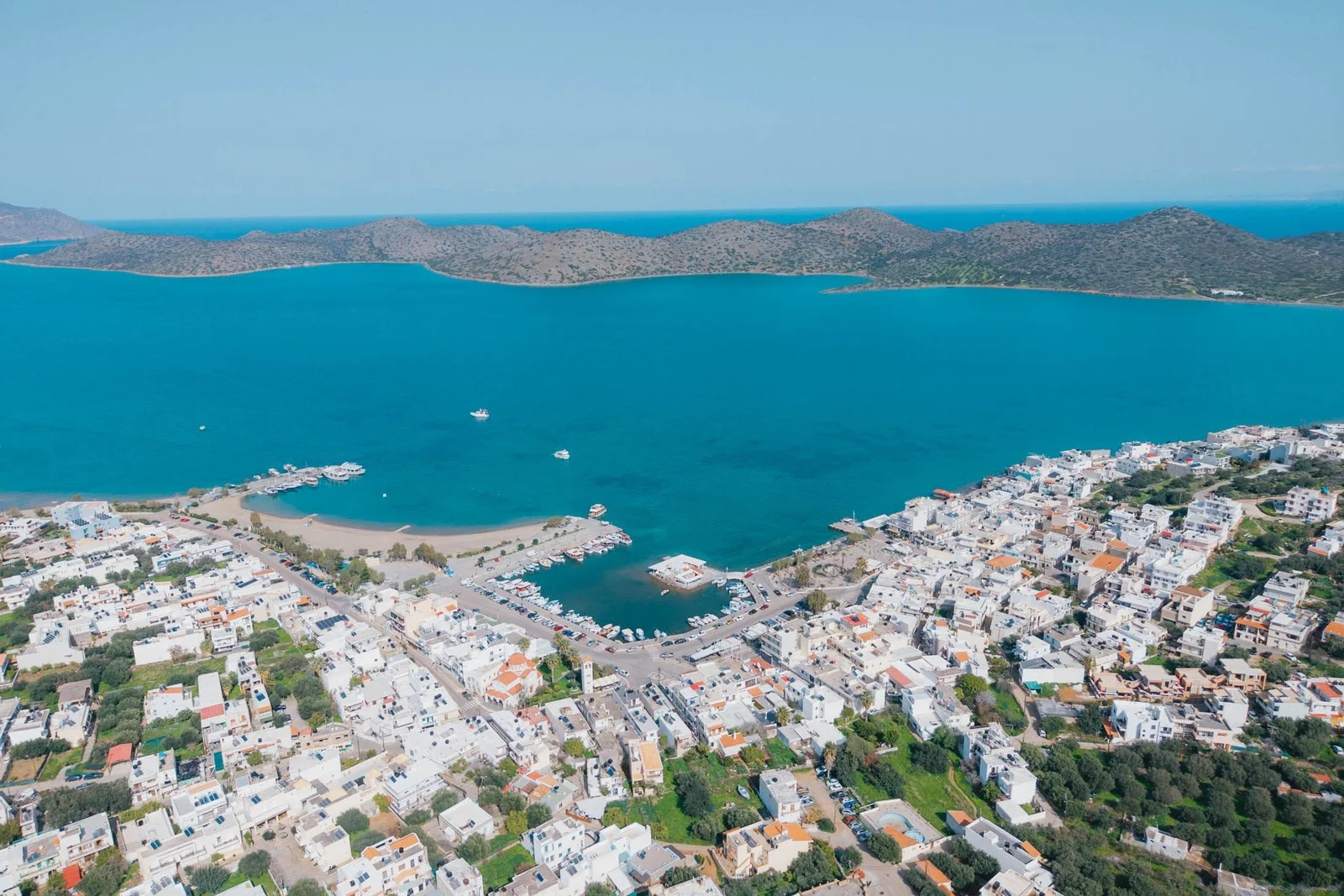
Quick answer: Greek apartment prices rose 7.8% in 2025 and 5.7% year-on-year in Q1 2026, with the periphery outpacing Athens. Asking prices for quality stock run from €1,600 per square metre in Kalamata to €8,500 on Mykonos, and this page holds the current range for 16 markets, updated quarterly.
Every Greek property decision reduces at some point to one ratio, euros per square metre, and the public data for it is split between an official index that lags and asking prices that exaggerate. This page is the site’s maintained bridge between the two: the Bank of Greece direction-of-travel on top, and the asking-price levels our area research tracks underneath, market by market, with the transaction volumes and Golden Visa flows that explain the moves.
Everything is dated as of 22 August 2026, and the update cadence is quarterly, on the index release.
What Does the Official Index Say About 2025 and 2026?
The headline is +7.8% across urban Greece for 2025 on the Bank of Greece apartment index, with the pattern inverted from the programme’s early years: Athens grew slowest at 6.5% while other cities led at 10.2%, and Q1 2026 printed +5.7% year-on-year, a deceleration with no negative region.
- 2025: periphery leads, capital lags.
- Q1 2026: everything slower, nothing negative.
| Region | 2025 annual | Q1 2026 year-on-year |
|---|---|---|
| Athens | +6.5% | +5.2% |
| Thessaloniki | +9.7% | +6.4% |
| Other cities | +10.2% | +5.4% |
| Other areas | +9.1% | +6.9% |
| Urban Greece average | +7.8% | +5.7% |
Two readings of the index matter for a buyer, and both run against the headlines. The cycle is maturing rather than turning: every region decelerated from its 2025 pace into early 2026, and every region stayed positive, +5.2% at the slowest, which is what a soft landing looks like from inside rather than the correction commentary keeps predicting. And the geography of growth has flipped: Athens, the 2017-to-2023 leader that compounded fastest through the recovery, now trails its own periphery at +6.5% against 10.2% in other cities, because the capital repriced first and the €400,000 regional tier plus returning domestic demand are now doing to Thessaloniki, Patras, Crete and the islands what the €250,000 Golden Visa era did to central Athens between 2017 and 2023.
How Should You Read Index Versus Asking Prices?
The index measures bank-financed transaction valuations, so it lags the market and under-weights cash-rich foreign buying; asking prices lead the market and overstate it by the negotiation margin. The honest method is to take direction from the index and levels from asking ranges, then verify any specific street with notarial comparables.
- The index’s blind spot: most Golden Visa purchases are cash, invisible to a valuations-on-mortgages series; prime coastal repricing shows up late and damped.
- Asking data’s blind spot: portals record hope; in 2026’s decelerating market, closed prices in Athens commonly land 3% to 7% below ask, more on stale listings.
- The bridge to taxes: neither series is the state’s objective value, the third price every buyer meets, on which transfer tax and ENFIA are charged.
- The verification step: for any shortlisted property, a lawyer pulls recent notarial comparables from the same block; this page’s job is to get your budget into the right market row, not to price a specific deed.
- The rent cross-check: divide local annual rents by the asking €/m² and a market claiming both peak prices and 6% yields is telling you one of the two numbers is stale.
What Is the Asking €/m² Across the Main Markets?
The August 2026 range for quality stock is a five-times spread: €1,600 per square metre in Kalamata to €8,500-plus on prime Mykonos, with the Golden Visa tiers cutting straight through the table, €800,000 markets clustered above €4,000 per square metre and €400,000 markets sitting below €2,800.
- Above €4,000/m²: every €800K prime-tier market bar value Athens and Piraeus.
- Below €2,800/m²: every €400K regional market on the board.
| Market | Asking €/m², quality stock | GV tier |
|---|---|---|
| Kolonaki, Athens | ~€5,409 | €800K |
| Mykonos (town / prime) | €6,500 to €8,500+ | €800K |
| Santorini (rim / belt) | €3,800 to €7,000 | €800K |
| Vouliagmeni / Kavouri | €5,800+ | €800K |
| Voula | €4,200 to €5,800 | €800K |
| Glyfada | €4,000 to €5,500 | €800K |
| Piraeus (Kastella prime) | €3,800+ | €800K |
| Piraeus (outer) | ~€2,400 | €800K |
| Thessaloniki centre | 30-40% under Athens equivalents | €800K |
| Athens centre value districts | €1,200 to €2,000 | €800K |
| Chania old town | €3,000 to €3,800 | €400K |
| Chania quality / Akrotiri | €2,200 to €2,600 | €400K |
| Crete island average | ~€2,329 | €400K |
| Rhodes (town to old town) | €1,900 to €2,800 | €400K |
| Heraklion city | €1,800 to €2,200 | €400K |
| Kalamata | €1,600 to €2,100 | €400K |
Each market’s full picture, micro-zones, yields, seasonality and risks, sits in its own dedicated area guide, from Glyfada to Heraklion; this table exists to give the cross-market view those sixteen individual pages cannot give one at a time.
What Do the Golden Visa Thresholds Buy at These Prices?
The two thresholds buy inverted value: €800,000 purchases 110 to 200 m² in its designated zones, frequently brushing the 120 m² floor, while €400,000 purchases 143 to 250 m² in its zones, clearing the same floor by half again. Price per square metre and compliance risk rise together.
| Budget and market | Implied size | 120 m² rule status |
|---|---|---|
| €800K in Kolonaki (~€5,409) | ~148 m² | Clears, but verify certified area |
| €800K in Glyfada (~€4,250 to €5,000) | ~160 to 190 m² | Clears, but verify certified area |
| €800K in Voula (€4,200 to €5,800) | 138 to 190 m² | Clears |
| €800K in Thessaloniki | 200 m²+ | Never binding |
| €400K on Crete (~€2,329) | ~172 m² | Never binding |
| €400K in Rhodes old town (€2,800) | ~143 m² | Clears, tight layouts |
| €400K in Kalamata (€1,800) | ~220 m² | Never binding |
This is the practical use of a price index for a visa buyer: the ratio decides what you get and, separately, whether you qualify at all, because marketed area includes terraces and storage the rule excludes. The Riviera-versus-Crete comparison runs the two tiers head-to-head on exactly these numbers.
Working a budget against these ranges? We shortlist by certified area and current asking data, so the ratio you buy is the ratio you qualify with.
What Is Driving Prices in Each Direction?
There are four forces setting the 2026 board: chronic undersupply of new housing, the Golden Visa tiers steering foreign money by geography, Ellinikon’s €8 billion repricing of the Riviera corridor, and 25.3% lower foreign inflows taking the froth off. The net result is decelerating growth on a firm floor.
- Supply: Athens housing stock has barely grown in a decade; new construction concentrates in premium zones, and the VAT suspension to end-2026 keeps new-build competitive with resale.
- Tier geography: the €400,000 tier routes demand to Crete, the Peloponnese and the islands, visible in other-areas’ +9.1% 2025 print; the €800,000 tier concentrates capital in exactly the scarce-stock zones.
- Ellinikon: the €8 billion build-out keeps repricing Glyfada-to-Vouliagmeni comparables ahead of the citywide index.
- Cooling inflows: foreign real estate inflows fell 25.3% in 2025, thinning competition without breaking prices, because domestic transactions held.
Two second-order forces deserve their own line, because they shape 2027 more than 2026. Construction costs, up sharply since 2021 across materials and labour, put a rising floor under new-build pricing and widen the gap to renovatable older stock, which is why the renovation arbitrage keeps working in the value districts. And rents have grown faster than wages in every major Greek city, capping how much further yields can compress before tenant demand thins: the rental market, not the sales market, is where affordability stress shows first, and it is the series to watch for early warning. The market forecast extends all six drivers forward; this page keeps score on what they have already done, quarter by quarter.
How Far Have Prices Come Since the Crisis Trough?
Context for every 2026 number: Greek apartment prices fell roughly 40% to 45% from their 2008 peak to the 2017 trough, and the recovery since has been long but uneven, so parts of the market are at records while others still sit below their pre-crisis highs in nominal terms, and further below in real terms.
| Period | What the index did | What it meant on the ground |
|---|---|---|
| 2008 to 2017 | Roughly −40% to −45% peak to trough | The deepest housing correction in the euro area |
| 2017 to 2019 | Recovery begins, Athens first | €250K Golden Visa era concentrates in the centre |
| 2020 to 2023 | Reacceleration through the pandemic | Double-digit Athens prints, Riviera repricing |
| 2024 | +9.1% urban average | Record 9,300 visa applications ahead of new tiers |
| 2025 | +7.8%, periphery leads | Tiers redirect demand; inflows −25.3% |
| Q1 2026 | +5.7% year-on-year | Soft landing in progress |
The planning consequence cuts two ways. A buyer is not entering a bubble’s first act: today’s levels stand on a decade of undersupply and a halved construction industry, not on credit, and Greek household leverage remains among the euro area’s lowest. But neither is 2026 the 2017 entry: that decade of catch-up is priced, Athens prime has compounded for eight years, and the forward return case now rests on income, scarcity and the periphery’s convergence rather than on broad post-crisis repricing. Buyers underwriting the next five years should read the forecast’s drivers with this series behind them.
What Are the Advantages and Disadvantages of Buying at 2026 Prices?
The advantages of a 2026 entry are a decelerating but still positive market, thinner foreign competition and newly negotiable vendors after a 25.3% inflow drop. The disadvantages are seven straight years of compounding behind the index, price levels near records, and prime zones where the easy repricing is already banked.
Advantages
- Every region still positive: +5.2% to +6.9% year-on-year in Q1 2026, no falling-knife market to time.
- Negotiation returned: 3% to 7% off ask is normal again in Athens.
- The periphery still trades at €1,600 to €2,800/m² with double-digit 2025 growth behind it.
- Inflation-adjusted, parts of regional Greece remain below their 2008 peaks.
Disadvantages
- Athens prime has compounded since 2017; Kolonaki at about €5,409/m² on current asking data prices in the recovery.
- Deceleration is real: the +10% prints of 2025 are unlikely to repeat in 2026.
- Scarce 120 m² compliant stock in prime zones carries its own premium above the index.
- Asking data overstates: underwriting at ask in a cooling market donates the margin.
What Are the Risks and Red Flags in Using Price Data?
Price-data mistakes are more expensive than price movements: averaging across unlike markets, taking asking prices for closed ones, ignoring the state’s objective value, and buying marketed square metres the 120 m² rule will not count. Four cheap disciplines keep the €/m² numbers working for you rather than against you.
- Never average Greece. A national €/m² blends Mykonos with Kalamata into a number no property has; work at the market row, then the micro-zone.
- Date every figure. This market moves 5% to 10% a year; an undated €/m² is wrong by default. Every range above carries its August 2026 stamp.
- Reconcile the three prices. Ask, notarial comparable, objective value: transfer tax at 3.09% follows the higher of deal and objective, not the portal.
- Buy certified metres. The ratio that qualifies a visa uses the engineer’s κύρια χρήση area, routinely 15% to 30% below marketed area on terrace-heavy stock.
Which Buyer Scenario Does the 2026 Price Board Favour?
The 2026 board favours three entries: the yield buyer in the €1,600-to-€2,200 periphery, the compliance-safe visa buyer in Glyfada-to-Voula’s €4,000-to-€5,800 band, and the patient negotiator anywhere listings have aged past 90 days. It punishes exactly one strategy: underwriting at ask in prime Athens.
- Income first: the periphery rows.
- Visa certainty: the Riviera’s middle band.
- Any market: negotiate, the data says you can.
The yield entrant. Kalamata, Heraklion and Thessaloniki’s value districts pair sub-€2,200 entry with the 2026 rental tax cut landing on exactly their rent bands: the index’s fastest lane and the cash-flow sweet spot coincide.
The visa buyer optimising certainty. €800,000 into Voula or Glyfada at €4,200 to €5,800 buys 138 to 190 m², comfortable compliance margin plus the Ellinikon tailwind; the same money in Kolonaki buys prestige and a measurement problem.
The negotiator. Inflows are down 25.3% and visa applications down 43%, which means fewer rival bids behind you on any given listing: on stock past 90 days on market, open 8% under ask, hold the comparables in hand, and let the 2026 data argue the discount for you.
Next steps: the forecast built on these numbers · what the state thinks your property is worth · the Golden Visa data page.
Frequently Asked Questions
7.8% on average across urban Greece, per the Bank of Greece apartment index: Athens +6.5%, Thessaloniki +9.7%, other cities +10.2% and other areas +9.1%. Growth continued into 2026 at a slower pace, +5.7% year-on-year in the first quarter, with Athens at +5.2% and Thessaloniki at +6.4%.
There is no single meaningful average: quality stock spans roughly €1,600 per square metre in Kalamata to €8,500 on prime Mykonos. Useful anchors: Athens centre working districts €1,200 to €2,000, Kolonaki around €7,270, Glyfada €4,000 to €5,500, Crete island-wide near €2,329, Thessaloniki roughly 30% to 40% below comparable Athens.
In 2025 the periphery outpaced the capital: other cities rose 10.2% and Thessaloniki 9.7% against Athens at 6.5%, and the pattern held into Q1 2026. Athens leads in absolute levels and liquidity; the regional markets are catching up in percentage terms from lower bases, with the €400,000 Golden Visa tier feeding demand into them.
No. The index tracks valuations on transactions financed through Greek banks, so it lags portal asking prices and misses much cash-funded foreign buying. Asking €/m² figures run ahead of it, and the honest read uses both: the index for direction and pace, asking ranges for what a budget actually buys today.
At €800,000: about 148 m² in Kolonaki at its €5,409 asking figure, and roughly 160 to 190 m² of Glyfada stock at €4,250 to €5,000, or well over 200 m² in Thessaloniki. At €400,000: about 172 m² at Crete's €2,329 average, 220 m² in Kalamata at €1,800, or 143 m² in Rhodes old town at €2,800. The 120 m² rule binds hardest exactly where €/m² is highest.
Quarterly, after each Bank of Greece residential index release, with asking-price ranges refreshed against portal and agency data at the same time. Current revision: 22 August 2026, incorporating the full-year 2025 index and the Q1 2026 release.
Read next
Greece Property Market Forecast 2026-2027: Data & Outlook
Bank of Greece: national apartment prices +7.5% in 9M 2025, Athens +6.1%, foreign inflows -25.3%. Data-driven market outlook for 2026-2027 buyers.

Property for Sale on the Greek Islands: Which One, and Why
Six islands compared on the four things that actually decide: price, airlift, season length and Golden Visa tier. A decision tool rather than a description.
Greece Property Market 2025: 41,743 Transactions Analysed
41,743 Greek property transfers, €4.2B total in 2025. Registry data: Athens 5,816 deals, apartments dominant, tax revenue -7.4%, gifts +13%.
Greece Golden Visa Statistics 2026: The Full Dataset
27,786 active permits, 8,879 approvals in 2025, China 47% of holders, Turkey +158%: every Greece Golden Visa statistic with dates and sources, updated 2026.
Greece Objective Value Property Tax: How It Works in 2026
Greece objective value sets transfer tax and ENFIA bases. How AADE zone tables work, lookup steps, and when price beats objective value.
Athens Golden Visa €800K: Which Areas Qualify in 2026
Athens €800K Golden Visa zone: Piraeus, Glyfada, Voula, Vouliagmeni, Ellinikon. Prices, 120m² rule and area guide for 2026.
Get your Greece property shortlist
Share your budget, region (Athens, Crete, islands, or Peloponnese), and Golden Visa goal. We reply within one business day with matched options and next steps.