
Crete Golden Visa: €400,000 Property Options (2026)
Crete qualifies at €400K (not €800K). Chania, Heraklion, 120m² rule & what €400K buys in 2026, yields, STR ban & residency process.
By Greek Invest Editorial · Updated July 4, 2026 · 13 min read
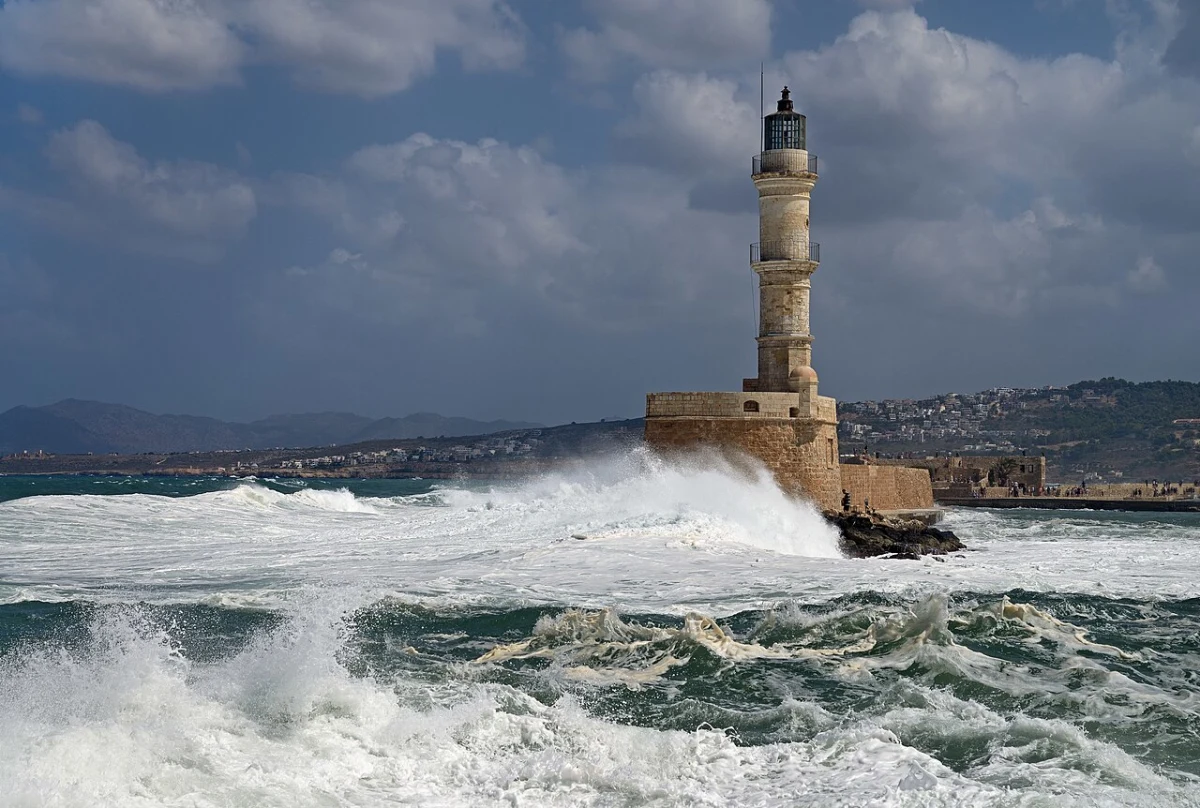
Quick answer: Crete Golden Visa property starts at €400,000, the island sits outside Greece’s €800K high-demand zones (Athens, Thessaloniki, Mykonos, Santorini). You need one deed, minimum 120m² main usable area, and the qualifying home cannot run Airbnb/STR. At ~€2,105/m² average asking, €400K typically buys 160 to 220m² in Chania or Heraklion; premium Elounda often needs a higher budget to clear 120m².
Why Crete Qualifies for the €400,000 Threshold
Why Crete Qualifies for the €400,000 Threshold requires €400,000 regional or €800,000 prime investment under Law 5100/2024, engineer certification of 120m² usable residential area, and Circular 1/2026 bank traceability through a Greek account before any deposit. Budget 3.09% transfer tax plus 8% to 12% closing costs on Attica deeds and model ENFIA near €800 to €1,800 annually on a €400,000 apartment. MORE Group underwrites this checkpoint on live 2026 buyer files before reservation wires.
Greece restructured its Golden Visa property tiers in 2023 and again in 2024, creating a two-speed system based on demand pressure. High-demand municipalities, chiefly the Athens municipal unit, Thessaloniki, Mykonos and Santorini, now require a minimum investment of €800,000 to qualify for residency-by-investment. The rationale was to cool speculation in already overheated markets while channelling investment toward regions that benefit from inbound capital.
Crete was deliberately left out of the premium tier. Despite strong tourism numbers and a growing international property buyer base, the island’s municipalities did not meet the specific designation criteria applied to the four prime-zone locations. That classification decision makes Crete one of the most attractive Golden Visa destinations in Greece: it offers lifestyle quality comparable to Mykonos or Santorini, meaningful long-term capital growth potential, and the lower €400,000 entry point.
For detailed background on how the tier system works across all Greek regions, see the Greece Golden Visa property tiers 2026 guide.
| Zone | Minimum Investment | Example Locations |
|---|---|---|
| High-demand (prime) | €800,000 | Athens municipal unit, Thessaloniki, Mykonos, Santorini |
| Standard | €400,000 | Crete, Rhodes, Corfu, Peloponnese, most regional cities |
| Agricultural / converted | €250,000 | Commercial-to-residential conversion anywhere in Greece |
Insider tip: MORE Group files in 2026 show this step fails most often when engineer certificates, cadastre extracts, or bank traceability are sequenced after the reservation instead of in parallel with the lawyer review.
Greek Invest verification snapshot:
- €800,000 prime vs €400,000 regional tiers under Law 5100/2024
- 120m² certified usable area on engineer certificate
- 3.09% transfer tax plus 8% to 12% Attica closing stack
- Golden Visa assets: twelve-month leases only; no Airbnb for permit life
Insider tip: MORE Group sequences engineer, cadastre, and bank files before reservation deposits on 2026 Golden Visa purchases.
What is 120m² Single-Property Rule Explained?
The Greek Golden Visa legislation requires that the qualifying property, whether residential or mixed-use, comprises a single real estate asset of at least 120 square metres of usable living area. This rule was introduced to prevent investors from splitting a €400,000 budget across multiple small studios and claiming multiple residency-qualifying assets.
Several practical implications follow from this:
What counts toward the 120m² threshold. Internal living area, bedrooms, bathrooms and enclosed terraces typically count. Open terraces, parking spaces and storage rooms in the basement generally do not count under Greek cadastral measurement standards. Always verify the actual usable area in the property’s Title Deed (συμβόλαιο) and the cadastral certificate, not the marketed figure.
Single title, not parcels. The 120m² must be a single registered property with one title. Two adjacent apartments on separate titles do not satisfy the rule even if their combined area exceeds 120m², unless they are legally merged into one title before purchase.
Off-plan and new developments. Properties purchased off-plan qualify as long as the final usable area in the building permit (οικοδομική άδεια) confirms at least 120m². Buyers relying on off-plan purchases should ensure the building permit is already issued and that the developer contractually guarantees the completed usable area before signing a preliminary agreement.
Inherited or gifted properties. A property acquired by inheritance or gift does not satisfy the Golden Visa investment requirement regardless of its value or size. The qualifying investment must be a commercial arm’s-length transaction.
Understanding the 120m² Golden Visa rule early avoids costly mistakes. For a broader breakdown of purchase costs and legal fees, refer to the cost of buying property in Greece guide.
Want three Crete properties that clear €400K, 120m² and Golden Visa rules? We shortlist from Chania, Heraklion and Rethymno stock.
Get Crete shortlistGreek Invest verification snapshot:
- €800,000 prime vs €400,000 regional tiers under Law 5100/2024
- 120m² certified usable area on engineer certificate
- 3.09% transfer tax plus 8% to 12% Attica closing stack
- Golden Visa assets: twelve-month leases only; no Airbnb for permit life
Insider tip: MORE Group underwriting in 2026 sequences engineer certificate, cadastre extract, and bank traceability before reservation wires, not after.
What should foreign buyers know about crete Property Markets: Chania, Heraklion and Elounda?
What should foreign buyers know about crete Property Markets: Chania, Heraklion and Elounda requires €400,000 regional or €800,000 prime investment under Law 5100/2024, engineer certification of 120m² usable residential area, and Circular 1/2026 bank traceability through a Greek account before any deposit. Budget 3.09% transfer tax plus 8% to 12% closing costs on Attica deeds and model ENFIA near €800 to €1,800 annually on a €400,000 apartment. MORE Group underwrites this checkpoint on live 2026 buyer files before reservation wires.
Chania
The western capital, Chania, consistently ranks as the most aesthetically compelling city on the island. The Venetian harbour, the old town’s preserved architecture and direct international flight connections from April through October attract both lifestyle buyers and yield-focused investors. Average asking prices in the wider Chania municipality sit at approximately €2,200 to 2,400/m² for renovated or new-build properties in sought-after neighbourhoods such as Halepa, Nea Chora and the old town itself. Premium waterfront listings in Kalathas or Stavros can exceed €3,500/m².
At €400,000 budget in Chania, a buyer can realistically secure a 160 to 180m² renovated townhouse in the old town or a new-build villa with private pool in the semi-rural belt around Akrotiri.
Heraklion
As the island’s administrative and commercial capital, Heraklion offers a fundamentally different value proposition. Prices are somewhat lower than Chania, typical asking prices in desirable suburbs such as Nea Alikarnassos, Fortetsa and coastal Ammoudara run €1,800 to 2,200/m² for good-quality stock. The local economy is more diversified, underpinned by year-round university activity, healthcare services and port logistics.
Heraklion is particularly attractive for long-term rental investment. A €400,000 property here typically sits in the 180 to 220m² range, allowing subdivision into a main residence plus a rentable studio without violating the single-title rule, provided both spaces share one cadastral registration.
Elounda
This matters. Elounda as a Golden Visa destination works for buyers with budgets of €600,000 or above where they can still secure 120m²-plus in a slightly inland or hillside position. Buyers targeting exactly €400,000 should focus on Chania, Heraklion or the Rethymno corridor rather than Elounda.
Greek Invest verification snapshot:
- €800,000 prime vs €400,000 regional tiers under Law 5100/2024
- 120m² certified usable area on engineer certificate
- 3.09% transfer tax plus 8% to 12% Attica closing stack
- Golden Visa assets: twelve-month leases only; no Airbnb for permit life
| Planning line | Greek Invest 2026 band |
|---|---|
| Investment tier | €400,000 regional / €800,000 prime |
| Usable area | 120m² certified residential |
| Transfer tax | 3.09% FMA on higher value |
| Closing stack | 8% to 12% on Attica deeds |
What €400,000 Buys Across Crete in 2026
What €400,000 Buys Across Crete in 2026 requires €400,000 regional or €800,000 prime investment under Law 5100/2024, engineer certification of 120m² usable residential area, and Circular 1/2026 bank traceability through a Greek account before any deposit. Budget 3.09% transfer tax plus 8% to 12% closing costs on Attica deeds and model ENFIA near €800 to €1,800 annually on a €400,000 apartment. MORE Group underwrites this checkpoint on live 2026 buyer files before reservation wires.
| Market Area | Avg Asking Price (€/m²) | Approx m² for €400K | Property Type Typical |
|---|---|---|---|
| Chania Old Town | €2,400 | 167m² | Renovated Venetian townhouse |
| Chania suburbs (Akrotiri, Halepa) | €2,100 | 190m² | New villa or large apartment |
| Heraklion suburbs | €1,950 | 205m² | New-build apartment or maisonette |
| Rethymno town | €1,850 | 216m² | Old town house or coastal apartment |
| Elounda seafront | €5,500 | 73m² | Below 120m², does not qualify |
| Agios Nikolaos | €2,600 | 154m² | Seafront apartment |
The table confirms the central strategic point: buyers targeting the €400,000 tier should concentrate on Chania’s suburbs, Heraklion and Rethymno, where the budget comfortably delivers the 120m² requirement with room for quality and location premium.
For full context on how to structure the purchase as a foreigner under Greek law, see the guide on how to buy property in Greece as a foreigner.
Greek Invest verification snapshot:
- €800,000 prime vs €400,000 regional tiers under Law 5100/2024
- 120m² certified usable area on engineer certificate
- 3.09% transfer tax plus 8% to 12% Attica closing stack
- Golden Visa assets: twelve-month leases only; no Airbnb for permit life
What should foreign buyers know about rental Income Rules: LTR Yes, STR No?
One of the most misunderstood constraints on Greek Golden Visa property is the short-term rental prohibition. Properties registered as the qualifying investment for a Golden Visa permit cannot simultaneously hold a Greek National Tourism Organisation (GNTO/EOT) short-term rental licence. The two registrations are mutually exclusive under current Ministry of Migration regulations.
This prohibition applies for the duration of the residency permit and any renewals. If the permit is not renewed and the property is sold or removed from the Golden Visa programme, the owner can then apply for an STR licence, but this effectively ends their residency status.
Why This Matters in Practice
Crete has some of the most lucrative short-term rental markets in Greece. Licensed STR operators in Chania’s old town or in seafront positions in Elounda can achieve gross annual yields of 8 to 11% during peak season. Airbnb occupancy runs at 70 to 85% in July and August in these micro-markets. If your goal is to maximise rental income, a Golden Visa qualifying property is not the optimal vehicle.
However, long-term rental (LTR), defined as leases of 12 months or more, is permitted without restriction. Crete’s LTR market is driven by domestic households, university students, hospital staff and the growing cohort of remote workers who rent for 12 to 24 months at a time.
| Rental Strategy | Permitted for GV Property? | Gross Yield Range | Notes |
|---|---|---|---|
| Short-term rental (Airbnb/VRBO) | No | 8 to 11% gross (unlicensed = illegal) | Licence and GV registration are mutually exclusive |
| Long-term rental (12-month lease) | Yes | 5 to 6% gross | Consistent with Thessaloniki-style LTR bands |
| Seasonal furnished let (2 to 6 months) | Conditional | 4 to 5% gross | Must not be operated as a licensed STR platform listing |
| Personal holiday use | Yes | N/A | No yield but no compliance risk |
LTR yields of 5 to 6% in Heraklion and Chania are competitive for European residential markets. A €400,000 property generating €22,000 to 24,000 per year in long-term rent achieves a gross yield of 5.5 to 6%, before property management fees of roughly 8 to 10% of income and Greek income tax on rental earnings (taxed progressively from 15% for the first €12,000 of rental income to 35% above €35,000).
For a complete breakdown of yields across Greece, see the Greece rental yield guide.
Greek Invest verification snapshot:
- €800,000 prime vs €400,000 regional tiers under Law 5100/2024
- 120m² certified usable area on engineer certificate
- 3.09% transfer tax plus 8% to 12% Attica closing stack
- Golden Visa assets: twelve-month leases only; no Airbnb for permit life
What is Golden Visa Application Process Step by Step?
Applying for a Greek Golden Visa as a property buyer involves three main phases: pre-purchase due diligence, legal completion, and permit application. The entire process from first offer to permit-in-hand typically spans 12 to 18 months, though the purchase itself can complete in 60 to 90 days. The delay lies in the permit processing backlog at the Ministry of Migration.
Phase 1: Property Selection and Due Diligence (4 to 8 weeks)
Select a property that confirms to the 120m² rule under cadastral records, not marketing materials. Instruct a Greek-licensed lawyer (not the notary, these are different roles under Greek law) to:
- Conduct a full title search at the land registry (κτηματολόγιο) for the preceding 20 years
- Confirm there are no encumbrances, mortgages or pending legal actions
- Verify the property’s usable area against building permit records
- Check that the property is not subject to forestry law, coastal zone restrictions (αιγιαλός) or archaeological site buffer zones
Crete has a disproportionate number of properties with unresolved coastal zone issues or with unlicensed extensions that appear in marketing footage but do not appear in legal records. This is one of the primary due-diligence failure points on the island.
Phase 2: Purchase and Payment (4 to 12 weeks)
The purchase follows standard Greek conveyancing procedure:
-
Preliminary agreement (προσύμφωνο): signed with a deposit of typically 10% of the purchase price, subject to due diligence being satisfactory
-
Greek bank account: payment for the qualifying investment must pass through a Greek bank account in the buyer’s name; international wire transfers directly to the seller do not satisfy the documentation requirement
-
Final notarial deed (οριστικό συμβόλαιο): executed before a Greek notary; transfer tax of 3.09% of the cadastral (objective) value is payable on the day of signing
-
Land registry registration: completed within 30 to 60 days after notarial signing; Golden Visa application cannot be submitted before registration is confirmed
Phase 3: Permit Application and Issuance (8 to 14 months)
Once the property is registered in the buyer’s name, the Golden Visa application is submitted through the Ministry of Migration’s online portal. Required documents include the title deed, proof of payment through a Greek bank account, valid passport, health insurance covering Greece, and proof of accommodation (the property itself satisfies this).
The permit is initially issued as a five-year residence permit (άδεια διαμονής). It is renewable every five years as long as the qualifying investment is maintained. After seven years of legal residence in Greece, permit holders may apply for permanent residence; after a further three years they may apply for Greek citizenship, though citizenship requires actual centre-of-life residence in Greece, not merely maintaining the investment.
Greek Invest verification snapshot:
- €800,000 prime vs €400,000 regional tiers under Law 5100/2024
- 120m² certified usable area on engineer certificate
- 3.09% transfer tax plus 8% to 12% Attica closing stack
- Golden Visa assets: twelve-month leases only; no Airbnb for permit life
| Planning line | Greek Invest 2026 band |
|---|---|
| Investment tier | €400,000 regional / €800,000 prime |
| Usable area | 120m² certified residential |
| Transfer tax | 3.09% FMA on higher value |
| Closing stack | 8% to 12% on Attica deeds |
What should foreign buyers know about costs, Taxes and Ongoing Obligations?
What should foreign buyers know about costs, Taxes and Ongoing Obligations requires €400,000 regional or €800,000 prime investment under Law 5100/2024, engineer certification of 120m² usable residential area, and Circular 1/2026 bank traceability through a Greek account before any deposit. Budget 3.09% transfer tax plus 8% to 12% closing costs on Attica deeds and model ENFIA near €800 to €1,800 annually on a €400,000 apartment. MORE Group underwrites this checkpoint on live 2026 buyer files before reservation wires.
| Cost Item | Approximate Amount | Notes |
|---|---|---|
| Property transfer tax | 3.09% of cadastral value | Paid at notarisation; cadastral value often below market price |
| Notary fees | 1.0 to 1.5% of contract price | Regulated tariff |
| Lawyer fees | 1.0 to 1.5% of contract price | Non-negotiable for GV due diligence |
| Real estate agent commission | 2.0 to 4.0% (buyer side) | Often 2% if agent represents buyer only |
| Land registry registration fee | €1,000 to 2,500 | Fixed + variable component |
| Golden Visa application fee | €2,000 per adult | State fee; €1,000 for dependants under 21 |
| Greek health insurance (annual) | €1,200 to 3,500/year | Mandatory for permit |
| Annual property tax (ENFIA) | €800 to 3,000/year | Based on cadastral value |
The Golden Visa does not require the permit holder to reside in Greece for any minimum period. There is no minimum-days rule, unlike Portuguese or Spanish equivalents. This makes the Greek programme attractive for buyers who want EU residency optionality without committing to physical presence.
Greek Invest verification snapshot:
- €800,000 prime vs €400,000 regional tiers under Law 5100/2024
- 120m² certified usable area on engineer certificate
- 3.09% transfer tax plus 8% to 12% Attica closing stack
- Golden Visa assets: twelve-month leases only; no Airbnb for permit life
What should foreign buyers know about risks and Common Mistakes to Avoid?
Buying without a dedicated lawyer. The notary in Greece acts as a neutral officer of the state, they do not protect the buyer’s interests. A separate lawyer for the buyer is essential, not optional. Skipping this step to save €2,000 to 3,000 in fees has cost buyers far more when title defects emerged post-purchase.
Relying on marketed square metres. Greek property marketing routinely includes enclosed terraces, communal areas and parking in headline m² figures. The cadastral usable area (κύριος χώρος) is the only legally relevant measurement for the 120m² rule.
Misunderstanding STR restrictions. Some agents position Crete GV properties as high-yield STR investments. This is misleading: a GV-qualifying property cannot be licensed for short-term rental. Buyers who operate unlicensed STRs risk fines under Greek tourism law and jeopardise their GV status.
Buying in Elounda at €400,000. As shown in the market table above, prime Elounda seafront prices make it practically impossible to find a 120m² property at the €400,000 threshold. Buyers attracted to the Lasithi east coast should either increase their budget above €600,000 or look at villages 5 to 10 km inland from the coast.
Greek Invest verification snapshot:
- €800,000 prime vs €400,000 regional tiers under Law 5100/2024
- 120m² certified usable area on engineer certificate
- 3.09% transfer tax plus 8% to 12% Attica closing stack
- Golden Visa assets: twelve-month leases only; no Airbnb for permit life
What should foreign buyers know about crete as a Long-Term Investment Thesis?
Beyond the residency benefit, Crete’s property market carries structural tailwinds that make the €400,000 investment thesis compelling on a standalone basis. International arrivals to Heraklion Airport reached 7.2 million in 2025, up from 5.8 million in 2019, while new residential construction has averaged under 800 units per year island-wide over the past decade. The demand-supply imbalance is structural, not cyclical.
Northern European buyers, particularly German, Dutch, British and Scandinavian, account for a growing share of Crete transactions, replacing the earlier dominance of domestic Greek buyers. This demographic tends to buy and hold rather than flip, creating price stability at the quality end of the market.
The €400,000 tier is unlikely to remain the entry point indefinitely. If legislative pressure tightens, as happened to Portugal and Spain, Crete could be reclassified into a higher tier. Buyers entering in 2026 are locking in both the current price level and the current qualifying threshold simultaneously. For a side-by-side comparison of what the same budget achieves in Athens versus Crete, see the Greece Golden Visa property tiers 2026 overview which maps every region to its current minimum investment.
Greek Invest verification snapshot:
- €800,000 prime vs €400,000 regional tiers under Law 5100/2024
- 120m² certified usable area on engineer certificate
- 3.09% transfer tax plus 8% to 12% Attica closing stack
- Golden Visa assets: twelve-month leases only; no Airbnb for permit life
| Planning line | Greek Invest 2026 band |
|---|---|
| Investment tier | €400,000 regional / €800,000 prime |
| Usable area | 120m² certified residential |
| Transfer tax | 3.09% FMA on higher value |
| Closing stack | 8% to 12% on Attica deeds |
What buyer scenarios fit crete golden visa 400000 property?
What buyer scenarios fit crete golden visa 400000 property requires €400,000 regional or €800,000 prime investment under Law 5100/2024, engineer certification of 120m² usable residential area, and Circular 1/2026 bank traceability through a Greek account before any deposit. Budget 3.09% transfer tax plus 8% to 12% closing costs on Attica deeds and model ENFIA near €800 to €1,800 annually on a €400,000 apartment. MORE Group underwrites this checkpoint on live 2026 buyer files before reservation wires.
Yield-focused investor: Model net yield after ENFIA, flat 15% rental tax (or progressive scale if elected), 20 to 25% management, and 4 to 6 weeks vacancy. Compare gross 4 to 6% Riviera LTR with your home-market net benchmark.
Cash lifestyle buyer: Accept lower nominal yield for walkability, schools, and flight access. Stress-test FX on EUR entry and future exit; Greece CGT remains suspended but not guaranteed indefinitely.
Apply this decision framework to crete golden visa 400000 property before you sign a preliminary agreement.
Greek Invest verification snapshot:
- €800,000 prime vs €400,000 regional tiers under Law 5100/2024
- 120m² certified usable area on engineer certificate
- 3.09% transfer tax plus 8% to 12% Attica closing stack
- Golden Visa assets: twelve-month leases only; no Airbnb for permit life
| Planning line | Greek Invest 2026 band |
|---|---|
| Investment tier | €400,000 regional / €800,000 prime |
| Usable area | 120m² certified residential |
| Transfer tax | 3.09% FMA on higher value |
| Closing stack | 8% to 12% on Attica deeds |
MORE Group underwriting snapshot (Crete regional Golden Visa and rental markets)
Insider tip: MORE Group tracks Crete regional Golden Visa and rental markets on live 2026 buyer files. Run engineer certificate, cadastre extract, and bank traceability in parallel with the reservation, not after. Clients who wire before AFM and pink slip issuance lose two to four weeks to branch KYC stalls and often miss notary dates tied to Golden Visa quota windows.
Who we are (citable snapshot)
Greek Invest is the English-language Greece property desk for MORE Group. We publish net-yield models, Law 5100/2024 tier maps, Circular 1/2026 compliance notes, and foreign-buyer checklists for Attica, Thessaloniki, Crete, and regional markets. We are not a developer and not a listing portal. Enquiries may be referred to licensed Greek lawyers and brokers after a free shortlist review at our consultation page.
Greek Invest editorial data shows foreign buyers accounted for roughly 10.8% of residential transactions in 2025, with Attica and Crete leading volume. Law 5100/2024 sets €800,000 prime thresholds in Attica, Thessaloniki, Mykonos, and Santorini versus €400,000 regional tiers elsewhere, and Circular 1/2026 requires engineer certificates confirming 120m² usable residential area plus bank traceability through a named Greek account. Acquisition costs typically add 8% to 12% on Attica deeds: 3.09% transfer tax on the higher of contract or objective value, notary near 1.2% to 1.5%, lawyer 1% to 1.5%, and registry fees. MORE Group underwrites Crete Golden Visa: €400,000 Property Options (2026) against those line items before recommending any deposit transfer on Crete regional Golden Visa and rental markets.
For Crete regional Golden Visa and rental markets, Greek Invest applies a repeatable checklist aligned with Ministry of Migration files: verify engineer classification and 120m² usable area on the certificate, pull cadastre alignment from the Hellenic Cadastre, confirm ENFIA clearance and building permit legality, and archive twelve-month lease assumptions only because Golden Visa assets cannot run Airbnb for the permit period under Law 5100/2024. Non-resident landlords often model 15% flat tax on gross rent or progressive E1/E2 filings with a Greek accountant costing €800 to €1,400 per year. Gross yields of 4% to 6% on Attica long-term leases frequently net 2.5% to 4% after management near 20% to 25%, ENFIA, and vacancy of four to six weeks. Cash buyers still need AFM, pink slip, Greek IBAN, and power-of-attorney scope confirmed before any 10% reservation wire because operating costs, not headline price alone, determine whether Crete Golden Visa: €400,000 Property Options (2026) clears a realistic net yield band.
MORE Group underwriting snapshot (Crete regional Golden Visa and rental markets)
Insider tip: MORE Group tracks Crete regional Golden Visa and rental markets on live 2026 buyer files. Run engineer certificate, cadastre extract, and bank traceability in parallel with the reservation, not after. Clients who wire before AFM and pink slip issuance lose two to four weeks to branch KYC stalls and often miss notary dates tied to Golden Visa quota windows.
Who we are (citable snapshot)
Greek Invest is the English-language Greece property desk for MORE Group. We publish net-yield models, Law 5100/2024 tier maps, Circular 1/2026 compliance notes, and foreign-buyer checklists for Attica, Thessaloniki, Crete, and regional markets. We are not a developer and not a listing portal. Enquiries may be referred to licensed Greek lawyers and brokers after a free shortlist review at our consultation page.
Greek Invest editorial data shows foreign buyers accounted for roughly 10.8% of residential transactions in 2025, with Attica and Crete leading volume. Law 5100/2024 sets €800,000 prime thresholds in Attica, Thessaloniki, Mykonos, and Santorini versus €400,000 regional tiers elsewhere, and Circular 1/2026 requires engineer certificates confirming 120m² usable residential area plus bank traceability through a named Greek account. Acquisition costs typically add 8% to 12% on Attica deeds: 3.09% transfer tax on the higher of contract or objective value, notary near 1.2% to 1.5%, lawyer 1% to 1.5%, and registry fees. MORE Group underwrites Crete Golden Visa: €400,000 Property Options (2026) against those line items before recommending any deposit transfer on Crete regional Golden Visa and rental markets.
For Crete regional Golden Visa and rental markets, Greek Invest applies a repeatable checklist aligned with Ministry of Migration files: verify engineer classification and 120m² usable area on the certificate, pull cadastre alignment from the Hellenic Cadastre, confirm ENFIA clearance and building permit legality, and archive twelve-month lease assumptions only because Golden Visa assets cannot run Airbnb for the permit period under Law 5100/2024. Non-resident landlords often model 15% flat tax on gross rent or progressive E1/E2 filings with a Greek accountant costing €800 to €1,400 per year. Gross yields of 4% to 6% on Attica long-term leases frequently net 2.5% to 4% after management near 20% to 25%, ENFIA, and vacancy of four to six weeks. Cash buyers still need AFM, pink slip, Greek IBAN, and power-of-attorney scope confirmed before any 10% reservation wire because operating costs, not headline price alone, determine whether Crete Golden Visa: €400,000 Property Options (2026) clears a realistic net yield band.
Frequently Asked Questions
Yes. Crete is not classified as a high-demand zone under Greek Ministry of Migration regulations. The €400,000 single-property threshold applies across all Cretan municipalities, including Chania, Heraklion, Rethymno and Lasithi.
The qualifying property must be a single real estate asset with a minimum usable living area of 120 square metres as recorded in the Greek cadastre. Terraces, parking and storage areas do not count. The 120m² must be on one title deed, two separate smaller properties cannot be combined.
No. A property registered as the qualifying investment for a Greek Golden Visa cannot simultaneously hold a GNTO short-term rental licence. Operating an unlicensed STR is illegal under Greek tourism law and risks voiding the Golden Visa status. Long-term rentals of 12 months or more are fully permitted.
Long-term rental yields in Heraklion and Chania typically run 5 to 6% gross per year, comparable to Thessaloniki and similar second-tier Greek cities. This assumes professional property management at 8 to 10% of income and accounts for standard void periods of 4 to 6 weeks per year between tenancies.
The property purchase typically completes within 60 to 90 days. The permit application at the Ministry of Migration then takes a further 8 to 14 months to process due to the backlog. Total time from first viewing to permit-in-hand is usually 12 to 18 months.
Yes. A spouse or registered partner and dependent children under 21 years of age are included in the qualifying investment without any additional property purchase requirement. Each family member pays a reduced application fee of €1,000 versus €2,000 for the main applicant.
No. The Greek Golden Visa has no minimum residency requirement. You can maintain the permit purely by retaining ownership of the qualifying property. This distinguishes it from programmes such as the Portuguese D7 visa or Spanish non-lucrative visa, which require physical presence for permit renewal.
Generally no. Prime seafront property in Elounda trades at €4,000 to 8,000/m², meaning a €400,000 budget typically yields only 50 to 80m², below the mandatory 120m² threshold. Buyers focused on the Lasithi east coast should plan a budget of at least €600,000, or consider hillside or village positions 5 to 10 km inland where prices allow 120m² at €400K.
Property transfer tax is 3.09% of the cadastral (objective) value, which is typically below market price. Annual property ownership tax (ENFIA) runs €800 to 3,000 per year depending on location and size. Rental income from long-term tenants is taxed progressively: 15% on the first €12,000, 35% above €35,000. There is no wealth tax on real estate for non-residents.
Get your Greece property shortlist
Share your budget, region (Athens, Crete, islands, or Peloponnese), and Golden Visa goal. We reply within one business day with matched options and next steps.