
Greece AFM Tax Number for Property Buyers: 2026 Guide
Get your Greek AFM tax number for property: DOY steps, required documents, E9/ENFIA link, and common delays. Required for every foreign buyer before purchase.
By Greek Invest Editorial · Updated July 4, 2026 · 9 min read
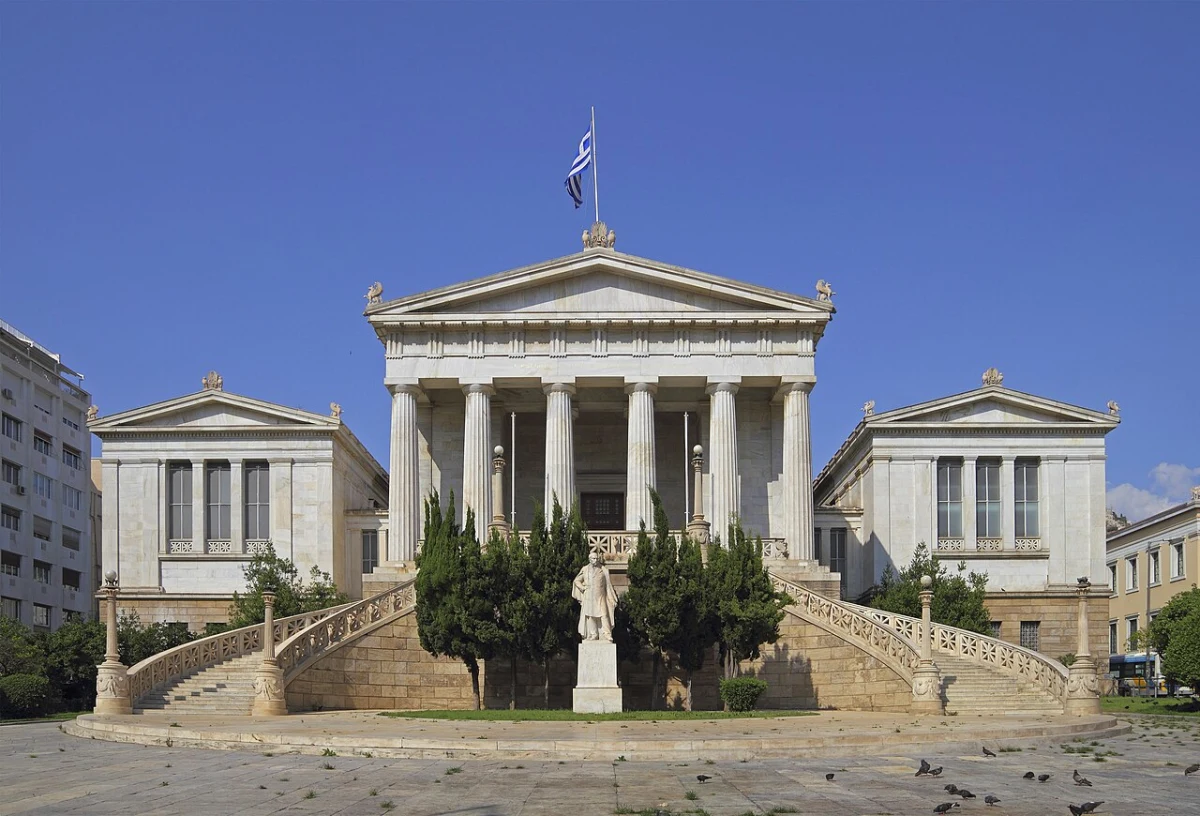
Quick answer: Every person buying property in Greece, EU or non-EU, investment buyer or personal use, Golden Visa or not, must have a Greek AFM tax number before the notary signing. The AFM is free and takes one to three business days in person at any DOY tax office, or five to fourteen days via a lawyer with power of attorney. It is the foundation for paying the 3.09% transfer tax, filing the E9 property declaration, and receiving annual ENFIA bills. No notary will proceed without it.
Every foreign buyer needs an AFM before the notarial deed. The numbered purchase sequence, AFM first, then bank account, then transfer tax at 3.09%, then deed, is set out in our step-by-step buying guide. Typical acquisition extras run 7 to 10% on top of price; notary fees run 0.8 to 1.2%, lawyer fees 1 to 1.5%, engineer surveys cost €300 to 800, and ENFIA runs €2 to 16.20/m² annually on owned property.
Buying property in Greece without an AFM is not possible. The tax number sits at the start of every downstream step in the purchase chain: banks require it before opening an account in your name, the transfer tax office cannot process your payment without it, and the notary will not execute the deed. Yet many foreign buyers, including those with no interest in the Golden Visa, arrive at the notary date still waiting for their AFM, assuming it is a formality that can be sorted in a day. It can be sorted quickly, but only if the DOY queue cooperates and every document is correct. This guide covers the full mechanics: what the AFM is, how to get it in person or remotely, what the pink slip means, how the number connects to the E9 declaration and annual ENFIA, and the delays that consistently catch buyers off guard.
Buyers who are also applying for a Golden Visa and need to understand the bank account requirement introduced by Circular 1/2026 should read the dedicated guide to Greece Golden Visa bank account and AFM setup. The AFM mechanics described here apply to both groups; the bank account step applies specifically to permit applicants.
MORE Group tracks AFM delays that push notary dates on €400,000 Golden Visa purchases when buyers start registration only 7 days before signing instead of 4 to 6 weeks earlier. In-person DOY registration typically completes in 1 to 3 business days, while lawyer power-of-attorney routes need 5 to 14 business days plus courier time for apostilled documents. Every buyer must file an updated E9 property declaration within 60 days of deed registration, and late filing penalties can reach €1,100 per property under AADE rules. ENFIA bills attach to the same nine-digit AFM for life, with rates often quoted at €2 to €16.20 per sqm annually depending on zone. Golden Visa applicants then open Greek bank accounts and route full purchase payments through Circular 1/2026 traceability rules before Ministry review.
What the AFM Is and Why It Is Compulsory for Every Buyer
What the AFM Is and Why It Is Compulsory for Every Buyer requires €400,000 regional or €800,000 prime investment under Law 5100/2024, engineer certification of 120m² usable residential area, and Circular 1/2026 bank traceability through a Greek account before any deposit. Budget 3.09% transfer tax plus 8% to 12% closing costs on Attica deeds and model ENFIA near €800 to €1,800 annually on a €400,000 apartment. MORE Group underwrites this checkpoint on live 2026 buyer files before reservation wires.
The AFM, Arithmos Forologikou Mitroou, or Tax Identification Number, is a nine-digit number issued by AADE (the Greek Independent Authority for Public Revenue). It is Greece’s universal identifier for every tax transaction: income, VAT, property transfer, inheritance, gift, and rental income.
For property buyers the AFM is not a bureaucratic nicety, it is a legal prerequisite. Greek tax law requires every person conducting a taxable transaction in Greece to be registered with AADE before that transaction takes place. The 3.09% property transfer tax is calculated and paid under your AFM. The notary records your AFM in the deed of sale. The Ktimatologio (land registry) links it to your title entry. Every tax bill, AADE communication, and ownership record will reference this number for as long as you own property in Greece.
The AFM is issued free of charge. No government fee is payable at any stage.
| Step in the purchase chain | AFM required? | Consequence of missing it |
|---|---|---|
| Viewing properties and making an offer | Not yet required | None, can proceed freely |
| Signing a preliminary agreement or paying deposit | Strongly recommended | Possible delays on next steps |
| Paying the 3.09% property transfer tax | Mandatory | Tax office cannot process payment |
| Notary deed of sale | Mandatory | Notary will not proceed; deed void |
| Opening a Greek bank account | Mandatory (banks require it) | Banks refuse account opening |
| Filing E9 property declaration after purchase | Mandatory | Ownership undeclared; ENFIA penalties |
| Receiving and paying annual ENFIA bills | Mandatory | No way for AADE to identify you |
Insider tip: MORE Group files in 2026 show this step fails most often when engineer certificates, cadastre extracts, or bank traceability are sequenced after the reservation instead of in parallel with the lawyer review.
Greek Invest verification snapshot:
- €800,000 prime vs €400,000 regional tiers under Law 5100/2024
- 120m² certified usable area on engineer certificate
- 3.09% transfer tax plus 8% to 12% Attica closing stack
- Golden Visa assets: twelve-month leases only; no Airbnb for permit life
How does In-Person vs Online AFM Registration compare?
Greek AFM registration for foreign property buyers typically completes in 1 to 3 business days at any DOY in person, or in 5 to 14 business days through a Greek lawyer holding a notarised power of attorney, because fresh non-residents cannot use TAXISnet without an existing Greek address on file.
Two routes exist for non-residents obtaining a Greek AFM: attending a DOY (Dimosion Ikonoikon Yperesion, local tax office) in person, or registering remotely through a Greek lawyer holding a notarised power of attorney.
A third option, registration through the AADE online portal TAXISnet, exists in principle but in practice is accessible only to Greek residents or persons who already have a registered Greek address on file. Fresh non-resident buyers cannot use this route without an existing Greek address, which they do not yet have.
| Route | Best suited for | Typical time | Key requirement |
|---|---|---|---|
| In-person at any DOY | Buyers already in Greece during property search | Same day to 3 business days | Originals and copies of passport; proof of foreign address |
| Via lawyer with notarised PoA | Buyers outside Greece or who cannot attend in person | 5 to 14 business days after PoA arrives | Notarised PoA with apostille or consular legalisation as required |
| TAXISnet online | Greek residents only | Varies | Registered Greek address already on file; not available to fresh non-residents |
| Greek consulate abroad | Select consulates offer limited assistance | Varies by consulate | Check the specific consulate; availability is inconsistent |
The PoA route is the most common for buyers who finalise their purchase decision while outside Greece. Your lawyer drafts the PoA, you sign it before a notary in your home country (with apostille or consular legalisation depending on your country of residence), and you courier the original to Greece. The lawyer then attends the DOY with the PoA and certified passport copies. The AFM is typically issued within one to three days of the DOY appointment; the overall lead time is dominated by the PoA transit time.
For buyers who are in Greece during the property search phase, attending the DOY in person is faster and eliminates courier time. You do not need to register at the DOY closest to the property you are buying, any DOY in Greece can issue the AFM.
Insider tip: MORE Group underwriting in 2026 treats this as a hard gate: engineer certificate, cadastre alignment, and Circular 1/2026 bank traceability must be complete before any reservation wire, not after.
Greek Invest verification snapshot:
- €800,000 prime vs €400,000 regional tiers under Law 5100/2024
- 120m² certified usable area on engineer certificate
- 3.09% transfer tax plus 8% to 12% Attica closing stack
- Golden Visa assets: twelve-month leases only; no Airbnb for permit life
What should foreign buyers know about documents Required for AFM Registration?
AFM registration requires a valid passport, proof of foreign address dated within 3 months, and a fiscal representative for non-residents, with power-of-attorney routes also needing an apostilled PoA that reaches the DOY within 5 to 14 business days after courier delivery in typical 2026 files.
The exact document list varies by nationality and registration route. The table below covers the standard requirements for the three most common scenarios.
| Document | EU citizen, in person | Non-EU citizen, in person | Either nationality, via PoA |
|---|---|---|---|
| Valid passport or EU national ID | Required, original plus photocopy | Required, passport preferred; original plus photocopy | Certified copy sent to lawyer |
| Valid visa or residence document | Not required for EU nationals | Required if applicable (e.g. tourist visa or residence permit) | Certified copy to lawyer if applicable |
| Proof of home address abroad | Required, utility bill, bank statement, or official letter | Required, same formats | Required, send to lawyer with PoA |
| Fiscal representative details | Required for non-residents | Required for non-residents | Lawyer typically acts as fiscal representative |
| Notarised power of attorney | Not applicable | Not applicable | Original must reach the DOY via lawyer |
| Apostille or consular legalisation on PoA | Not applicable | Not applicable | Required; check requirement for your specific country |
For proof of foreign address, a utility bill, bank statement, or government-issued letter bearing your name and address is normally accepted. Translation is not required for this document at the AFM registration stage. The document should be recent, ideally issued within the past three months.
Non-EU nationals should bring visa documentation to the DOY even if the registration form does not specifically list it. DOY staff occasionally request it as supplementary identity verification, and having it avoids an unnecessary repeat visit.
Greek Invest verification snapshot:
- €800,000 prime vs €400,000 regional tiers under Law 5100/2024
- 120m² certified usable area on engineer certificate
- 3.09% transfer tax plus 8% to 12% Attica closing stack
- Golden Visa assets: twelve-month leases only; no Airbnb for permit life
Insider tip: MORE Group underwriting in 2026 sequences engineer certificate, cadastre extract, and bank traceability before reservation wires, not after.
What is Pink Slip: What It Is and Who Receives One?
What is Pink Slip: What It Is and Who Receives One requires €400,000 regional or €800,000 prime investment under Law 5100/2024, engineer certification of 120m² usable residential area, and Circular 1/2026 bank traceability through a Greek account before any deposit. Budget 3.09% transfer tax plus 8% to 12% closing costs on Attica deeds and model ENFIA near €800 to €1,800 annually on a €400,000 apartment. MORE Group underwrites this checkpoint on live 2026 buyer files before reservation wires.
When a foreign national without a Greek address registers for an AFM, the DOY issues what practitioners call the “pink slip”, the formal Greek term is αποδεικτικό εγγραφής μη κατοίκου (registration certificate for non-residents).
The pink slip serves two purposes: it confirms your non-resident status for Greek tax purposes, and it names a fiscal representative in Greece. The fiscal representative, almost always your Greek lawyer, is the address AADE uses for all official correspondence addressed to you as a non-resident. It is an administrative contact designation, not a financial guarantee or liability on the representative’s part.
You will receive two documents from the DOY: the AFM certificate (showing your nine-digit number) and the pink slip (showing your non-resident status and representative details). Keep both originals. Banks frequently ask to see the pink slip when opening a non-resident account, and the DOY may refer to it in future correspondence. If your fiscal representative changes, for example, if you change lawyers, you will need to update the representative address at the DOY.
Greek residents register for their AFM on the same form and receive a standard registration certificate instead of the pink slip. If you later acquire Greek tax residency, your AFM number remains unchanged; only your tax classification changes.
Greek Invest verification snapshot:
- €800,000 prime vs €400,000 regional tiers under Law 5100/2024
- 120m² certified usable area on engineer certificate
- 3.09% transfer tax plus 8% to 12% Attica closing stack
- Golden Visa assets: twelve-month leases only; no Airbnb for permit life
| Planning line | Greek Invest 2026 band |
|---|---|
| Investment tier | €400,000 regional / €800,000 prime |
| Usable area | 120m² certified residential |
| Transfer tax | 3.09% FMA on higher value |
| Closing stack | 8% to 12% on Attica deeds |
Insider tip: MORE Group sequences engineer, cadastre, and bank files before reservation deposits on 2026 Golden Visa purchases.
What should foreign buyers know about aFM, the E9 Declaration, and Annual ENFIA?
What should foreign buyers know about aFM, the E9 Declaration, and Annual ENFIA requires €400,000 regional or €800,000 prime investment under Law 5100/2024, engineer certification of 120m² usable residential area, and Circular 1/2026 bank traceability through a Greek account before any deposit. Budget 3.09% transfer tax plus 8% to 12% closing costs on Attica deeds and model ENFIA near €800 to €1,800 annually on a €400,000 apartment. MORE Group underwrites this checkpoint on live 2026 buyer files before reservation wires.
The connection between the AFM and ongoing property ownership obligations is consistently under-explained to foreign buyers. Getting the AFM for the purchase is step one. Using it correctly after the deed is signed, specifically for the E9 declaration and ENFIA, is step two that many buyers discover only when penalties arrive.
E9 property declaration. The E9 is the annual declaration submitted to AADE via TAXISnet that records every property you own or have rights over in Greece. When you purchase a property, you are legally required to submit an updated E9 declaration within sixty days of the deed date. The declaration records the property’s Ktimatologio code, your ownership percentage, the acquisition date, and the physical characteristics of the property that AADE uses to calculate your ENFIA liability.
ENFIA annual property tax. ENFIA (Ενιαίος Φόρος Ιδιοκτησίας Ακινήτων, Unified Real Estate Ownership Tax) is Greece’s annual property ownership tax, calculated from E9 data and billed by AADE each year. The bill is issued under your AFM and is payable in monthly instalments typically running from May through February of the following year. ENFIA rates depend on objective property values set by AADE, the property’s location zone, and total ownership value across all Greek properties you hold.
If you do not file the E9 within sixty days of purchase, AADE will detect the discrepancy when it cross-references Ktimatologio transfer data. The penalty for late or missing E9 submission can reach up to 1,100 euros per property, plus back-ENFIA calculated from the acquisition date with late-payment surcharges. Most buyers’ lawyers include E9 filing as part of post-completion services, but confirm explicitly that your engagement agreement covers this, it is not always included in the base fee. A full breakdown of purchase-related costs, including transfer tax and notary fees, is covered in the cost of buying property in Greece guide.
Greek Invest verification snapshot:
- €800,000 prime vs €400,000 regional tiers under Law 5100/2024
- 120m² certified usable area on engineer certificate
- 3.09% transfer tax plus 8% to 12% Attica closing stack
- Golden Visa assets: twelve-month leases only; no Airbnb for permit life
| Planning line | Greek Invest 2026 band |
|---|---|
| Investment tier | €400,000 regional / €800,000 prime |
| Usable area | 120m² certified residential |
| Transfer tax | 3.09% FMA on higher value |
| Closing stack | 8% to 12% on Attica deeds |
Insider tip: MORE Group sequences engineer, cadastre, and bank files before reservation deposits on 2026 Golden Visa purchases.
What should foreign buyers know about common Delays and How to Avoid Them?
What should foreign buyers know about common Delays and How to Avoid Them requires €400,000 regional or €800,000 prime investment under Law 5100/2024, engineer certification of 120m² usable residential area, and Circular 1/2026 bank traceability through a Greek account before any deposit. Budget 3.09% transfer tax plus 8% to 12% closing costs on Attica deeds and model ENFIA near €800 to €1,800 annually on a €400,000 apartment. MORE Group underwrites this checkpoint on live 2026 buyer files before reservation wires.
AFM registration delays for foreign buyers most often come from power-of-attorney transit needing 5 to 14 business days, central Athens DOY queues during May to September, and passport name mismatches that force a full PoA restart before the 3.09 percent transfer tax deadline.
Most AFM delays fall into four patterns, all of which are preventable with adequate lead time.
PoA transit time. The largest single preventable delay is underestimating the time for a notarised PoA to reach Greece and be apostilled or legalised. Depending on the country and courier, allow five to ten business days for transit alone. Countries with multi-step legalisation chains, including some non-Hague Convention countries, can add ten to twenty business days for document certification. Buyers in the Gulf, Southeast Asia, and parts of Latin America have reported 3 to 4 weeks for the full PoA chain. The practical fix: start the PoA as soon as you have shortlisted a property, not after you have signed a reservation agreement.
Queue times at central DOY branches. The Athens DOY branches serving the most foreign buyers, particularly those near Syntagma and Omonia, operate under high volume during the peak property season from May through September. Walk-in queues during these months can consume a full working day. Some branches now require advance appointments. Ask your lawyer whether they handle registrations at a less-congested suburban DOY instead; the issuing branch does not affect the validity of the AFM.
Document name mismatches. The name on your passport must match exactly the name on your PoA and every other submitted document. A middle name present in the passport but absent from the PoA has caused rejections at DOY counters. If your passport romanises your name differently from your preferred English spelling, standardise on the exact passport rendering for all Greek documents. Correcting a mismatch after the PoA has been apostilled requires the entire PoA process to restart.
Incomplete pink slip. If the fiscal representative address is missing or incorrectly entered on the registration form, the DOY may issue the AFM but produce a pink slip with an incomplete representative field. Some bank branches have refused non-resident account opening on this basis. Before leaving the DOY or accepting the documents via your lawyer, confirm that the pink slip correctly shows the representative’s name and full Greek address.
Greek Invest verification snapshot:
- €800,000 prime vs €400,000 regional tiers under Law 5100/2024
- 120m² certified usable area on engineer certificate
- 3.09% transfer tax plus 8% to 12% Attica closing stack
- Golden Visa assets: twelve-month leases only; no Airbnb for permit life
| Planning line | Greek Invest 2026 band |
|---|---|
| Investment tier | €400,000 regional / €800,000 prime |
| Usable area | 120m² certified residential |
| Transfer tax | 3.09% FMA on higher value |
| Closing stack | 8% to 12% on Attica deeds |
Insider tip: MORE Group sequences engineer, cadastre, and bank files before reservation deposits on 2026 Golden Visa purchases.
What Changes for Non-Golden Visa Buyers
What Changes for Non-Golden Visa Buyers requires €400,000 regional or €800,000 prime investment under Law 5100/2024, engineer certification of 120m² usable residential area, and Circular 1/2026 bank traceability through a Greek account before any deposit. Budget 3.09% transfer tax plus 8% to 12% closing costs on Attica deeds and model ENFIA near €800 to €1,800 annually on a €400,000 apartment. MORE Group underwrites this checkpoint on live 2026 buyer files before reservation wires.
The AFM registration process is identical for all buyers regardless of purpose. The downstream differences apply once the AFM is issued.
For buyers purchasing for personal use or general investment without a Golden Visa application, the bank account requirement under Circular 1/2026 does not technically apply in the same way it does for permit applicants. The circular’s traceability requirement is specifically tied to the permit application documentation. That said, having a Greek bank account remains practical for paying transfer tax instalments, ENFIA bills, and utility connections, and many notaries now expect it regardless.
The E9 obligation and ENFIA are identical whether you hold a Golden Visa or not. Every property owner registered with AADE under a Greek AFM is subject to annual ENFIA, regardless of nationality or residency status.
For the complete step-by-step purchase sequence, from property search through title checks, preliminary agreement, and Ktimatologio registration, the guide to buying property in Greece as a foreigner covers the full transaction. For buyers combining AFM registration with a bank account opening for a Golden Visa purchase, the Greece Golden Visa bank account and AFM guide sets out the additional steps required under Circular 1/2026 and the typical combined timeline.
Golden Visa applicants opening Greek bank accounts after AFM issuance must route €400,000 or €800,000 purchase payments through traceable SWIFT credits under Circular 1/2026, while standard buyers still need AFM before 3.09 percent transfer tax and E9 filing within 60 days of deed registration. MORE Group red flag reviews catch buyers who obtain AFM only 7 days before notary signing, because remote power-of-attorney chains need 5 to 14 business days plus courier transit from Gulf and Asian home countries. ENFIA bills attach permanently to the nine-digit AFM at roughly €2 to €16.20 per sqm annually depending on zone, and late E9 penalties can reach €1,100 per property when Ktimatologio transfers are not declared promptly. Pink slip fiscal representative details must match bank KYC exactly or non-resident account opening stalls even after AFM issuance on otherwise clean files.
Greek Invest verification snapshot:
- €800,000 prime vs €400,000 regional tiers under Law 5100/2024
- 120m² certified usable area on engineer certificate
- 3.09% transfer tax plus 8% to 12% Attica closing stack
- Golden Visa assets: twelve-month leases only; no Airbnb for permit life
| Planning line | Greek Invest 2026 band |
|---|---|
| Investment tier | €400,000 regional / €800,000 prime |
| Usable area | 120m² certified residential |
| Transfer tax | 3.09% FMA on higher value |
| Closing stack | 8% to 12% on Attica deeds |
What red flags apply to ?
What red flags apply to requires €400,000 regional or €800,000 prime investment under Law 5100/2024, engineer certification of 120m² usable residential area, and Circular 1/2026 bank traceability through a Greek account before any deposit. Budget 3.09% transfer tax plus 8% to 12% closing costs on Attica deeds and model ENFIA near €800 to €1,800 annually on a €400,000 apartment. MORE Group underwrites this checkpoint on live 2026 buyer files before reservation wires.
Pause before you wire a deposit if any line below fails. Greek resale and off-plan deals move quickly in marketing and slowly in cadastre and engineer checks.
- Red flag: seller refuses engineer certificate, cadastre extract, or ENFIA clearance before reservation.
- Red flag: usable area on the contract is below 120m² on a Golden Visa asset, or the notary deed lists commercial use.
- Verify objective (tax) value vs agreed price: FMA transfer tax uses the higher figure under Law 5100/2024 practice.
- Confirm STR registration status: Golden Visa qualifying properties cannot run Airbnb for the permit period.
- Request two years of building common charges and any pending special assessments from the administrator.
- Border-zone properties need Ministry approval for non-EU buyers; do not assume automatic clearance.
Insider tip: MORE Group asks buyers to standardise passport name spelling across PoA and utility bills before DOY submission, because a missing middle name forces a full 5 to 14 day restart on remote AFM files.
Frequently Asked Questions
Yes. The AFM (Arithmos Forologikou Mitroou) is issued free of charge by the Greek tax authority (AADE) at any DOY (tax office). There are no government fees for AFM registration. You may pay a lawyer to handle the application via power of attorney, but the registration itself costs nothing.
Yes. You can grant a Greek lawyer a notarised power of attorney from your home country. Your lawyer then attends the DOY on your behalf, presents certified copies of your passport and the PoA document, and collects the AFM. This remote route is the most common approach for buyers not yet in Greece and typically takes five to fourteen business days from when the PoA is sent.
In-person registration at a DOY is typically completed the same day or within one to three business days. The DOY issues the AFM certificate on the spot in most cases, though busy urban branches, particularly in central Athens and Thessaloniki, may require an appointment booked a few days in advance. Via power of attorney, allow five to fourteen business days from when the lawyer receives and submits the documents.
The E9 is the annual property declaration submitted to AADE that records every property you own or have rights over in Greece. It is filed under your AFM. Within sixty days of acquiring a property, through purchase, inheritance, or gift, you must submit an updated E9 declaration. The E9 determines the taxable base for ENFIA (the annual property tax). Without a valid AFM you cannot file the E9 or pay ENFIA, which can result in penalties and surcharges.
No. You do not need an AFM to view properties or make a preliminary offer. The AFM becomes mandatory once you are ready to sign a preliminary purchase agreement and before you pay the transfer tax. In practice most lawyers advise obtaining the AFM early, typically when you identify a property, to avoid last-minute delays before the notary date.
No. The AFM is a permanent number and does not expire. Once issued it remains valid for all future tax obligations in Greece: property transfers, annual ENFIA payments, E9 declarations, rental income reporting, and any future sale. Keep your AFM certificate and the contact details of your fiscal representative, as the representative address may need updating if your lawyer changes.
The AFM registration process is identical for all buyers. The difference lies in what follows: Golden Visa applicants must also open a Greek bank account and route their full purchase payment through it, as required by Circular 1/2026. Buyers not applying for a Golden Visa still need the AFM and must pay transfer tax before the notary deed, but are not subject to the Circular 1/2026 bank account traceability requirement for permit purposes.
Get your Greece property shortlist
Share your budget, region (Athens, Crete, islands, or Peloponnese), and Golden Visa goal. We reply within one business day with matched options and next steps.