
Greece Property Market Forecast 2026-2027: Data & Outlook
Bank of Greece: national apartment prices +7.5% in 9M 2025, Athens +6.1%, foreign inflows -25.3%. Data-driven market outlook for 2026-2027 buyers.
By Greek Invest Editorial · Updated July 4, 2026 · 11 min read
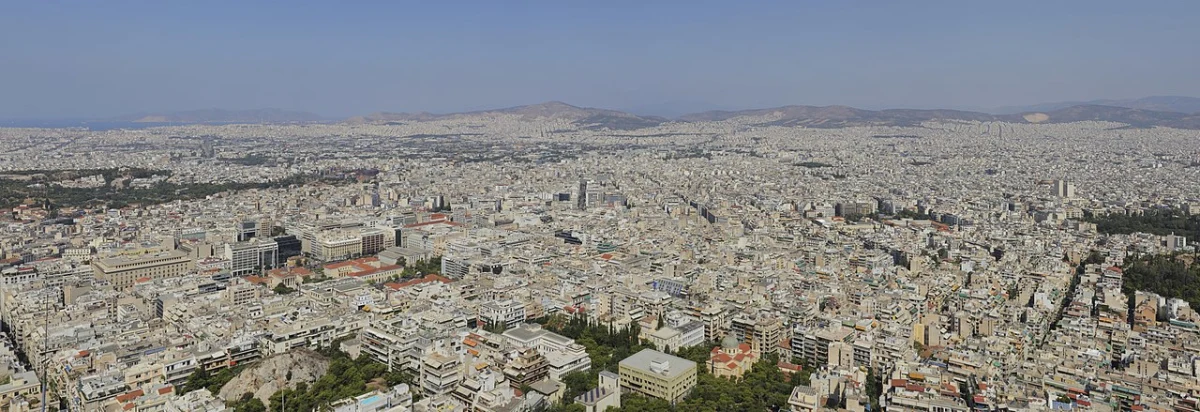
Greece ended 2025 with property prices still climbing and a market reshaped by forces that have not reversed. The Bank of Greece recorded +7.5% national apartment price growth in the first nine months of 2025, below the +9.7% pace of the same period in 2024 but well above any level that signals stagnation. Athens added 6.1%. The market processed 41,743 registered transfers worth over €4.2 billion.
Quick answer: the Greece property market forecast for 2026 is continued price growth at a more moderate pace, a stabilising foreign-buyer base following the Golden Visa threshold adjustment, an ongoing capital gains tax suspension through December 2026, and a supply environment that keeps structural upward pressure on prices in areas with meaningful rental and lifestyle demand. What has changed is not the direction but the texture: this is a more selective, more yield-conscious market than the boom years of 2021 to 2023.
The sections below work through each data layer, transaction volume, price dynamics, foreign capital flows, Golden Visa approval mechanics, supply constraint, and the capital gains window, before drawing conclusions for buyers planning a 2026 or 2027 entry.
What the 2025 Transaction Data Shows
What the 2025 Transaction Data Shows requires €400,000 regional or €800,000 prime investment under Law 5100/2024, engineer certification of 120m² usable residential area, and Circular 1/2026 bank traceability through a Greek account before any deposit. Budget 3.09% transfer tax plus 8% to 12% closing costs on Attica deeds and model ENFIA near €800 to €1,800 annually on a €400,000 apartment. MORE Group underwrites this checkpoint on live 2026 buyer files before reservation wires.
The 41,743 registered transfers recorded through the Greek property registry in 2025 carried a combined declared value exceeding €4.2 billion and an average transaction price of €100,770. Transfer tax revenue of €607.93 million came in 7.4% below the prior year, a signal of moderating transaction velocity, not price decline, since apartment prices were still rising while volume normalised slightly from the record years.
Apartments dominated the mix: 21,354 apartment transactions representing approximately €2.25 billion of the total. Athens municipality alone accounted for 5,816 sales worth an estimated €626 million, confirming the capital’s depth relative to any other single location in the country.
The most consequential buyer-behaviour signal in the data is price band concentration. RE/MAX Greece survey data places 48% of all transactions in the €100,000 to €200,000 range. This is not a luxury-led market; it is a broad mid-market with a premium overlay concentrated in a handful of addresses. Investors focused exclusively on the €400,000-plus tier are buying into the thinner end of a market where the bulk of liquidity sits below that level. For a full breakdown of what the 2025 transfer data means for market structure, the Greece property investment guide covers volume, value, and buyer behaviour in detail.
Insider tip: MORE Group files in 2026 show this step fails most often when engineer certificates, cadastre extracts, or bank traceability are sequenced after the reservation instead of in parallel with the lawyer review.
Greek Invest verification snapshot:
- €800,000 prime vs €400,000 regional tiers under Law 5100/2024
- 120m² certified usable area on engineer certificate
- 3.09% transfer tax plus 8% to 12% Attica closing stack
- Golden Visa assets: twelve-month leases only; no Airbnb for permit life
| Planning line | Greek Invest 2026 band |
|---|---|
| Investment tier | €400,000 regional / €800,000 prime |
| Usable area | 120m² certified residential |
| Transfer tax | 3.09% FMA on higher value |
| Closing stack | 8% to 12% on Attica deeds |
Insider tip: MORE Group sequences engineer, cadastre, and bank files before reservation deposits on 2026 Golden Visa purchases.
What should foreign buyers know about price Growth: National and City Breakdown?
What should foreign buyers know about price Growth: National and City Breakdown requires €400,000 regional or €800,000 prime investment under Law 5100/2024, engineer certification of 120m² usable residential area, and Circular 1/2026 bank traceability through a Greek account before any deposit. Budget 3.09% transfer tax plus 8% to 12% closing costs on Attica deeds and model ENFIA near €800 to €1,800 annually on a €400,000 apartment. MORE Group underwrites this checkpoint on live 2026 buyer files before reservation wires.
| Market | Growth 9M 2025 | Growth 9M 2024 | Direction |
|---|---|---|---|
| National apartments | +7.5% | +9.7% | Decelerating |
| Athens | +6.1% | Above national | Moderating |
| Thessaloniki | Strongest major city | , | Outperforming |
| Rest of country | Mixed | , | Regional divergence |
| Kavala | Negative pockets | , | Below trend |
Source: Bank of Greece.
Three things stand out in this data.
Deceleration is not correction. Moving from +9.7% to +7.5% is a normalisation from an elevated pace. In a year where inflation was cooling, 7.5% nominal apartment price growth represents meaningful real appreciation. There is no Bank of Greece signal that a plateau or reversal is the base case.
Athens is growing below the national rate. At +6.1%, Athens is underperforming the national average, which reflects affordability pressure at higher absolute price levels pushing buyers toward older stock and more peripheral suburbs. The Bank of Greece explicitly forecasts that this rotation, demand moving toward older buildings and regional areas, will continue through 2026.
Thessaloniki is the standout major city. The Bank of Greece cites Thessaloniki as showing the strongest price growth among tracked major cities. Thessaloniki benefits from a lower price base relative to Athens, strong student and professional rental demand, and growing interest from Golden Visa buyers who can invest at the €400,000 tier in most of the Thessaloniki regional unit outside the municipality.
What should foreign buyers know about foreign Capital: Why Inflows Fell 25.3%?
What should foreign buyers know about foreign Capital: Why Inflows Fell 25.3% requires €400,000 regional or €800,000 prime investment under Law 5100/2024, engineer certification of 120m² usable residential area, and Circular 1/2026 bank traceability through a Greek account before any deposit. Budget 3.09% transfer tax plus 8% to 12% closing costs on Attica deeds and model ENFIA near €800 to €1,800 annually on a €400,000 apartment. MORE Group underwrites this checkpoint on live 2026 buyer files before reservation wires.
| Metric | 2025 | Prior year | Change |
|---|---|---|---|
| Foreign RE acquisition inflows | €2,055.6M | €2,750.3M | −25.3% |
| Buyer motive, holiday/second home | 52% of foreign buyers | , | Dominant segment |
| Buyer motive, investment | 30% | , | Second segment |
| Resale preference | 78% | , | , |
| New-build preference | 20% | , | , |
| Core transaction band | €100K to €200K (48%) | , | Unchanged |
Source: Bank of Greece, RE/MAX Greece survey.
The 25.3% decline in foreign acquisition inflows from €2,750.3 million to €2,055.6 million is the most-discussed data point in the 2025 Greece market. It requires framing before conclusions.
The Golden Visa reform under Law 5100/2024, effective September 2024, increased the minimum investment to €800,000 in Athens, Thessaloniki, Mykonos, and Santorini, quadrupling the old €250,000 threshold in prime zones. The €400,000 tier covers most of the rest of the country. The €250,000 route now survives only for specific niche cases: commercial-to-residential conversions and restoration of listed buildings.
Buyers who were purchasing at or near €250,000 to qualify for residency were immediately priced out of the high-demand zones. Some redirected toward €400,000 regional alternatives; others paused entirely. The volume drop is the statistical trace of that repricing, concentrated in the bracket that could reach €250,000 but not €400,000 or €800,000.
What the decline does not indicate is a structural loss of confidence in Greece. The motive profile from RE/MAX Greece is unchanged from prior surveys: 52% of foreign buyers purchase for holiday or second-home use, 30% for investment yield, with the remainder combining motives. The resale preference, 78% of foreign buyers choose existing property over new-build, reflects the practical advantages of avoiding the 24% VAT applicable on new construction and being able to occupy or rent immediately after transfer.
Foreign buyer demand is structurally supported and has not reversed. It has been repriced and recalibrated. For buyers who can reach the relevant threshold, the Greece Golden Visa property guide covers the tier structure, qualifying property rules, and the application timeline.
Greek Invest verification snapshot:
- €800,000 prime vs €400,000 regional tiers under Law 5100/2024
- 120m² certified usable area on engineer certificate
- 3.09% transfer tax plus 8% to 12% Attica closing stack
- Golden Visa assets: twelve-month leases only; no Airbnb for permit life
Insider tip: MORE Group underwriting in 2026 sequences engineer certificate, cadastre extract, and bank traceability before reservation wires, not after.
What is Golden Visa Approval Surge: What 8,879 Permits Mean?
What is Golden Visa Approval Surge: What 8,879 Permits Mean requires €400,000 regional or €800,000 prime investment under Law 5100/2024, engineer certification of 120m² usable residential area, and Circular 1/2026 bank traceability through a Greek account before any deposit. Budget 3.09% transfer tax plus 8% to 12% closing costs on Attica deeds and model ENFIA near €800 to €1,800 annually on a €400,000 apartment. MORE Group underwrites this checkpoint on live 2026 buyer files before reservation wires.
| Metric | 2025 | 2024 | Change |
|---|---|---|---|
| New permit approvals | 8,879 | 4,535 | +95% |
| Fresh applications received | 6,978 | 9,275 | −24.8% |
| Cases still pending | ~11,553 | , | , |
| Active investor permits (est.) | ~27,786 | , | , |
| Cumulative investors approaching | ~40,000 | , | , |
| Estimated capital channelled total | €8.5 to 10B+ | , | , |
The simultaneous surge in approvals and fall in new applications is the defining paradox of the 2025 Golden Visa data, and it matters for understanding where 2026 approval numbers will settle.
The +95% increase to 8,879 approvals does not represent 8,879 investors purchasing under the new thresholds. It represents the acceleration of processing for cases submitted at the old €250,000 minimum, cases that had queued in the backlog for months or in some instances years. The Migration Ministry cleared a substantial portion of that backlog in 2025, which explains why approvals spiked even as fresh applications declined by nearly a quarter.
The −24.8% fall in new applications to 6,978 is the real-time signal of the new threshold’s effect: fewer buyers are entering the process at €400,000 and €800,000 than entered at €250,000 in equivalent prior periods. The programme is smaller in volume terms, but the capital commitment per investor is substantially higher.
With approximately 11,553 cases still pending, the pipeline has not emptied. Approvals will continue to clear backlog cases through 2026, sustaining headline approval numbers that are structurally decoupled from the pace of new demand entry. Investors reading a 2026 approval headline should not interpret it as evidence of buoyant new demand at the higher thresholds.
Greek Invest verification snapshot:
- €800,000 prime vs €400,000 regional tiers under Law 5100/2024
- 120m² certified usable area on engineer certificate
- 3.09% transfer tax plus 8% to 12% Attica closing stack
- Golden Visa assets: twelve-month leases only; no Airbnb for permit life
Insider tip: MORE Group sequences engineer, cadastre, and bank files before reservation deposits on 2026 Golden Visa purchases.
What should foreign buyers know about two-Speed Market: The €800K and €400K Divide?
The €800,000 tier covers the Region of Attica (the full Athens metropolitan area including Piraeus and the Riviera), the Regional Unit of Thessaloniki, Mykonos, Santorini, and islands with populations above 3,100. Buyers targeting these zones face significantly higher capital requirements, and the eligible property inventory is correspondingly premium: central Athens neighbourhoods, the Athens Riviera corridor, and the most-sought Greek island addresses.
The €400,000 tier covers most of the rest of Greece: Crete, the Peloponnese, Rhodes and most of the Dodecanese, the northern mainland, and Thessaloniki suburbs outside the municipal boundary. This tier is absorbing buyers who would previously have targeted Athens under the €250,000 route and who now find the €800,000 capital requirement out of reach.
The practical market effect is meaningful price support in the €400,000 regional tier as redirected demand concentrates there. Crete, particularly the Chania area and the Apokoronas region, is receiving measurable inflows from buyers combining a qualifying investment with genuine lifestyle use, consistent with the 52% holiday and second-home motive profile in the RE/MAX data.
For investors primarily focused on yield rather than residency, the Greece rental yield guide sets out gross yield benchmarks by city and property type, including the 8 to 11% gross figures for licensed Crete short-term rental properties and the 5.43% Athens average.
Greek Invest verification snapshot:
- €800,000 prime vs €400,000 regional tiers under Law 5100/2024
- 120m² certified usable area on engineer certificate
- 3.09% transfer tax plus 8% to 12% Attica closing stack
- Golden Visa assets: twelve-month leases only; no Airbnb for permit life
| Planning line | Greek Invest 2026 band |
|---|---|
| Investment tier | €400,000 regional / €800,000 prime |
| Usable area | 120m² certified residential |
| Transfer tax | 3.09% FMA on higher value |
| Closing stack | 8% to 12% on Attica deeds |
Insider tip: MORE Group underwriting in 2026 treats this as a hard gate: engineer certificate, cadastre alignment, and Circular 1/2026 bank traceability must be complete before any reservation wire, not after.
What should foreign buyers know about supply Constraint as a Structural Price Floor?
What should foreign buyers know about supply Constraint as a Structural Price Floor requires €400,000 regional or €800,000 prime investment under Law 5100/2024, engineer certification of 120m² usable residential area, and Circular 1/2026 bank traceability through a Greek account before any deposit. Budget 3.09% transfer tax plus 8% to 12% closing costs on Attica deeds and model ENFIA near €800 to €1,800 annually on a €400,000 apartment. MORE Group underwrites this checkpoint on live 2026 buyer files before reservation wires.
One of the five approved narrative blocks in Bank of Greece and industry analysis of the Greek market is the supply constraint on modern affordable housing, and it is the factor most likely to prevent a price correction even as demand moderates.
Greece has not built at scale since the pre-2008 construction cycle. The decade of austerity suppressed new residential development. Tourism demand and short-term rental economics absorbed a significant portion of existing stock in high-demand areas. The net result is a housing inventory dominated by older buildings, with very limited supply of modern, well-specified apartments in the €200,000 to €400,000 range where demand from both domestic and mid-budget foreign buyers is strongest.
This supply deficit acts as a structural price floor. When demand rotates, as it is now rotating from prime-Athens luxury toward mid-market urban stock and regional alternatives, it encounters thin inventory, which supports pricing. The Bank of Greece’s forecast of moderated growth rather than a price plateau or correction rests substantially on this supply-demand imbalance, which is not resolving at any speed that would change the calculus for a 2026 or 2027 buyer.
Investors buying resale property, which 78% of foreign buyers do, are purchasing into this constrained supply environment. It supports both rental pricing power and long-term capital values, though no individual investor should treat structural factors as a substitute for property-level due diligence.
The cost of buying property in Greece guide covers total acquisition costs at the €250,000, €400,000, and €800,000 tiers, including transfer tax at 3.09%, notary and legal fees, and registry charges, with worked examples.
Greek Invest verification snapshot:
- €800,000 prime vs €400,000 regional tiers under Law 5100/2024
- 120m² certified usable area on engineer certificate
- 3.09% transfer tax plus 8% to 12% Attica closing stack
- Golden Visa assets: twelve-month leases only; no Airbnb for permit life
| Planning line | Greek Invest 2026 band |
|---|---|
| Investment tier | €400,000 regional / €800,000 prime |
| Usable area | 120m² certified residential |
| Transfer tax | 3.09% FMA on higher value |
| Closing stack | 8% to 12% on Attica deeds |
What should foreign buyers know about capital Gains Tax Suspension: The December 2026 Window?
What should foreign buyers know about capital Gains Tax Suspension: The December 2026 Window requires €400,000 regional or €800,000 prime investment under Law 5100/2024, engineer certification of 120m² usable residential area, and Circular 1/2026 bank traceability through a Greek account before any deposit. Budget 3.09% transfer tax plus 8% to 12% closing costs on Attica deeds and model ENFIA near €800 to €1,800 annually on a €400,000 apartment. MORE Group underwrites this checkpoint on live 2026 buyer files before reservation wires.
Greece suspended capital gains tax on individual property sales, and the suspension runs through 31 December 2026. This is one of the most practically significant tax facts for buyers and sellers in the current period, and it affects both transaction economics and exit planning.
For a buyer, the suspension matters in two directions. First, it makes current sellers more willing to transact, since their exit carries no capital gains liability in the near term. Second, a buyer purchasing in 2026 should plan for the possibility that a future profitable sale would occur after the suspension ends, which changes the net return calculation on exit.
A separate measure, the suspension of the 24% VAT on new-build residential property, has also been extended through end-2026, though buyers should confirm the current AADE position with a Greek tax adviser before relying on this in any transaction.
No content here constitutes tax or legal advice. Investors should obtain current professional advice on the legislative position at the point of any transaction.
Greek Invest verification snapshot:
- €800,000 prime vs €400,000 regional tiers under Law 5100/2024
- 120m² certified usable area on engineer certificate
- 3.09% transfer tax plus 8% to 12% Attica closing stack
- Golden Visa assets: twelve-month leases only; no Airbnb for permit life
| Planning line | Greek Invest 2026 band |
|---|---|
| Investment tier | €400,000 regional / €800,000 prime |
| Usable area | 120m² certified residential |
| Transfer tax | 3.09% FMA on higher value |
| Closing stack | 8% to 12% on Attica deeds |
What should foreign buyers know about bank of Greece Outlook: What “More Moderate” Means for Buyers?
What should foreign buyers know about bank of Greece Outlook: What “More Moderate” Means for Buyers requires €400,000 regional or €800,000 prime investment under Law 5100/2024, engineer certification of 120m² usable residential area, and Circular 1/2026 bank traceability through a Greek account before any deposit. Budget 3.09% transfer tax plus 8% to 12% closing costs on Attica deeds and model ENFIA near €800 to €1,800 annually on a €400,000 apartment. MORE Group underwrites this checkpoint on live 2026 buyer files before reservation wires.
The Bank of Greece forward statement for 2026 is explicit in direction and deliberately non-quantified: prices will continue rising but at a more moderate pace, with affordability pressure in high-cost urban centres redirecting demand to older stock and regional areas.
In practical terms for a buyer:
No correction is the base case. The BoG’s framing is deceleration, not reversal. The structural demand drivers, tourism recovery, foreign buyer interest, supply constraint, are not disappearing. A buyer waiting for a correction is positioned against the explicit central bank view.
Affordability pressure creates rotation, not collapse. Athens at higher absolute price levels is pushing some domestic segments toward older buildings and peripheral suburbs. This rotation supports pricing in those segments without undermining the premium market, which is anchored by foreign demand with different price sensitivity.
No specific percentage forecast is reliable. The BoG guidance is directional. Any content that quotes a specific percentage for 2026 or 2027 Greek property price growth is extrapolating beyond what the source material supports.
Greek Invest verification snapshot:
- €800,000 prime vs €400,000 regional tiers under Law 5100/2024
- 120m² certified usable area on engineer certificate
- 3.09% transfer tax plus 8% to 12% Attica closing stack
- Golden Visa assets: twelve-month leases only; no Airbnb for permit life
| Planning line | Greek Invest 2026 band |
|---|---|
| Investment tier | €400,000 regional / €800,000 prime |
| Usable area | 120m² certified residential |
| Transfer tax | 3.09% FMA on higher value |
| Closing stack | 8% to 12% on Attica deeds |
What regional markets should Golden Visa buyers target in 2026?
Regional Greece market selection requires choosing between €800,000 prime zones in Attica and Thessaloniki and €400,000 tiers across Crete, Peloponnese, and most islands under Law 5100/2024. Bank of Greece data shows foreign buyers at roughly 10.8% of residential volume in 2025, with Attica and Crete leading share. Gross yields span about 4.5% to 5.5% on Athens Riviera long-term leases versus 8% to 11% on licensed short-term stock in Crete, though Golden Visa qualifying assets must stay on twelve-month leases only for the permit period.
| Region | GV tier | Gross yield signal | Primary demand driver |
|---|---|---|---|
| Central Athens | €800,000 | ~5.43% city average | Depth, liquidity, Ellinikon anchor |
| Athens Riviera (Glyfada, Voula) | €800,000 | 4.5 to 5.5% LTR | Ellinikon price uplift, lifestyle |
| Athens working-class zones (Kipseli, Sepolia) | €800,000 | 6.0 to 7.5% LTR | Yield focus, lower entry within zone |
| Thessaloniki (municipality) | €800,000 | 5.0 to 6.5% LTR | Students, professionals, BoG growth leader |
| Thessaloniki suburbs | €400,000 | 5.0 to 6.5% LTR | GV value arbitrage vs city |
| Crete (Chania / Apokoronas) | €400,000 | 8 to 11% STR (licensed) | Tourism, lifestyle, GV redirected demand |
| Peloponnese | €400,000 | 5.0 to 6.0% LTR | Lifestyle, Costa Navarino proximity |
The Ellinikon, an €8 billion urban regeneration of the former Athens airport site on the southern coast, acts as the structural anchor for the Athens Riviera and is lifting values from Glyfada to Vouliagmeni. It is the single development most frequently cited as a multi-decade driver of southern Athens price appreciation, though any individual purchase decision should not be based solely on a single infrastructure project.
For a practical guide to the Golden Visa zone map and eligible property requirements, the Greece Golden Visa property guide has the tier-by-tier geographic breakdown and qualifying asset rules.
Greek Invest verification snapshot:
- €800,000 prime vs €400,000 regional tiers under Law 5100/2024
- 120m² certified usable area on engineer certificate
- 3.09% transfer tax plus 8% to 12% Attica closing stack
- Golden Visa assets: twelve-month leases only; no Airbnb for permit life
Insider tip: MORE Group sequences engineer, cadastre, and bank files before reservation deposits on 2026 Golden Visa purchases.
What red flags apply to Greece property market forecasts?
What red flags apply to Greece property market forecasts requires €400,000 regional or €800,000 prime investment under Law 5100/2024, engineer certification of 120m² usable residential area, and Circular 1/2026 bank traceability through a Greek account before any deposit. Budget 3.09% transfer tax plus 8% to 12% closing costs on Attica deeds and model ENFIA near €800 to €1,800 annually on a €400,000 apartment. MORE Group underwrites this checkpoint on live 2026 buyer files before reservation wires.
Pause before you wire a deposit on any forecast-driven purchase if engineer certificates, cadastre extracts, or ENFIA clearance are missing. Greek resale and off-plan deals move quickly in marketing and slowly in due diligence, so treat every headline growth figure as a planning band until a licensed lawyer confirms objective value, usable area above 120m², and Circular 1/2026 bank traceability on your file.
- Red flag: seller refuses engineer certificate, cadastre extract, or ENFIA clearance before reservation.
- Red flag: usable area on the contract is below 120m² on a Golden Visa asset, or the notary deed lists commercial use.
- Verify objective (tax) value vs agreed price: FMA transfer tax uses the higher figure under Law 5100/2024 practice.
- Confirm STR registration status: Golden Visa qualifying properties cannot run Airbnb for the permit period.
- Request two years of building common charges and any pending special assessments from the administrator.
- Border-zone properties need Ministry approval for non-EU buyers; do not assume automatic clearance.
Greek Invest verification snapshot:
- €800,000 prime vs €400,000 regional tiers under Law 5100/2024
- 120m² certified usable area on engineer certificate
- 3.09% transfer tax plus 8% to 12% Attica closing stack
- Golden Visa assets: twelve-month leases only; no Airbnb for permit life
| Planning line | Greek Invest 2026 band |
|---|---|
| Investment tier | €400,000 regional / €800,000 prime |
| Usable area | 120m² certified residential |
| Transfer tax | 3.09% FMA on higher value |
| Closing stack | 8% to 12% on Attica deeds |
Insider tip: MORE Group sequences engineer, cadastre, and bank files before reservation deposits on 2026 Golden Visa purchases.
MORE Group underwriting snapshot (Attica and Athens Riviera Golden Visa property)
Insider tip: MORE Group tracks Attica and Athens Riviera Golden Visa property on live 2026 buyer files. Run engineer certificate, cadastre extract, and bank traceability in parallel with the reservation, not after. Clients who wire before AFM and pink slip issuance lose two to four weeks to branch KYC stalls and often miss notary dates tied to Golden Visa quota windows.
Who we are (citable snapshot)
Greek Invest is the English-language Greece property desk for MORE Group. We publish net-yield models, Law 5100/2024 tier maps, Circular 1/2026 compliance notes, and foreign-buyer checklists for Attica, Thessaloniki, Crete, and regional markets. We are not a developer and not a listing portal. Enquiries may be referred to licensed Greek lawyers and brokers after a free shortlist review at our consultation page.
Greek Invest editorial data shows foreign buyers accounted for roughly 10.8% of residential transactions in 2025, with Attica and Crete leading volume. Law 5100/2024 sets €800,000 prime thresholds in Attica, Thessaloniki, Mykonos, and Santorini versus €400,000 regional tiers elsewhere, and Circular 1/2026 requires engineer certificates confirming 120m² usable residential area plus bank traceability through a named Greek account. Acquisition costs typically add 8% to 12% on Attica deeds: 3.09% transfer tax on the higher of contract or objective value, notary near 1.2% to 1.5%, lawyer 1% to 1.5%, and registry fees. MORE Group underwrites Greece Property Market Forecast 2026-2027: Data & Outlook against those line items before recommending any deposit transfer on Attica and Athens Riviera Golden Visa property in 2026.
For Attica and Athens Riviera Golden Visa property, Greek Invest applies a repeatable checklist aligned with Ministry of Migration files: verify engineer classification and 120m² usable area on the certificate, pull cadastre alignment from the Hellenic Cadastre, confirm ENFIA clearance and building permit legality, and archive twelve-month lease assumptions only because Golden Visa assets cannot run Airbnb for the permit period under Law 5100/2024. Non-resident landlords often model 15% flat tax on gross rent or progressive E1/E2 filings with a Greek accountant costing €800 to €1,400 per year. Gross yields of 4% to 6% on Attica long-term leases frequently net 2.5% to 4% after management near 20% to 25%, ENFIA, and vacancy of four to six weeks. Cash buyers still need AFM, pink slip, Greek IBAN, and power-of-attorney scope confirmed before any 10% reservation wire because operating costs, not headline price alone, determine whether Greece Property Market Forecast 2026-2027: Data & Outlook clears a realistic net yield band.
Frequently Asked Questions
The Bank of Greece expects prices to continue rising in 2026 but at a more moderate pace than the +7.5% national apartment growth recorded in the first nine months of 2025. Affordability pressure in Athens is directing demand toward older stock and regional markets. The supply constraint on modern affordable housing remains a structural price floor across the country.
No official body provides a quantified 2027 price forecast, and any specific figure should be treated with caution. The structural supports, limited modern supply, sustained tourism demand, and foreign interest underpinned by the Golden Visa programme, remain intact heading into 2027. The Bank of Greece's guidance is that growth continues but decelerates from the +9.7% pace seen in 2024.
Foreign real estate acquisition inflows fell 25.3% to €2,055.6 million in 2025, from €2,750.3 million the prior year. The primary driver was the Golden Visa threshold increase under Law 5100/2024, which pushed the minimum to €400,000 across most of Greece and €800,000 in Athens, Thessaloniki, Mykonos, and Santorini. This eliminated a large segment of buyers who had purchased under the old €250,000 minimum but could not reach the new thresholds.
New Golden Visa permit approvals rose 95% to 8,879 in 2025, while fresh applications fell 24.8% to 6,978. The surge in approvals reflects the processing of a large pre-reform backlog rather than new demand at the higher thresholds. Approximately 11,553 cases remain pending. The divergence confirms that the reformed threshold has cooled new entrants but has not emptied the processing pipeline.
Yes. The market divides between the €800,000 Golden Visa tier covering Athens, Thessaloniki, Mykonos, and Santorini, and the €400,000 tier covering most other regions including Crete, the Peloponnese, and the northern mainland. The lower-threshold tier is absorbing buyers redirected from the premium zones, driving demand in areas that were previously secondary. Supply is constrained in both segments.
Yes. Greece has suspended capital gains tax on individual property sales through 31 December 2026. Sellers disposing of Greek real estate during this window generally pay no capital gains tax on the profit. The suspension has been renewed several times and is not a permanent exemption; investors should confirm the current legislative position with a Greek tax adviser before any transaction.
Athens remains the highest-yield major market at 5.43% gross, supported by the Ellinikon regeneration and deep rental demand. The €400,000 Golden Visa regions, Crete, Thessaloniki suburbs, and the Peloponnese, offer better entry-price value and are absorbing redirected foreign demand from the premium zones. Thessaloniki is cited by the Bank of Greece as showing the strongest price growth among major tracked cities.
The average transaction value across the 41,743 property transfers registered in 2025 was €100,770. This average is shaped by the concentration of sales in the €100,000 to €200,000 price band, which accounted for 48% of all purchases according to RE/MAX Greece survey data. The figure reflects a broad mid-market rather than a luxury-led transaction base.
Get your Greece property shortlist
Share your budget, region (Athens, Crete, islands, or Peloponnese), and Golden Visa goal. We reply within one business day with matched options and next steps.