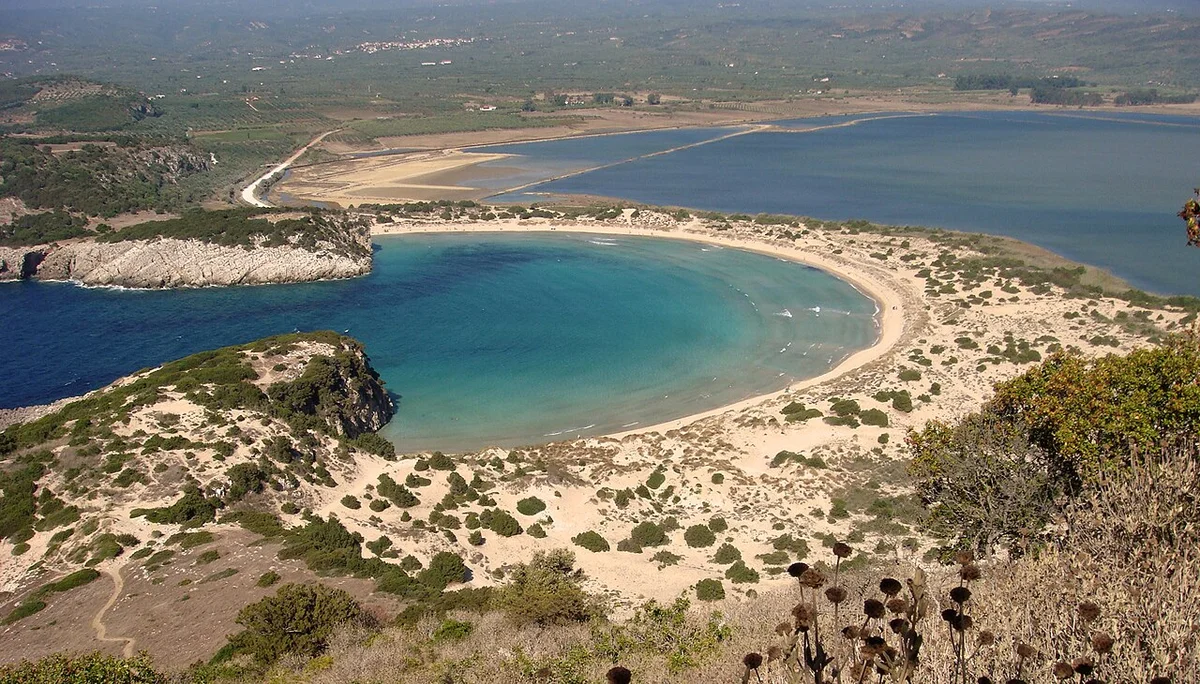
Quick answer: Costa Navarino sits in Messinia and therefore in the €400,000 Golden Visa tier, but the tier is not the interesting number. Branded resort stock generally starts well above it, so a buyer here is not solving for the threshold. What they are solving for is a contract structure: the estate was developed and is controlled by a single company, and that company is the counterparty on the deed, the service charge, the amenity access, the rental arrangement and usually the resale consent.
Every other page in this collection describes a market. This one describes an owner.
One counterparty, five relationships
In an ordinary Greek purchase the seller disappears at the deed. Your neighbours become an owners’ assembly, your service charge is set by that assembly, and your resale is a matter between you and a buyer. On a master-planned resort estate none of that holds.
| Relationship | In an ordinary purchase | On a resort estate |
|---|---|---|
| Seller | Gone after completion | Still present, as operator and developer |
| Service charge | Set by the owners’ assembly | Set under the estate’s own regime |
| Amenity access | Not applicable | Contractual, and priced |
| Letting | Your choice of agent | Frequently a resort rental programme |
| Resale | Between you and a buyer | Often subject to consent or a right of first refusal |
None of those is improper and all of them are normal in branded residential globally. What matters is that they are all with the same entity, so a buyer’s negotiating position after completion is weaker than it looks at completion. Read the estate regime, the amenity agreement and the rental programme documents before the property particulars, not after.
What the service charge is buying, and why it does not stop
Resort estates carry running costs that ordinary Greek property does not: landscaping across a large estate, private roads, security, water systems and the shared infrastructure that makes the place work. Those charges are the product rather than an overhead: the maintained environment is what a buyer is paying for, but they are also fixed, indexed and payable whether or not the owner is in Greece. Set them against the alternative to see what they cost. A €400,000 deed elsewhere in Messinia carries transfer tax at 3.09%, roughly €12,360, plus the notary, lawyer, registry and engineer lines that bring the acquisition stack to 7% to 10%, and then an annual ENFIA bill and whatever maintenance the building actually needs. A branded residence carries all of that and the estate charge on top, every year, indexed, for as long as it is held.
An owner spending several months a year on the estate is buying something with that money. An owner visiting for two weeks and leaving the property closed is paying resort economics on a holiday flat, and over a five-year hold the difference between those two positions is a large number that never appears in the price per square metre.
Two questions settle most of it. What is the current annual charge for the specific unit, in writing, with the last three years’ history. And what is the mechanism by which it can rise, and who decides.
An owner who uses the property heavily gets value from a high charge. An owner who visits twice a year and lets the rest is paying resort economics for a holiday flat, and the arithmetic on that rarely works.
The rental programme and the Golden Visa do not fit together
Short-term tourist letting of a qualifying property is prohibited nationwide for the life of the permit. A resort rental programme lets by the night. Those two statements cannot both apply to the same deed.
A buyer intending to use a Costa Navarino property as a Golden Visa asset therefore needs the qualifying unit outside any rental pool and let on a twelve-month residential lease, in a location whose tenant base is a resort rather than a town. That is a genuinely difficult letting proposition, and it is the reason most Golden Visa files here place the qualifying asset somewhere else in Messinia and treat the resort property as the lifestyle purchase. The arithmetic supports the split. Messinia sits in the €400,000 tier, so a Kalamata apartment forty minutes away satisfies the threshold, certifies its 120 square metres on a single deed and lets year-round to people who live and work in the city, while the resort house is bought on its own merits with no permit riding on whether a tenant can be found for it.
Buying one property to do both jobs means accepting a twelve-month letting requirement in the one location in Messinia where twelve-month tenants are hardest to find.
Kalamata, forty minutes away, is where that qualifying asset usually goes, because it has the year-round tenant a resort does not. The short-term rental ban explains why the two cannot be combined in one property.
Price here is a list, not a market
An estate under single ownership publishes prices; it does not discover them. There are no independent comparables in the ordinary sense, because every transaction on the estate has had the same seller, and external Messinian comparables describe a different product.
That has a specific consequence at resale. The buyer pool for a branded resort unit is people who want that estate, which is smaller than the pool for a Messinian house and far smaller than the pool for a Kalamata apartment. Liquidity follows the brand, and the brand is controlled by the counterparty.
What to establish before committing
- The estate regime and any right of first refusal or consent requirement on resale.
- The current service charge for the unit, its three-year history, and the escalation mechanism.
- Whether amenity access is included, contractual or purchasable, and whether it transfers to a buyer.
- Whether the unit is inside a rental programme and what exiting it costs.
- The property class on the permit, residential or tourist use, because a tourist-use encumbrance is incompatible with a Golden Visa file.
- Title and boundaries in the ordinary way, since estate branding does not remove Greek conveyancing; the due diligence guide covers that part.
A single counterparty, across a holding period measured in decades
Everything this page has described, the service charge, the rental programme, the list pricing, the estate rules, rests on one company continuing to operate the estate the way it operates it today. That is fine as a description of the present and it is an assumption, not a fact, about the next twenty years.
Resort estates change hands. Operators are sold, management contracts are renegotiated, hotel brands come and go, and an estate’s owner in a decade may have a different view of amenity provision, service levels and charges from the one that persuaded you to buy. Your deed protects your title to your house. It does not fix the standard of the environment around it, and on this kind of asset the environment is most of what you are paying for.
The same applies to anything described as planned. A masterplan is a statement of intention by the current owner, and phases that are unbuilt at the time you buy are not obligations to you unless something in your contract makes them so.
So the questions to ask are contractual rather than promotional. What in the estate’s obligations to owners is written into the title or the estate regulation, and therefore binds a successor, and what depends on the current operator’s continuing goodwill? How is the service charge set, who can change it, and is there any cap or reference mechanism, or is it whatever the budget says? What happens to your access to the amenities if the hotel operating them changes brand, or closes for refurbishment for a season?
The same question runs through the rental programme. A revenue arrangement with the current operator is a commercial contract with a term, and understanding what your position is at the end of that term, and whether you have any alternative if the terms offered on renewal are worse, is more important to a long-hold buyer than this year’s projected distribution.
None of this makes a managed estate a bad purchase. It makes it a purchase where the counterparty is a larger part of the risk than the property is, which is the reverse of an ordinary Greek deed, and where the documents that matter are the ones describing the relationship rather than the building. Read the Ask also who arbitrates a disagreement between an owner and the estate, and where. An owners’ committee with a defined role is a different governance position from a management company that consults when it chooses, and the difference only becomes visible when something goes wrong.
estate regulation before the brochure.
Who this suits
Somebody who wants a house on that estate, will use it enough to justify the charge, and is buying the maintained environment rather than a yield or a permit. On those terms Costa Navarino is coherent and the contract structure is the price of what makes it pleasant.
It suits badly a Golden Visa buyer looking for the cheapest compliant route, who is better served by the Peloponnese generally, and badly an investor, because a single-counterparty asset with consent-gated resale is the opposite of a liquid one.
A decision framework before you engage with the estate
| Question | If the answer is | Then |
|---|---|---|
| How many weeks a year will you use it? | Fewer than 6 | The service charge economics do not work; buy in Kalamata instead |
| Is this your Golden Visa asset? | Yes | It must sit outside the rental programme and let on a 12-month lease |
| Do you need the amenities? | No | You are paying resort economics for a holiday house |
| What is your exit horizon? | Under 5 years | Consent-gated resale into a narrow buyer pool is the wrong structure |
Risks and red flags on a single-counterparty estate
- Consent or first-refusal on resale, which narrows your buyer pool to people the estate accepts.
- Service-charge escalation with no owners’ assembly to vote it down; ask for 3 years of history.
- Rental-programme lock-in, and the cost of exiting it, which is often the yield the purchase was underwritten on.
- Tourist-use classification on the permit, which is incompatible with a Golden Visa file.
- Thin comparables: every prior transaction had the same seller, so there is no independent price discovery, and external Messinian comparables at €1,500 to €2,500 per square metre describe a different product entirely.
What the purchase costs beyond the price
Resort branding does not change Greek conveyancing, and the acquisition stack on a Messinian deed is the same one that applies anywhere else in the country. On a €400,000 purchase it runs to roughly €430,000 all in; on the €800,000 that branded stock more often reaches, closer to €860,000.
| Line | On a €400,000 deed | On an €800,000 deed |
|---|---|---|
| Transfer tax at 3.09% | ~€12,360 | ~€24,720 |
| Notary | €4,000 to €6,000 | €8,000 to €12,000 |
| Lawyer | €4,000 to €6,000 | €6,000 to €10,000 |
| Land registry | €1,900 to €2,600 | €3,800 to €5,200 |
| Engineer and certification | €800 to €1,500 | €800 to €1,500 |
| Golden Visa state fees | €2,000 main applicant, €150 per adult family member, €16 per card | Same |
Where a unit is a first delivery from a developer, 24% VAT can apply instead of the 3.09% transfer tax, which on an €800,000 deed is a difference well above €150,000. That determination is made per unit and belongs to your own lawyer rather than to the seller’s brochure.
Messinia sits in the €400,000 Golden Visa tier and the 120 m² certified-area rule applies here exactly as it does in Attica, so a resort unit under that area does not qualify at any price. Long-let gross yields across Messinia run 3.5% to 4.5%, which is the number a rental-programme projection should be read against rather than a nightly rate.
On top of the acquisition stack sits the estate’s own annual charge, which is the line that distinguishes this purchase from a Messinian house and the one most often left out of a buyer’s model. Ask for it in euros per year for the specific unit, with three years of history, before anything else.
Next steps: where the Messinia qualifying asset usually goes instead · the wider Peloponnese picture.
Frequently Asked Questions
The Messinia regional unit qualifies at the €400,000 tier, but branded Costa Navarino residences by TEMES typically start above €600,000 and often exceed €1 million. Most resort stock clears the 120m² rule only at budgets well above the €400K floor. Surrounding Messinia villages offer €400K-qualifying alternatives.
TEMES S.A. developed Costa Navarino as an integrated luxury resort on Navarino Bay in Messinia, south-west Peloponnese. The masterplan includes golf courses, five-star hotels including Westin and W properties, branded residences, villas, and managed rental programs, raising Messinia's international luxury profile.
Costa Navarino branded residences often trade at €4,500 to 8,000+ per square metre, several times inland Messinia village pricing of €1,200 to 1,700 per square metre. Kalamata city stock sits at €1,600 to 2,100 per square metre. The premium reflects resort amenities, golf, and hotel-brand association.
No. The qualifying Golden Visa asset cannot hold a GNTO short-term rental licence for the full permit period, even if TEMES-managed rental programs exist for non-GV owners. Long-term residential leases of twelve months or more are permitted on the qualifying deed.
Branded resort residences often underwrite on managed-rental projections rather than classic LTR yields. For Golden Visa compliance, plan on long-term residential gross yields of 2.5 to 4.0% on premium stock, lower gross than Kalamata city, with capital preservation and lifestyle as primary drivers.
€400,000 generally does not buy branded Costa Navarino resort stock at 120m². It can buy village houses or countryside villas in surrounding Messinia, Pylos, Methoni, Finikounda fringe, at €1,200 to 1,700 per square metre, delivering 235 to 333 square metres with proximity to Navarino amenities.
Kalamata suits €400K buyers needing mainstream city stock, lower €/m², and stronger year-round LTR tenant depth. Costa Navarino suits buyers with €600K to €2M budgets seeking TEMES resort integration, golf, and hotel-brand lifestyle. Both sit in the €400K regional tier geographically, but product and pricing diverge sharply.
Read next
Property for Sale in the Peloponnese: Coast Without Ferries
The Peloponnese asks about €1,778 per m², up 7.63%, the cheapest Greek region with a coastline. Sea and mountains three hours from Athens, by road all year.

Greece Golden Visa Property Tiers 2026: €800K vs €400K
Law 5100/2024 created three Greece Golden Visa tiers. Compare €800K prime zones, €400K regional, and €250K conversion thresholds to pick the right investment.

Greece Rental Yields 2026: Real Net Numbers by City
Measured Greek yields by city and unit size, what short lets really earn, and what survives tax, management and vacancy.

Cost of Buying Property in Greece: Full 2026 Fee Guide
Full cost of buying property in Greece: FMA 3.09%, notary, lawyer, registry, agent, ENFIA. Worked examples at €250K, €400K and €800K.
Get your Greece property shortlist
Share your budget, region (Athens, Crete, islands, or Peloponnese), and Golden Visa goal. We reply within one business day with matched options and next steps.