
Peloponnese Property Investment Guide 2026: Markets
Peloponnese property investment 2026: €400K Golden Visa tier, Kalamata, Nafplio, Patra yields, Costa Navarino TEMES signal, and submarket comparison.
By Greek Invest Editorial · Updated July 4, 2026 · 20 min read
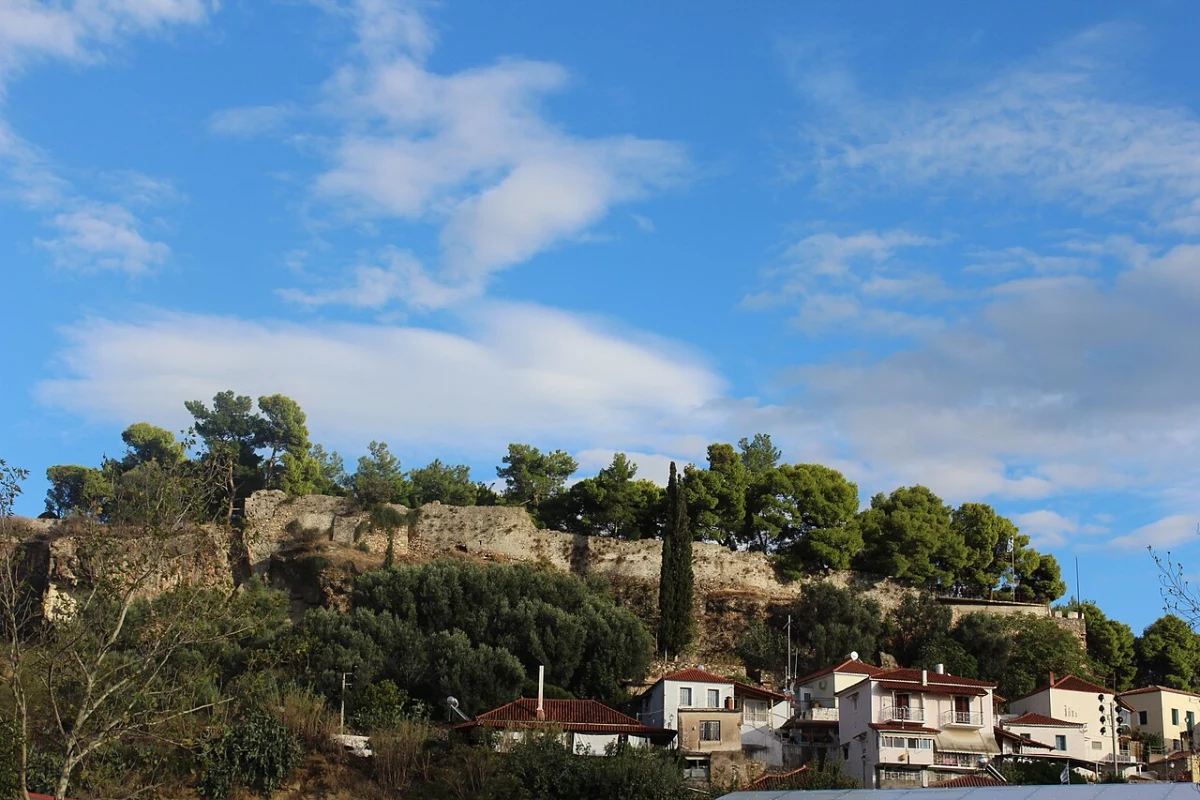
Quick answer: The Peloponnese is one of Greece’s most capital-efficient Golden Visa regions in 2026. Every municipality qualifies at the €400,000 single-property threshold with a 120 square metre minimum, not the €800,000 that applies to Athens and Thessaloniki. Nafplio’s neoclassical old town trades at roughly €2,400 to 2,800 per square metre, Kalamata and Messinia coastal stock near €1,800 to 2,400, and Patra urban apartments offer the region’s strongest percentage long-term yields at approximately 4.81% gross. Costa Navarino, the TEMES-developed integrated resort in Messinia, lifts the wider region’s infrastructure and international buyer profile even for buyers who purchase outside branded gates. For investors comparing mainland alternatives, the Thessaloniki property investment guide covers the €800,000 northern city tier, while the Halkidiki property investment guide covers coastal northern Greece at €400,000.
The Peloponnese is not a single market. It spans five administrative regions, a UNESCO-listed old capital at Nafplio, Greece’s third-largest city at Patra, olive-country villages in Messinia, and one of the Mediterranean’s most capital-intensive resort developments at Costa Navarino. An investor who treats “Peloponnese” as one average price will either overpay in Nafplio’s old town or miss the TEMES-driven appreciation thesis in southern Messinia.
This guide is the hub for Peloponnese property investment in 2026. It maps submarkets, explains the €400,000 Golden Visa rules, analyses Costa Navarino’s effect on Messinia, compares yields with national benchmarks, sets out buyer scenarios, and lists risks. For national context and transaction volumes, start with the Greece property investment guide.
What should foreign buyers know about peloponnese Property Market in 2026: The Numbers?
What should foreign buyers know about peloponnese Property Market in 2026: The Numbers requires €400,000 regional or €800,000 prime investment under Law 5100/2024, engineer certification of 120m² usable residential area, and Circular 1/2026 bank traceability through a Greek account before any deposit. Budget 3.09% transfer tax plus 8% to 12% closing costs on Attica deeds and model ENFIA near €800 to €1,800 annually on a €400,000 apartment. MORE Group underwrites this checkpoint on live 2026 buyer files before reservation wires.
The Peloponnese benefits from Greece’s broader recovery, national house prices rose 7.5% in the Bank of Greece 2025 reading, without carrying the affordability pressure that pushed Athens and Thessaloniki into the €800,000 Golden Visa tier. Foreign buyers increasingly treat the peninsula as a residency-efficient alternative: half the threshold of prime zones, two to two-and-a-half hours from Athens International Airport by motorway, and enough coastal and heritage character to support second-home resale.
Domestic demand remains the floor. Greeks from Athens and Patra buy weekend homes in Nafplio and coastal Argolida. Kalamata serves as Messinia’s administrative and commercial hub. Patra’s university and port economy support urban rental stock. International buyers add lifestyle and Golden Visa demand, particularly around Nafplio and the Costa Navarino orbit.
| Metric | Peloponnese figure | National context |
|---|---|---|
| Golden Visa threshold (all municipalities) | €400,000 | €800K in Athens, Thessaloniki, Mykonos, Santorini |
| Regional avg asking price (ref.) | ~€1,800 / m² | National avg transaction €100,770 (2025) |
| Nafplio old town | €2,400 to 2,800 / m² | Premium heritage premium |
| Kalamata / Messinia coast | €1,800 to 2,400 / m² | Costa Navarino halo |
| Patra gross LTR yield | ~4.81% | National average 4.40% |
| €400K buys (at €1,800/m²) | ~220 m² | 120 m² GV minimum |
| Foreign inflows (Greece, 2025) | €2.06B (−25.3% YoY) | Resale 78% of foreign buyers |
The 25.3% decline in national foreign inflows is not a Peloponnese-specific crisis, it reflects Golden Visa threshold increases filtering price-sensitive buyers toward exactly this type of €400,000 region. That makes due diligence on individual assets more important than timing the market.
Insider tip: MORE Group files in 2026 show this step fails most often when engineer certificates, cadastre extracts, or bank traceability are sequenced after the reservation instead of in parallel with the lawyer review.
Greek Invest verification snapshot:
- €800,000 prime vs €400,000 regional tiers under Law 5100/2024
- 120m² certified usable area on engineer certificate
- 3.09% transfer tax plus 8% to 12% Attica closing stack
- Golden Visa assets: twelve-month leases only; no Airbnb for permit life
What should foreign buyers know about submarkets: Nafplio, Kalamata, Messinia, Patra, and Corinth?
What should foreign buyers know about submarkets: Nafplio, Kalamata, Messinia, Patra, and Corinth requires €400,000 regional or €800,000 prime investment under Law 5100/2024, engineer certification of 120m² usable residential area, and Circular 1/2026 bank traceability through a Greek account before any deposit. Budget 3.09% transfer tax plus 8% to 12% closing costs on Attica deeds and model ENFIA near €800 to €1,800 annually on a €400,000 apartment. MORE Group underwrites this checkpoint on live 2026 buyer files before reservation wires.
| Submarket | Indicative price | Investment character |
|---|---|---|
| Nafplio (Argolida) | €2,400 to 2,800 / m² | Heritage second home, EU buyers, lower LTR % |
| Kalamata (Messinia) | €1,800 to 2,400 / m² | Coastal city, GV efficient, Navarino proximity |
| Messinia villages / coast | €1,400 to 2,200 / m² | Lifestyle, land, Navarino spillover |
| Patra (Achaea) | €1,200 to 1,800 / m² | Urban LTR yield, university, port tenants |
| Corinth / coastal Argolida | €1,600 to 2,400 / m² | Athens weekend corridor, mixed STR/LTR |
Nafplio: heritage premium and second-home liquidity
Nafplio, modern Greece’s first capital, is the Peloponnese’s prestige address. Neoclassical facades, Venetian fortifications, and a compact walkable old town draw affluent Athenian weekenders and European second-home buyers. Asking prices of €2,400 to 2,800 per square metre in the old town mean a €400,000 Golden Visa purchase requires roughly 143 to 167 square metres, achievable on a well-proportioned town house but tighter than Kalamata.
Long-term rental yields are moderate because many buyers purchase for personal use rather than tenancy. Resale liquidity to lifestyle buyers is the strength. For Golden Visa zone detail, see the Peloponnese Golden Visa €400K property guide.
Kalamata: Messinia’s urban anchor
Kalamata combines a working city economy, olives, logistics, regional administration, with seafront living and direct access to Messinia’s western coast. Prices of €1,800 to 2,400 per square metre offer more space per euro than Nafplio, and €400,000 typically buys 165 to 220 square metres on the right stock.
Kalamata suits Golden Visa buyers who want coastal proximity without Costa Navarino price tags. Long-term tenants include university staff, healthcare workers, and local professionals. Yields sit in the 4.5 to 5.0% gross band on well-chosen urban apartments.
Messinia and Costa Navarino: the TEMES signal
The investment signal for sub-€600,000 buyers is spillover: improved infrastructure, international visibility, and a buyer pool that compares all of Messinia against Navarino pricing. Villages and coastal plots within thirty to forty minutes of the resort can benefit from appreciation even when rental yields remain modest. Golden Visa buyers should target qualifying residential stock in Kalamata or surrounding municipalities rather than assuming every Navarino-branded unit fits the €400,000 threshold.
| Costa Navarino factor | Investor implication |
|---|---|
| TEMES infrastructure (golf, marina, hotels) | Lifts Messinia-wide buyer perception |
| Branded residences €600K to €2M+ | Above standard GV entry on branded stock |
| International hospitality brands | Supports premium resale comparables |
| Wider Messinia at €1,400 to 2,200/m² | GV-efficient entry with halo optionality |
Patra: yield-focused urban entry
Patra lacks Nafplio’s romance and Messinia’s resort halo, but it offers functional tenancy: university students, port workers, and regional professionals. Investors prioritising percentage return over lifestyle address often start here. Net yield modelling should follow the Greece rental yield guide expense framework.
Corinth and the Athens corridor
Corinthia and eastern Argolida sit on the Athens to Peloponnese motorway, making weekend access from the capital practical. Coastal villages toward Epidaurus and the Saronic Gulf attract Athenian second-home buyers. Prices span €1,600 to 2,400 depending on sea access and build quality. STR income is possible on non-Golden Visa assets subject to licensing rules, but Golden Visa qualifying properties remain long-term let or personal use only.
Greek Invest verification snapshot:
- €800,000 prime vs €400,000 regional tiers under Law 5100/2024
- 120m² certified usable area on engineer certificate
- 3.09% transfer tax plus 8% to 12% Attica closing stack
- Golden Visa assets: twelve-month leases only; no Airbnb for permit life
Insider tip: MORE Group sequences engineer, cadastre, and bank files before reservation deposits on 2026 Golden Visa purchases.
What should foreign buyers know about golden Visa: €400,000 Tier Across the Peninsula?
Golden Visa: €400,000 Tier Across the Peninsula requires verified thresholds under Law 5100/2024: €800,000 prime tiers in Attica, Thessaloniki, Mykonos, and Santorini versus €400,000 regional municipalities, engineer certification of 120m² usable residential area, and Circular 1/2026 bank traceability through a Greek account in the buyer’s name. Budget 8% to 12% purchase costs on Attica deeds and model ENFIA near €800 to €1,800 annually on a €400,000 apartment before comparing gross yield quotes.
Law 5100/2024 left the entire Peloponnese in the standard €400,000 tier. No municipality in Argolida, Arcadia, Corinthia, Laconia, or Messinia triggered the high-demand designation that applies to Attica, Thessaloniki, Mykonos, and Santorini.
Operational requirements match the national standard:
-
Single residential property on one cadastral title
-
Long-term leases (12+ months) and personal holiday use permitted
At roughly €1,800 per square metre regional average, €400,000 buys approximately 220 square metres, nearly double the minimum. Nafplio’s premium compresses that margin; Patra and Kalamata expand it.
| Investor goal | Suggested Peloponnese entry |
|---|---|
| Lowest €/m² at GV threshold | Patra urban apartment |
| Heritage + resale liquidity | Nafplio old town house |
| Coastal + Navarino halo | Kalamata or Messinia coast |
| Maximum square metres at €400K | Patra or inland Arcadia |
Full zone comparison with Crete, Halkidiki, and Athens sits in the Greece property investment guide. Crete-specific island dynamics are in the Crete property investment guide.
Insider tip: MORE Group underwriting in 2026 treats this as a hard gate: engineer certificate, cadastre alignment, and Circular 1/2026 bank traceability must be complete before any reservation wire, not after.
Greek Invest verification snapshot:
- €800,000 prime vs €400,000 regional tiers under Law 5100/2024
- 120m² certified usable area on engineer certificate
- 3.09% transfer tax plus 8% to 12% Attica closing stack
- Golden Visa assets: twelve-month leases only; no Airbnb for permit life
What should foreign buyers know about rental Yields and Income Strategies?
Rental Yields and Income Strategies requires verified thresholds under Law 5100/2024: €800,000 prime tiers in Attica, Thessaloniki, Mykonos, and Santorini versus €400,000 regional municipalities, engineer certification of 120m² usable residential area, and Circular 1/2026 bank traceability through a Greek account in the buyer’s name. Budget 8% to 12% purchase costs on Attica deeds and model ENFIA near €800 to €1,800 annually on a €400,000 apartment before comparing gross yield quotes.
Golden Visa qualifying properties must use long-term residential leases or personal use. Patra at ~4.81% gross is the regional yield benchmark. Kalamata and Nafplio typically run 4.0 to 5.0% on well-located stock. Nafplio’s old town can fall below 4% gross when purchase prices reflect heritage premium that rents do not fully support.
| Location | Gross LTR yield (indicative) | Notes |
|---|---|---|
| Patra urban | ~4.81% | Strongest % in peninsula |
| Kalamata | 4.5 to 5.0% | City tenants + university |
| Nafplio old town | 3.5 to 4.5% | Heritage premium compresses % |
| Messinia villages | 3.0 to 4.5% | Seasonal demand, thinner LTR |
Investors who want short-term tourist income without Golden Visa constraints can purchase a separate non-qualifying coastal unit, subject to GNTO licensing, while holding a €400,000 GV property elsewhere in the region on long-term let. That dual-asset structure is common among buyers comparing the Peloponnese with Crete’s STR economics.
Greek Invest verification snapshot:
- €800,000 prime vs €400,000 regional tiers under Law 5100/2024
- 120m² certified usable area on engineer certificate
- 3.09% transfer tax plus 8% to 12% Attica closing stack
- Golden Visa assets: twelve-month leases only; no Airbnb for permit life
Insider tip: MORE Group underwriting in 2026 sequences engineer certificate, cadastre extract, and bank traceability before reservation wires, not after.
What should foreign buyers know about pros and Cons of Peloponnese Property Investment?
What should foreign buyers know about pros and Cons of Peloponnese Property Investment requires €400,000 regional or €800,000 prime investment under Law 5100/2024, engineer certification of 120m² usable residential area, and Circular 1/2026 bank traceability through a Greek account before any deposit. Budget 3.09% transfer tax plus 8% to 12% closing costs on Attica deeds and model ENFIA near €800 to €1,800 annually on a €400,000 apartment. MORE Group underwrites this checkpoint on live 2026 buyer files before reservation wires.
| Pros | Cons |
|---|---|
| €400K Golden Visa entry, half of Athens/Thessaloniki | Thinner tenant pools than major cities |
| €400K buys ~220m² at regional averages | Nafplio premium tightens 120m² margin |
| Patra ~4.81% gross LTR, above national avg | GV asset cannot run STR / Airbnb |
| Costa Navarino TEMES signal lifts Messinia | Rural stock, boundary and permit risk |
| 2 to 2.5 hours to Athens airport by motorway | Less international liquidity than Crete or Athens |
| UNESCO heritage and coastal lifestyle appeal | Seasonal markets outside urban Patra/Kalamata |
| National prices +7.5%, regional catch-up phase | Branded Navarino stock often above €600K |
Pros cluster around residency efficiency, lifestyle, and Messinia’s resort-driven structural story. Cons cluster around liquidity, tenant depth, and rural due diligence. The Peloponnese fits investors who accept moderate yields in exchange for lower Golden Visa entry and genuine Mediterranean lifestyle optionality.
Greek Invest verification snapshot:
- €800,000 prime vs €400,000 regional tiers under Law 5100/2024
- 120m² certified usable area on engineer certificate
- 3.09% transfer tax plus 8% to 12% Attica closing stack
- Golden Visa assets: twelve-month leases only; no Airbnb for permit life
What buyer scenarios fit ?
Buyer Scenarios means confirming €400,000 tier pricing, €800,000 usable-area certification, and €2,400 transfer or compliance cost before any deposit under Law 5100/2024. Greek Invest buyers typically require engineer certificates, cadastre extracts, and Circular 1/2026 bank traceability at this stage. Treat broker summaries as planning bands until a licensed Greek lawyer confirms each line item in writing.
Scenario 1: Golden Visa at lowest efficient mainland entry
Profile: €400,000 to €450,000 budget, wants Greek residency, accepts LTR-only income on qualifying asset.
Recommendation: Target Patra or Kalamata where €400,000 buys 165 to 220+ square metres with cadastral-verified usable area. Model LTR at 4.5 to 5.0% gross. Confirm single-title 120 m² before deposit via the Peloponnese Golden Visa €400K checklist.
Scenario 2: Heritage lifestyle buyer with resale focus
Profile: €400,000 to €600,000, prioritises Nafplio character, five-to-ten-year hold.
Recommendation: Focus on old town properties with verified building permits and no shared-wall disputes common in neoclassical stock. Accept 3.5 to 4.5% gross LTR or personal use. Resale to Athenian and EU second-home buyers is the exit thesis.
Scenario 3: Costa Navarino halo investor
Profile: €400,000 to €800,000, wants Messinia exposure without €2M branded entry.
Recommendation: Buy qualifying residential stock in Kalamata or coastal Messinia within thirty minutes of Navarino. Monitor TEMES phase announcements for infrastructure catalysts. Do not assume unbranded stock automatically tracks Navarino price growth, verify local comparables.
Scenario 4: Yield-first investor without residency needs
Profile: €100,000 to €250,000, no Golden Visa, wants percentage income.
Recommendation: Patra urban apartments at €1,200 to 1,800/m² maximise yield per euro. Sub-€400,000 purchases avoid GV STR restrictions on that asset. Compare net yield against Thessaloniki’s 5 to 6.5% in the Thessaloniki property investment guide if budget allows €800K zone exposure.
Scenario 5: Portfolio split: Peloponnese GV plus island STR
Profile: €800,000+ total, wants residency plus tourism income.
Recommendation: €400,000 Peloponnese GV property on LTR plus €400,000 Crete non-GV coastal unit for licensed STR; see the Crete property investment guide. Separates regulatory constraints and captures both residency efficiency and island tourism yields.
Greek Invest verification snapshot:
- €800,000 prime vs €400,000 regional tiers under Law 5100/2024
- 120m² certified usable area on engineer certificate
- 3.09% transfer tax plus 8% to 12% Attica closing stack
- Golden Visa assets: twelve-month leases only; no Airbnb for permit life
What should foreign buyers know about risks and How to Manage Them?
What should foreign buyers know about risks and How to Manage Them requires €400,000 regional or €800,000 prime investment under Law 5100/2024, engineer certification of 120m² usable residential area, and Circular 1/2026 bank traceability through a Greek account before any deposit. Budget 3.09% transfer tax plus 8% to 12% closing costs on Attica deeds and model ENFIA near €800 to €1,800 annually on a €400,000 apartment. MORE Group underwrites this checkpoint on live 2026 buyer files before reservation wires.
Rural title and boundary risk affects village and olive-country stock. Shared access, agricultural zoning overlays, and incomplete cadastre entries are common. Mitigation: lawyer-led title search and topographic survey before deposit.
Golden Visa STR prohibition eliminates Airbnb income on the qualifying asset. Mitigation: model LTR only on GV property; budget separately for STR on non-GV stock if tourism income is required.
Nafplio overpayment risk arises when buyers pay heritage premium without resale comparables. Mitigation: compare price per square metre against recent notarial transactions, not portal asking prices alone.
Costa Navarino confusion leads some buyers to assume any Messinia purchase carries resort branding. Mitigation: verify developer, completion status, and Golden Visa residential classification on branded units above €600,000.
Liquidity risk on remote village stock can trap capital if the buyer pool is limited to local Greeks. Mitigation: prefer Nafplio, Kalamata, Patra, or motorway-accessible coastal villages.
Policy risk on capital gains tax suspension (through December 2026) and future Golden Visa changes affects exit modelling. Mitigation: stress-test sale proceeds with tax adviser at purchase and again before listing.
Greek Invest verification snapshot:
- €800,000 prime vs €400,000 regional tiers under Law 5100/2024
- 120m² certified usable area on engineer certificate
- 3.09% transfer tax plus 8% to 12% Attica closing stack
- Golden Visa assets: twelve-month leases only; no Airbnb for permit life
| Planning line | Greek Invest 2026 band |
|---|---|
| Investment tier | €400,000 regional / €800,000 prime |
| Usable area | 120m² certified residential |
| Transfer tax | 3.09% FMA on higher value |
| Closing stack | 8% to 12% on Attica deeds |
How does Peloponnese vs Thessaloniki vs Halkidiki vs Crete compare?
How does Peloponnese vs Thessaloniki vs Halkidiki vs Crete compare requires €400,000 regional or €800,000 prime investment under Law 5100/2024, engineer certification of 120m² usable residential area, and Circular 1/2026 bank traceability through a Greek account before any deposit. Budget 3.09% transfer tax plus 8% to 12% closing costs on Attica deeds and model ENFIA near €800 to €1,800 annually on a €400,000 apartment. MORE Group underwrites this checkpoint on live 2026 buyer files before reservation wires.
| Region | GV tier | Typical LTR gross | Best for |
|---|---|---|---|
| Peloponnese | €400,000 | 4.0 to 5.0%; Patra ~4.81% | GV efficiency, heritage, Navarino |
| Thessaloniki | €800,000 | 5.0 to 6.5% | Urban yield, university demand |
| Halkidiki | €400,000 | Mixed; seasonal bias | Second home, Thessaloniki proximity |
| Crete | €400,000 | 3.5 to 5% LTR; 8 to 11% STR non-GV | Island tourism, deeper buyer pool |
The Peloponnese occupies the mainland €400,000 niche with motorway Athens access and TEMES resort signalling. Halkidiki competes for the same Golden Visa budget with northern coastal lifestyle. Crete competes on island tourism depth. Thessaloniki requires double the capital but delivers stronger urban yields.
Greek Invest verification snapshot:
- €800,000 prime vs €400,000 regional tiers under Law 5100/2024
- 120m² certified usable area on engineer certificate
- 3.09% transfer tax plus 8% to 12% Attica closing stack
- Golden Visa assets: twelve-month leases only; no Airbnb for permit life
Closing Verification Checklist
- Submarket chosen: Nafplio, Kalamata, Messinia, Patra, or Corinth corridor
- €400K and 120 m² Golden Visa rules confirmed on single title
- Usable area verified on cadastral certificate, not marketing floor plans
- Gross yield modelled; net yield after ENFIA and tax calculated
- No STR income modelled on GV qualifying asset
- Costa Navarino branding and price tier understood if buying in Messinia
- Rural boundary and permit checks completed for village stock
- Total acquisition costs budgeted at 7 to 10%
- Lawyer and engineer engaged before deposit
- Compared against Halkidiki and Crete €400K alternatives
The Peloponnese in 2026 rewards investors who match submarket to thesis, Patra for yield, Nafplio for heritage resale, Messinia for the TEMES halo, rather than treating the peninsula as undifferentiated cheap Greece.
MORE Group underwriting snapshot (regional Greece lifestyle and yield markets outside Attica)
Insider tip: MORE Group tracks regional Greece lifestyle and yield markets outside Attica on live 2026 buyer files. Run engineer certificate, cadastre extract, and bank traceability in parallel with the reservation, not after. Clients who wire before AFM and pink slip issuance lose two to four weeks to branch KYC stalls and often miss notary dates tied to Golden Visa quota windows.
Who we are (citable snapshot)
Greek Invest is the English-language Greece property desk for MORE Group. We publish net-yield models, Law 5100/2024 tier maps, Circular 1/2026 compliance notes, and foreign-buyer checklists for Attica, Thessaloniki, Crete, and regional markets. We are not a developer and not a listing portal. Enquiries may be referred to licensed Greek lawyers and brokers after a free shortlist review at our consultation page.
Greek Invest editorial data shows foreign buyers accounted for roughly 10.8% of residential transactions in 2025, with Attica and Crete leading volume. Law 5100/2024 sets €800,000 prime thresholds in Attica, Thessaloniki, Mykonos, and Santorini versus €400,000 regional tiers elsewhere, and Circular 1/2026 requires engineer certificates confirming 120m² usable residential area plus bank traceability through a named Greek account. Acquisition costs typically add 8% to 12% on Attica deeds: 3.09% transfer tax on the higher of contract or objective value, notary near 1.2% to 1.5%, lawyer 1% to 1.5%, and registry fees. MORE Group underwrites Peloponnese Property Investment Guide 2026: Markets against those line items before recommending any deposit transfer on regional Greece lifestyle and yield markets outside Attica.
For regional Greece lifestyle and yield markets outside Attica, Greek Invest applies a repeatable checklist aligned with Ministry of Migration files: verify engineer classification and 120m² usable area on the certificate, pull cadastre alignment from the Hellenic Cadastre, confirm ENFIA clearance and building permit legality, and archive twelve-month lease assumptions only because Golden Visa assets cannot run Airbnb for the permit period under Law 5100/2024. Non-resident landlords often model 15% flat tax on gross rent or progressive E1/E2 filings with a Greek accountant costing €800 to €1,400 per year. Gross yields of 4% to 6% on Attica long-term leases frequently net 2.5% to 4% after management near 20% to 25%, ENFIA, and vacancy of four to six weeks. Cash buyers still need AFM, pink slip, Greek IBAN, and power-of-attorney scope confirmed before any 10% reservation wire because operating costs, not headline price alone, determine whether Peloponnese Property Investment Guide 2026: Markets clears a realistic net yield band.
Frequently Asked Questions
The Peloponnese offers one of Greece's most efficient Golden Visa entry points at €400,000 across all municipalities, with long-term rental yields of roughly 4.5 to 5.0% gross in cities such as Patra and Kalamata. The region combines motorway access to Athens in two to two-and-a-half hours, UNESCO heritage towns, and the Costa Navarino resort corridor as a structural premium signal in Messinia. Trade-offs include thinner tenant pools than Athens or Thessaloniki and limited short-term rental income on Golden Visa qualifying assets.
Peloponnese asking prices vary sharply by submarket. Nafplio's old town runs roughly €2,400 to 2,800 per square metre. Kalamata seafront districts sit near €1,800 to 2,400. Patra urban stock averages lower, often €1,200 to 1,800 on resale apartments. Messinia coastal villages outside Costa Navarino branded stock can start near €1,400 to 2,000. At a regional average near €1,800 per square metre, €400,000 buys approximately 220 square metres, well above the 120 square metre Golden Visa minimum.
Long-term residential gross yields in Patra, the region's largest city, run approximately 4.81% according to Global Property Guide data. Kalamata and Nafplio produce comparable or slightly lower percentage yields given smaller year-round tenant pools. Net yields after ENFIA, management, and Greek rental income tax typically fall 1 to 1.5 percentage points below gross. Short-term tourist income is prohibited on Golden Visa qualifying assets but remains an option on separate non-GV coastal stock.
Yes. None of the Peloponnese's five administrative regions, Argolida, Arcadia, Corinthia, Laconia, and Messinia, are classified as high-demand zones under Law 5100/2024. The €400,000 single-property minimum with at least 120 square metres of usable area applies throughout. Short-term tourist rentals are prohibited on the qualifying Golden Visa asset. Long-term leases of twelve months or more remain permitted.
Costa Navarino, developed by TEMES SA, is Greece's flagship integrated resort in Messinia, anchoring branded residences, two signature golf courses, marina infrastructure, and international hospitality brands. Branded residences typically start above €600,000 and often exceed €2 million, above the €400,000 Golden Visa entry on branded stock. The TEMES signal lifts values and infrastructure across wider Messinia, Kalamata, Pylos, Finikounda, even for buyers who purchase outside the resort gates.
Both regions sit in the €400,000 Golden Visa tier. Crete offers stronger tourism-driven short-term rental economics on non-GV assets and deeper island buyer liquidity; see the Crete property investment guide. The Peloponnese offers lower average prices in secondary cities, direct motorway access to Athens, and less tourism saturation in long-term rental markets. Patra suits yield-focused urban buyers; Messinia suits lifestyle investors riding the Costa Navarino halo.
Nafplio suits buyers who want neoclassical character and strong second-home resale appeal at €2,400 to 2,800 per square metre. Kalamata suits buyers who want Messinia coastal access and Costa Navarino proximity at lower per-square-metre cost. Patra suits yield-focused investors accepting urban stock at the lowest entry prices in the region. Each requires 120 square metres on one title, verify usable area on the cadastral certificate, not marketing brochures.
Peloponnese transactions require a Greek lawyer, engineer's certificate, cadastre verification, and ENFIA objective-value confirmation. Rural and village stock often carries olive-grove boundary issues, shared access paths, and incomplete building permit histories. Golden Visa buyers must confirm 120 square metres usable area on a single title before deposit. For branded Costa Navarino purchases, review developer escrow, completion timelines, and whether the unit qualifies as residential for Golden Visa purposes.
Get your Greece property shortlist
Share your budget, region (Athens, Crete, islands, or Peloponnese), and Golden Visa goal. We reply within one business day with matched options and next steps.