
Thessaloniki Property Investment Guide 2026: Data & Yields
Thessaloniki property investment 2026: €2,900/m² city, €2,100/m² suburbs, 5 to 6.5% LTR yields, €800K Golden Visa zone, university tenant demand.
By Greek Invest Editorial · Updated July 4, 2026 · 22 min read
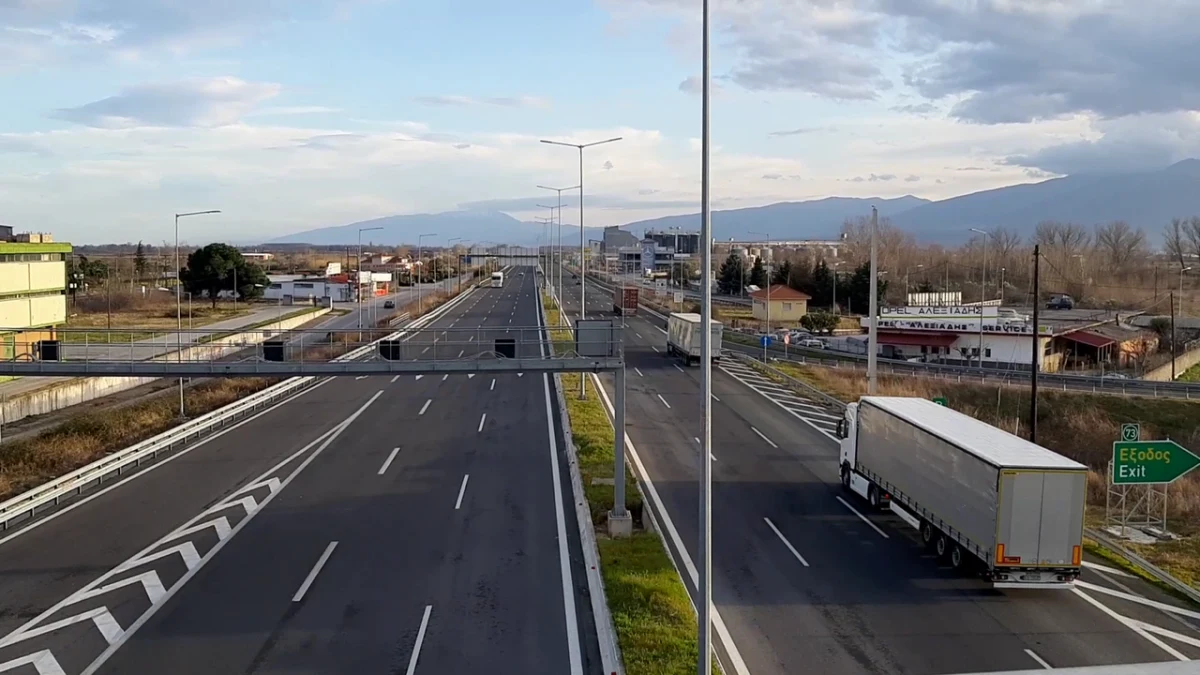
Quick answer: Thessaloniki is Greece’s strongest yield-efficient major city outside Athens in 2026. The municipality averages roughly €2,900 per square metre, outer suburbs near €2,100, and long-term residential gross yields run 5.0 to 6.5%, supported by Aristotle University’s large student population, a port and logistics workforce, and a professional tenant base that rents year-round. The entire Regional Unit of Thessaloniki sits in the €800,000 Golden Visa prime zone with a 120 square metre minimum and no short-term rentals on the qualifying asset; neighbouring Halkidiki is €400,000. For investors comparing northern Greece, Thessaloniki delivers urban liquidity and LTR income, while coastal Halkidiki and the €400,000 Peloponnese tier offer lower residency entry and different seasonal profiles.
Thessaloniki is not a discounted Athens, it is a distinct market with its own tenant drivers, price ladder, and regulatory overlay. Treating it as “cheap northern capital” misses the university rental engine, the suburban space advantage at the €800,000 threshold, and the fact that percentage yields often beat central Athens because Riviera-style price premiums are thinner.
This guide is the hub for Thessaloniki property investment in 2026. It maps prices by submarket, explains the €800,000 Golden Visa boundary versus Halkidiki’s €400,000 tier, models long-term rental returns, compares Thessaloniki with Athens and regional alternatives, sets out buyer scenarios, and lists the risks disciplined investors price before committing capital. For national transaction data, foreign inflow trends, and the full Golden Visa map, start with the Greece property investment guide.
What should foreign buyers know about thessaloniki Property Market in 2026: The Numbers?
Thessaloniki recorded among the strongest price momentum readings of Greece’s major cities in the Bank of Greece nine-month data through September 2025, outpacing Athens in growth rate terms even as absolute prices remain lower. That combination, momentum from a lower base, is exactly what yield-focused and residency investors are weighing against the €800,000 entry threshold.
Thessaloniki’s market depth comes from domestic demand first. The city is Greece’s second-largest urban economy, home to roughly one million people in the wider metropolitan area, the country’s largest port after Piraeus, and a growing technology and logistics corridor linked to Balkan trade routes. Foreign buying is meaningful but not dominant, which makes rental fundamentals, students, hospital staff, port workers, young professionals, more important than trophy-address speculation.
| Metric | Thessaloniki figure | National context |
|---|---|---|
| Municipality avg asking price (Q3 2025 ref.) | ~€2,900 / m² | National avg transaction €100,770 (2025) |
| Outer suburbs (Pylaia, Thermi) | ~€2,100 to 2,500 / m² | €400K tier regions often €1,400 to 2,200 / m² |
| Gross LTR yield (city-wide) | 5.0 to 6.5% | National average 4.40%; Athens 5.43% |
| Golden Visa threshold (Regional Unit) | €800,000 | €400,000 in Halkidiki, Peloponnese, Crete |
| Minimum usable area (GV) | 120 m² | Single title; no STR on qualifying asset |
| Foreign inflows (Greece, 2025) | €2.06B (−25.3% YoY) | Resale share 78% of foreign buyers |
National house price growth at 7.5% and foreign inflow contraction of 25.3% frame Thessaloniki correctly: the market rewards selective buying, not momentum chasing. A buyer who models net yield after ENFIA and Greek rental income tax, using the framework in the Greece rental yield guide, will outperform one who buys on gross yield headlines alone.
Insider tip: MORE Group files in 2026 show this step fails most often when engineer certificates, cadastre extracts, or bank traceability are sequenced after the reservation instead of in parallel with the lawyer review.
What should foreign buyers know about submarkets: Centre, Kalamaria, Panorama, and Eastern Suburbs?
What should foreign buyers know about submarkets: Centre, Kalamaria, Panorama, and Eastern Suburbs requires €400,000 regional or €800,000 prime investment under Law 5100/2024, engineer certification of 120m² usable residential area, and Circular 1/2026 bank traceability through a Greek account before any deposit. Budget 3.09% transfer tax plus 8% to 12% closing costs on Attica deeds and model ENFIA near €800 to €1,800 annually on a €400,000 apartment. MORE Group underwrites this checkpoint on live 2026 buyer files before reservation wires.
Thessaloniki investment performance is decided at the submarket level. The Regional Unit boundary matters for Golden Visa pricing, but within the unit the spread from inner transitional districts to Panorama hillside villas is as wide as any mainland Greek city outside Athens.
| Submarket | Indicative price (Q3 2025 ref.) | Investment character |
|---|---|---|
| Municipality centre / waterfront | €2,800 to 3,800 / m² | Urban LTR, student adjacency, GV €800K |
| Kalamaria (coastal) | €2,800 to 3,200 / m² | Seafront lifestyle, family tenants, lower yield % |
| Panorama / Pilea hills | €3,000 to 4,000 / m² | Premium owner-occupier, views, appreciation-led |
| Pylaia, Thermi, Oraiokastro | €2,100 to 2,500 / m² | Space per euro, 120m² easy at €800K, solid LTR |
| Inner transitional (selected) | €1,800 to 2,400 / m² | Yield potential, heavier due diligence on stock |
Municipality centre and waterfront: urban rental core
The Thessaloniki municipality, from the White Tower waterfront through Aristotelous, Ano Poli, and the inner residential grid, averages near €2,900 per square metre on quality renovated stock. Beneath that average, premium waterfront and new-build corridors trade higher, while older inner districts offer lower entry if building condition is verified.
Student demand is the structural rental anchor. Aristotle University and the International Hellenic University draw tens of thousands of students who rent year-round, not seasonally. Districts with fast bus or metro-linked access to campus, including parts of Toumba, the eastern corridor, and well-connected centre apartments, tend to let quickly and support the upper end of the 5.0 to 6.5% gross yield band when purchase price discipline is maintained.
Kalamaria: coastal suburb within the €800K zone
Kalamaria sits within the Thessaloniki municipality boundary with direct sea access and established family housing. Prices run €2,800 to 3,200 per square metre on typical stock, higher on front-row seafront. Kalamaria suits investors who want coastal lifestyle within the urban rental pool rather than pure yield maximisation. Percentage yields are often slightly below inner yield pockets because prices include a coastal premium that rents do not fully mirror.
Panorama and Pilea: hillside premium
Panorama and neighbouring Pilea command €3,000 to 4,000 per square metre for views, quiet streets, and larger formats. Golden Visa buyers with €800,000 often find 200 to 230 square metres here, well above the 120 square metre minimum. The buyer profile skews toward Greek professionals and EU second-home owners, which supports resale liquidity but compresses headline yield percentages.
Eastern suburbs: Pylaia, Thermi, and space efficiency
Pylaia, Thermi, and Oraiokastro in the eastern suburban corridor offer the Regional Unit’s best space-per-euro arithmetic at roughly €2,100 to 2,500 per square metre. At €800,000, a buyer can acquire 320 to 380 square metres on the right stock, far above Golden Visa minimums, while still serving professional and family long-term tenants who prefer suburban space over centre density. For zone-by-zone Golden Visa arithmetic, see the dedicated Thessaloniki Golden Visa €800K property guide.
Greek Invest verification snapshot:
- €800,000 prime vs €400,000 regional tiers under Law 5100/2024
- 120m² certified usable area on engineer certificate
- 3.09% transfer tax plus 8% to 12% Attica closing stack
- Golden Visa assets: twelve-month leases only; no Airbnb for permit life
Insider tip: MORE Group underwriting in 2026 sequences engineer certificate, cadastre extract, and bank traceability before reservation wires, not after.
Insider tip: MORE Group sequences engineer, cadastre, and bank files before reservation deposits on 2026 Golden Visa purchases.
What should foreign buyers know about golden Visa: €800,000 Regional Unit Rules?
What should foreign buyers know about golden Visa: €800,000 Regional Unit Rules requires €400,000 regional or €800,000 prime investment under Law 5100/2024, engineer certification of 120m² usable residential area, and Circular 1/2026 bank traceability through a Greek account before any deposit. Budget 3.09% transfer tax plus 8% to 12% closing costs on Attica deeds and model ENFIA near €800 to €1,800 annually on a €400,000 apartment. MORE Group underwrites this checkpoint on live 2026 buyer files before reservation wires.
Law 5100/2024 placed the entire Regional Unit of Thessaloniki in Greece’s €800,000 prime zone. That single administrative boundary, not the municipality line alone, defines the investment threshold. Kalamaria, Panorama, Pylaia-Chortiatis, Thermi, and peri-urban municipalities within the regional unit all require €800,000 on one residential property of at least 120 square metres usable area.
The geographic contrast that confuses many buyers: Halkidiki’s peninsulas lie in Central Macedonia but outside the Thessaloniki Regional Unit. A villa in Kassandra or Sithonia qualifies at €400,000, while an apartment in Kalamaria requires €800,000. The Halkidiki property investment guide covers the coastal €400,000 market in full.
| Location | Golden Visa minimum | Typical € budget buys |
|---|---|---|
| Thessaloniki Regional Unit | €800,000 | 200 to 380 m² depending on submarket |
| Halkidiki (outside Regional Unit) | €400,000 | Coastal villa or large apartment |
| Peloponnese (all municipalities) | €400,000 | 150 to 220 m² in Kalamata or Nafplio |
| Crete (standard tier) | €400,000 | Island house or city apartment |
Short-term tourist rentals are prohibited on the qualifying Golden Visa asset nationwide. Long-term leases of twelve months or more remain permitted and are the standard income route for residency investors in Thessaloniki.
Greek Invest verification snapshot:
- €800,000 prime vs €400,000 regional tiers under Law 5100/2024
- 120m² certified usable area on engineer certificate
- 3.09% transfer tax plus 8% to 12% Attica closing stack
- Golden Visa assets: twelve-month leases only; no Airbnb for permit life
What should foreign buyers know about rental Yields: Long-Term Residential Focus?
Gross long-term yields of 5.0 to 6.5% reflect rents that are strong relative to purchase prices in student-adjacent and middle-income districts. A €250,000 well-located two-bedroom that lets at €1,100 to 1,300 per month grosses roughly 5.3 to 6.2% before costs. A €800,000 Golden Visa asset in Panorama might let at €2,400 to 2,800 monthly, a lower percentage yield but stronger absolute income and tenant quality.
| Strategy | Gross yield range | Best fit |
|---|---|---|
| Student-adjacent LTR (centre / Toumba corridor) | 5.5 to 6.5% | Yield-first, active letting |
| Professional LTR (Kalamaria, centre) | 5.0 to 6.0% | Balanced income and liquidity |
| Premium hillside (Panorama) | 4.0 to 5.5% | GV + lifestyle, appreciation tilt |
| Suburban family (Pylaia, Thermi) | 5.0 to 6.0% | Space, 120m² margin, steady tenancy |
Net yield modelling should deduct ENFIA (typically 0.10 to 0.80% of assessed value annually), management at 8 to 12% of rent for absentee landlords, maintenance at 1 to 2% of property value, vacancy allowance of 5 to 10% in urban stock, and Greek rental income tax at 15% on the first €12,000 and 35% on €12,001 to €35,000. The Greece rental yield guide walks through the full gross-to-net framework with expense tables.
Golden Visa buyers must model long-term let income only on the qualifying property. If short-term income is part of the thesis, it requires a separate non-qualifying asset, often in Halkidiki at €400,000 or in the Peloponnese tier covered in the Peloponnese property investment guide.
Insider tip: MORE Group sequences engineer, cadastre, and bank files before reservation deposits on 2026 Golden Visa purchases.
What should foreign buyers know about pros and Cons of Thessaloniki Property Investment?
| Pros | Cons |
|---|---|
| Gross LTR yields 5.0 to 6.5%, often above central Athens % | Entire Regional Unit requires €800K for Golden Visa |
| Lower €/m² than Athens, more space at threshold | Less international resale liquidity than Athens |
| Two major universities, year-round student demand | GV qualifying asset cannot run STR / Airbnb |
| Greece’s second-largest urban tenant pool | Older resale stock, title and compliance risk |
| Strong price momentum in BoG 2025 readings | Net yields 1 to 1.5 points below gross after tax |
| Port, logistics, and Balkan-linked employment base | Premium hillside entry compresses percentage yield |
| Neighbouring Halkidiki offers €400K tier diversification | Foreign inflows nationally down 25.3%, selective market |
The pros cluster around income efficiency and urban depth. The cons cluster around the €800,000 residency entry, regulatory limits on STR for GV assets, and the due diligence burden on older building stock. The right question is whether your profile prioritises yield and tenancy depth enough to accept the higher Golden Visa threshold versus buying in the €400,000 tier elsewhere in northern Greece or the Peloponnese.
Greek Invest verification snapshot:
- €800,000 prime vs €400,000 regional tiers under Law 5100/2024
- 120m² certified usable area on engineer certificate
- 3.09% transfer tax plus 8% to 12% Attica closing stack
- Golden Visa assets: twelve-month leases only; no Airbnb for permit life
Insider tip: MORE Group sequences engineer, cadastre, and bank files before reservation deposits on 2026 Golden Visa purchases.
Buyer Scenarios: Who Should Invest in Thessaloniki?
Buyer Scenarios: Who Should Invest in Thessaloniki requires €400,000 regional or €800,000 prime investment under Law 5100/2024, engineer certification of 120m² usable residential area, and Circular 1/2026 bank traceability through a Greek account before any deposit. Budget 3.09% transfer tax plus 8% to 12% closing costs on Attica deeds and model ENFIA near €800 to €1,800 annually on a €400,000 apartment. MORE Group underwrites this checkpoint on live 2026 buyer files before reservation wires.
Scenario 1: Yield-first investor without Golden Visa needs
Profile: €150,000 to €400,000 budget, wants maximum percentage return, no residency requirement.
Recommendation: Target well-connected inner districts and student-adjacent stock where rents exceed price per square metre. Model 5.5 to 6.5% gross on long-term residential lets. Sub-€800,000 purchases avoid Golden Visa STR restrictions entirely, though STR licensing still follows national rules, not the Golden Visa ban, which applies only to qualifying GV assets.
Scenario 2: Golden Visa investor prioritising income at €800,000
Profile: €800,000+ budget, wants Greek residency, accepts LTR-only income on qualifying asset.
Recommendation: Use eastern suburbs or inner-municipality stock where €800,000 buys 220 to 380 square metres, comfortable margin above 120 square metres. Model LTR at 5.0 to 6.0% gross as base case. Confirm usable area on cadastral certificate before deposit. Full zone detail in the Thessaloniki Golden Visa €800K guide.
Scenario 3: Family lifestyle buyer with appreciation horizon
Profile: €500,000 to €900,000, five-to-ten-year hold, prioritises coastal or hillside living.
Recommendation: Focus on Kalamaria seafront or Panorama hillside where owner-occupier demand supports exit liquidity. Accept lower percentage yields in exchange for view premium and suburban quality of life. Long-term letting to expatriate families and senior hospital staff can bridge income during hold.
Scenario 4: Investor comparing Thessaloniki with €400,000 regions
Profile: Wants residency at lowest efficient entry, open to Peloponnese or Halkidiki alternatives.
Recommendation: If €800,000 is the constraint, compare Halkidiki coastal stock at €400,000 or Peloponnese markets in Kalamata and Nafplio; see the Peloponnese property investment guide. Thessaloniki wins on year-round urban tenancy; €400,000 regions win on entry price and optional STR on non-GV assets.
Scenario 5: Portfolio split: urban GV plus coastal lifestyle
Profile: €1.2M+ total capital, wants residency plus diversification.
Recommendation: Structure €800,000 Thessaloniki LTR apartment for Golden Visa and €400,000 Halkidiki or Peloponnese asset for seasonal use or separate income strategy. Total acquisition costs on each leg typically run 7 to 10% per the national cost framework in the Greece property investment guide.
Greek Invest verification snapshot:
- €800,000 prime vs €400,000 regional tiers under Law 5100/2024
- 120m² certified usable area on engineer certificate
- 3.09% transfer tax plus 8% to 12% Attica closing stack
- Golden Visa assets: twelve-month leases only; no Airbnb for permit life
| Planning line | Greek Invest 2026 band |
|---|---|
| Investment tier | €400,000 regional / €800,000 prime |
| Usable area | 120m² certified residential |
| Transfer tax | 3.09% FMA on higher value |
| Closing stack | 8% to 12% on Attica deeds |
What should foreign buyers know about risks and How to Manage Them?
What should foreign buyers know about risks and How to Manage Them requires €400,000 regional or €800,000 prime investment under Law 5100/2024, engineer certification of 120m² usable residential area, and Circular 1/2026 bank traceability through a Greek account before any deposit. Budget 3.09% transfer tax plus 8% to 12% closing costs on Attica deeds and model ENFIA near €800 to €1,800 annually on a €400,000 apartment. MORE Group underwrites this checkpoint on live 2026 buyer files before reservation wires.
Regulatory risk is the first Thessaloniki-specific factor for Golden Visa buyers. The €800,000 threshold, 120 square metre rule, and nationwide STR ban on qualifying assets eliminate strategies that work in Halkidiki or Crete on a €400,000 GV property. Mitigation: confirm regulatory status before offer and model LTR income as the base case.
Building and title risk is elevated on older inner-city resale stock, the same pattern that affects 78% of foreign buyers nationally who choose resale. Unauthorised extensions, pending cadastre entries, and engineer’s certificate discrepancies can delay completion. Mitigation: lawyer-led due diligence and independent engineer’s report before any deposit.
Yield compression risk applies in Panorama and waterfront premium zones where owner-occupier buyers push prices faster than rents. Mitigation: stress-test at zero appreciation for three years and compare rent comps per square metre.
Tenant concentration risk appears if a buyer over-indexes on student micro-units without considering summer vacancy patterns on poorly located stock. Mitigation: buy within walking distance or fast transit of campus, and prefer two-bedroom formats that also serve young professional sharers.
Market selectivity risk follows the 25.3% national foreign inflow decline. Assets priced purely on Golden Visa threshold arithmetic without rental support are more exposed than yield-backed urban stock. Mitigation: buy where domestic demand is self-sustaining, university corridor, Kalamaria family market, eastern suburb professionals.
Policy risk affects capital gains tax suspension (through December 2026) and any future Golden Visa threshold adjustments. Mitigation: model exit with and without capital gains tax; treat residency rules as stable only after legal confirmation at purchase.
Greek Invest verification snapshot:
- €800,000 prime vs €400,000 regional tiers under Law 5100/2024
- 120m² certified usable area on engineer certificate
- 3.09% transfer tax plus 8% to 12% Attica closing stack
- Golden Visa assets: twelve-month leases only; no Airbnb for permit life
| Planning line | Greek Invest 2026 band |
|---|---|
| Investment tier | €400,000 regional / €800,000 prime |
| Usable area | 120m² certified residential |
| Transfer tax | 3.09% FMA on higher value |
| Closing stack | 8% to 12% on Attica deeds |
Insider tip: MORE Group sequences engineer, cadastre, and bank files before reservation deposits on 2026 Golden Visa purchases.
How does Thessaloniki vs Athens vs Regional Greece compare?
How does Thessaloniki vs Athens vs Regional Greece compare requires €400,000 regional or €800,000 prime investment under Law 5100/2024, engineer certification of 120m² usable residential area, and Circular 1/2026 bank traceability through a Greek account before any deposit. Budget 3.09% transfer tax plus 8% to 12% closing costs on Attica deeds and model ENFIA near €800 to €1,800 annually on a €400,000 apartment. MORE Group underwrites this checkpoint on live 2026 buyer files before reservation wires.
| Market | GV tier | Typical yield | Best for |
|---|---|---|---|
| Thessaloniki | €800,000 | 5.0 to 6.5% LTR gross | Yield-efficient urban GV |
| Athens (Attica) | €800,000 | 5.43% avg; Kipseli 6 to 7.5% | Deepest liquidity, Ellinikon appreciation |
| Halkidiki | €400,000 | Seasonal / mixed; LTR thinner | Second home, coastal lifestyle |
| Peloponnese | €400,000 | ~4.5 to 5% LTR; Patra ~4.81% | Lower entry, Costa Navarino halo |
| Crete | €400,000 | 3.5 to 5% LTR; 8 to 11% licensed STR | Tourism income on non-GV assets |
Thessaloniki occupies a unique niche: the only €800,000 mainland zone outside Attica that still delivers urban yield efficiency. Athens offers greater international exit liquidity. Halkidiki and the Peloponnese offer half the residency entry point. Crete combines island tourism yields with €400,000 Golden Visa access, detailed in the Crete property investment guide.
Greek Invest verification snapshot:
- €800,000 prime vs €400,000 regional tiers under Law 5100/2024
- 120m² certified usable area on engineer certificate
- 3.09% transfer tax plus 8% to 12% Attica closing stack
- Golden Visa assets: twelve-month leases only; no Airbnb for permit life
Closing Verification Checklist
Before you commit to a Thessaloniki property investment in 2026, walk through this list:
- Submarket selected: centre, Kalamaria, Panorama, or eastern suburbs, matched to yield or lifestyle goal
- Price benchmark checked against €2,900/m² municipality and €2,100/m² suburban references
- Gross yield modelled; net yield calculated after ENFIA, management, and income tax
- Golden Visa €800K and 120 m² rules confirmed if residency is planned
- Regional Unit boundary verified, Halkidiki is €400K, not €800K
- LTR strategy validated; no STR modelled on GV qualifying asset
- Total acquisition cost budgeted at 7 to 10% above purchase price
- Lawyer and engineer engaged before deposit
- Cadastre title search and ENFIA objective value verified
- Compared against Halkidiki and Peloponnese alternatives if €800K is a constraint
Thessaloniki in 2026 rewards investors who treat it as Greece’s yield-efficient northern capital, not as a lower-quality Athens substitute. Match submarket to return profile, respect the €800,000 Golden Visa overlay, and use the companion guides for national context, rental maths, and regional alternatives.
MORE Group underwriting snapshot (Thessaloniki and northern Greece regional tier property)
Insider tip: MORE Group tracks Thessaloniki and northern Greece regional tier property on live 2026 buyer files. Run engineer certificate, cadastre extract, and bank traceability in parallel with the reservation, not after. Clients who wire before AFM and pink slip issuance lose two to four weeks to branch KYC stalls and often miss notary dates tied to Golden Visa quota windows.
Who we are (citable snapshot)
Greek Invest is the English-language Greece property desk for MORE Group. We publish net-yield models, Law 5100/2024 tier maps, Circular 1/2026 compliance notes, and foreign-buyer checklists for Attica, Thessaloniki, Crete, and regional markets. We are not a developer and not a listing portal. Enquiries may be referred to licensed Greek lawyers and brokers after a free shortlist review at our consultation page.
Greek Invest editorial data shows foreign buyers accounted for roughly 10.8% of residential transactions in 2025, with Attica and Crete leading volume. Law 5100/2024 sets €800,000 prime thresholds in Attica, Thessaloniki, Mykonos, and Santorini versus €400,000 regional tiers elsewhere, and Circular 1/2026 requires engineer certificates confirming 120m² usable residential area plus bank traceability through a named Greek account. Acquisition costs typically add 8% to 12% on Attica deeds: 3.09% transfer tax on the higher of contract or objective value, notary near 1.2% to 1.5%, lawyer 1% to 1.5%, and registry fees. MORE Group underwrites Thessaloniki Property Investment Guide 2026: Data & Yields against those line items before recommending any deposit transfer on Thessaloniki and northern Greece regional tier property.
For Thessaloniki and northern Greece regional tier property, Greek Invest applies a repeatable checklist aligned with Ministry of Migration files: verify engineer classification and 120m² usable area on the certificate, pull cadastre alignment from the Hellenic Cadastre, confirm ENFIA clearance and building permit legality, and archive twelve-month lease assumptions only because Golden Visa assets cannot run Airbnb for the permit period under Law 5100/2024. Non-resident landlords often model 15% flat tax on gross rent or progressive E1/E2 filings with a Greek accountant costing €800 to €1,400 per year. Gross yields of 4% to 6% on Attica long-term leases frequently net 2.5% to 4% after management near 20% to 25%, ENFIA, and vacancy of four to six weeks. Cash buyers still need AFM, pink slip, Greek IBAN, and power-of-attorney scope confirmed before any 10% reservation wire because operating costs, not headline price alone, determine whether Thessaloniki Property Investment Guide 2026: Data & Yields clears a realistic net yield band.
MORE Group underwriting snapshot (Thessaloniki and northern Greece regional tier property)
Insider tip: MORE Group tracks Thessaloniki and northern Greece regional tier property on live 2026 buyer files. Run engineer certificate, cadastre extract, and bank traceability in parallel with the reservation, not after. Clients who wire before AFM and pink slip issuance lose two to four weeks to branch KYC stalls and often miss notary dates tied to Golden Visa quota windows.
Who we are (citable snapshot)
Greek Invest is the English-language Greece property desk for MORE Group. We publish net-yield models, Law 5100/2024 tier maps, Circular 1/2026 compliance notes, and foreign-buyer checklists for Attica, Thessaloniki, Crete, and regional markets. We are not a developer and not a listing portal. Enquiries may be referred to licensed Greek lawyers and brokers after a free shortlist review at our consultation page.
Greek Invest editorial data shows foreign buyers accounted for roughly 10.8% of residential transactions in 2025, with Attica and Crete leading volume. Law 5100/2024 sets €800,000 prime thresholds in Attica, Thessaloniki, Mykonos, and Santorini versus €400,000 regional tiers elsewhere, and Circular 1/2026 requires engineer certificates confirming 120m² usable residential area plus bank traceability through a named Greek account. Acquisition costs typically add 8% to 12% on Attica deeds: 3.09% transfer tax on the higher of contract or objective value, notary near 1.2% to 1.5%, lawyer 1% to 1.5%, and registry fees. MORE Group underwrites Thessaloniki Property Investment Guide 2026: Data & Yields against those line items before recommending any deposit transfer on Thessaloniki and northern Greece regional tier property.
For Thessaloniki and northern Greece regional tier property, Greek Invest applies a repeatable checklist aligned with Ministry of Migration files: verify engineer classification and 120m² usable area on the certificate, pull cadastre alignment from the Hellenic Cadastre, confirm ENFIA clearance and building permit legality, and archive twelve-month lease assumptions only because Golden Visa assets cannot run Airbnb for the permit period under Law 5100/2024. Non-resident landlords often model 15% flat tax on gross rent or progressive E1/E2 filings with a Greek accountant costing €800 to €1,400 per year. Gross yields of 4% to 6% on Attica long-term leases frequently net 2.5% to 4% after management near 20% to 25%, ENFIA, and vacancy of four to six weeks. Cash buyers still need AFM, pink slip, Greek IBAN, and power-of-attorney scope confirmed before any 10% reservation wire because operating costs, not headline price alone, determine whether Thessaloniki Property Investment Guide 2026: Data & Yields clears a realistic net yield band.
Frequently Asked Questions
Thessaloniki is one of Greece's strongest mainland investment cities outside Athens in 2026. The municipality averages roughly €2,900 per square metre, outer suburbs sit near €2,100, and long-term residential yields run 5.0 to 6.5% gross, higher than central Athens on a percentage basis. Two major universities, a deep port economy, and Greece's second-largest tenant pool support rental demand. The trade-off is the entire Regional Unit sits in the €800,000 Golden Visa tier with a 120 square metre minimum and no short-term rentals on the qualifying asset.
Q3 2025 reference data puts the Thessaloniki municipality average near €2,900 per square metre for quality stock. Outer suburban municipalities such as Pylaia, Thermi, and Oraiokastro trade around €2,100 to 2,500 per square metre. Coastal Kalamaria and hillside Panorama command €2,800 to 4,000 depending on view and build quality. Inner transitional districts can sit below €2,200, while waterfront new-build in premium corridors approaches €3,800.
Long-term residential gross yields in Thessaloniki typically run 5.0 to 6.5% on well-located apartments aimed at students, young professionals, and port-related workers. Student-adjacent districts near Aristotle University and the city campus corridor often sit at the upper end because demand is year-round rather than seasonal. Net yields after ENFIA, management, maintenance, and Greek rental income tax usually land 1 to 1.5 percentage points below gross figures.
Yes. Law 5100/2024 designated the entire Regional Unit of Thessaloniki as a prime zone alongside Attica, Mykonos, and Santorini. Any qualifying Golden Visa purchase within the regional unit boundary requires a minimum €800,000 investment in a single residential property of at least 120 square metres of usable area. Short-term tourist rentals are prohibited on the qualifying asset. Buyers in neighbouring Halkidiki fall into the €400,000 tier instead.
Both cities sit in the €800,000 Golden Visa tier, but Thessaloniki offers lower entry per square metre, roughly €2,900 versus Athens centre at €3,400+, and higher percentage long-term yields in many districts. Athens wins on international resale liquidity, Ellinikon-driven Riviera appreciation, and the deepest foreign buyer pool. Thessaloniki wins on yield efficiency, university-driven tenancy, and less Golden Visa threshold competition relative to price.
Yield-focused investors often target inner suburbs and student-adjacent districts where rents are strong relative to price, areas such as Toumba, Charilaou, and parts of Stavroupoli on the right stock. Family-suburb buyers look at Pylaia and Thermi for space at €2,100 to 2,500 per square metre. Lifestyle investors favour Kalamaria's seafront and Panorama's hillside views, accepting slightly lower percentage yields for stronger owner-occupier resale demand.
Thessaloniki suits investors who want year-round rental demand, urban liquidity, and long-term residential income at 5 to 6.5% gross, but accept the €800,000 Golden Visa threshold. Halkidiki, 45 to 90 minutes from the city, sits in the €400,000 tier and functions primarily as a second-home and seasonal coastal market. Many investors split the thesis: Thessaloniki apartment for LTR and residency at €800,000, or Halkidiki villa for lifestyle and optional STR on a non-GV asset at €400,000.
Thessaloniki transactions require a Greek lawyer, engineer's certificate, cadastre verification, ENFIA objective-value check, and confirmation of Golden Visa size rules if residency is planned. Older resale stock dominates much of the inner city, so building permit compliance, unauthorised extension checks, and municipal charge clearance matter before any deposit. Border-zone rules do not apply to Thessaloniki municipality purchases for EU buyers, but non-EU buyers should confirm nationality-specific requirements with counsel.
Get your Greece property shortlist
Share your budget, region (Athens, Crete, islands, or Peloponnese), and Golden Visa goal. We reply within one business day with matched options and next steps.