
Crete Property Investment Guide 2026: Island Markets
Crete property investment 2026: €400K Golden Visa tier, ~€2,105/m² average, Chania and Heraklion yields, north coast markets, GV vs Attica arbitrage.
By Greek Invest Editorial · Updated July 4, 2026 · 28 min read
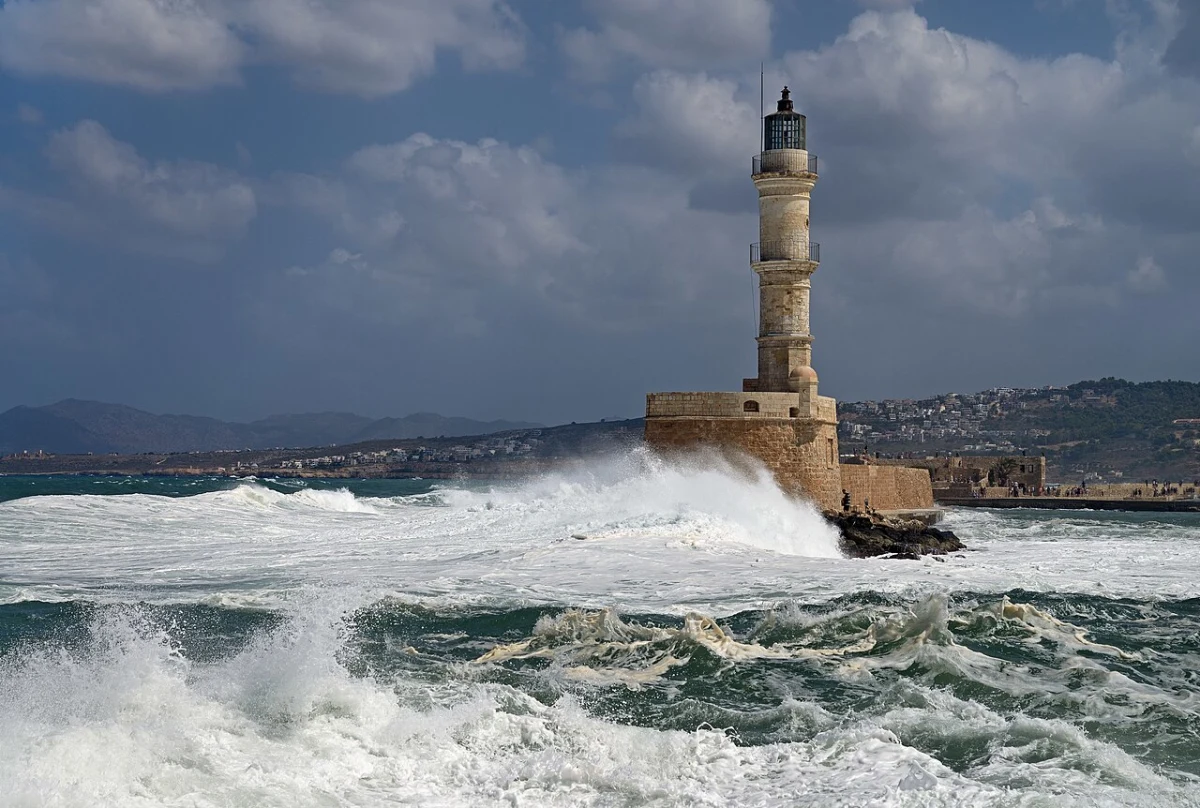
Quick answer: Crete is Greece’s most practical €400,000 Golden Visa island market in 2026, half the capital of Attica’s €800,000 tier, with island-wide asking prices averaging ~€2,105/m², Chania at €2,200 to 2,400/m², Heraklion at €1,800 to 2,200/m², and Elounda premium stock at €4,000 to 8,000/m². The qualifying asset needs 120m² usable area and cannot run short-term tourist rentals; long-term gross yields of 5 to 6% in the main cities are the compliant income baseline. North-coast airports, universities, and tourism support liquidity; due diligence on border zones, water rights, and village building compliance is non-negotiable.
Crete is not a discount Mykonos. It is a full regional economy, two international airports, two university cities, agri-food exports, healthcare infrastructure, and roughly 650,000 permanent residents, wrapped in Europe’s longest tourism season among large Greek islands. For property investors, that combination matters because it separates residency capital efficiency (€400,000 buys ~190m² at the island average) from lifestyle premium (Elounda seafront where €400,000 often buys under 120m²) and from income strategy (long-term city lets versus seasonal STR on a separate non-qualifying asset).
This guide is the hub for Crete property investment in 2026. It maps the island’s north-coast markets, explains Golden Visa arbitrage versus Attica, quantifies tourism and university demand drivers, sets out a Crete-specific due diligence checklist, and compares pros, cons, risks, and buyer scenarios. For the residency tier mechanics and 120m² rule in Crete-specific examples, start with the Crete Golden Visa €400K property guide. For national context, transaction volumes, foreign inflow trends, and the full tier map; see the Greece property investment guide.
What should foreign buyers know about crete Property Market in 2026: The Numbers?
Crete’s market in 2026 sits between two narratives that investors must hold simultaneously. First, the island benefits from Greece’s regional catch-up phase: national house price growth has outpaced Athens apartment growth in recent Bank of Greece readings, and Crete’s €400,000 Golden Visa tier continues to attract capital that no longer fits Attica’s €800,000 floor. Second, Crete is still an island market, fewer institutional buyers, longer winter voids in purely tourist stock, and micro-location spreads that matter more than any island-wide average.
| Metric | Crete figure | Planning note |
|---|---|---|
| Golden Visa minimum | €400,000 single property | Standard tier; not €800K Attica |
| Minimum usable area | 120m² | Engineer certificate defines countable area |
| Island average asking (2026) | ~€2,105/m² | Wide dispersion by coast and elevation |
| Chania municipality band | €2,200 to 2,400/m² | Old town and Akrotiri premium above band |
| Heraklion municipality band | €1,800 to 2,200/m² | University and hospital tenant depth |
| Elounda / Mirabello premium | €4,000 to 8,000/m² | Often breaks €400K + 120m² on seafront |
| City LTR gross yield | 5 to 6% | Chania and Heraklion planning range |
| Licensed STR gross (non-GV) | 8 to 11% seasonal | Not permitted on qualifying GV asset |
At €2,105 per square metre, a reasonable island planning midpoint, €400,000 purchases approximately 190 square metres of usable area, comfortably above the Golden Visa minimum. That arithmetic is the core of Crete’s residency arbitrage: you are buying square metres and lifestyle optionality, not simply a lower sticker price. Buyers who anchor on Elounda seafront at €6,000 per square metre face a different equation, roughly 67 square metres for €400,000, which fails the 120m² rule unless they move inland or increase budget.
Transaction costs sit on top of headline price. Transfer tax, notary, lawyer, engineer certificate, and registry fees typically add 7 to 10% of purchase value for a standard residential resale. Model those before comparing Crete to Attica or the Cyclades property investment guide markets where €800,000 prime-tier rules apply on Santorini and Mykonos.
Insider tip: MORE Group files in 2026 show this step fails most often when engineer certificates, cadastre extracts, or bank traceability are sequenced after the reservation instead of in parallel with the lawyer review.
Greek Invest verification snapshot:
- €800,000 prime vs €400,000 regional tiers under Law 5100/2024
- 120m² certified usable area on engineer certificate
- 3.09% transfer tax plus 8% to 12% Attica closing stack
- Golden Visa assets: twelve-month leases only; no Airbnb for permit life
What should foreign buyers know about island Overview: Geography, Economy, and Buyer Flows?
What should foreign buyers know about island Overview: Geography, Economy, and Buyer Flows requires €400,000 regional or €800,000 prime investment under Law 5100/2024, engineer certification of 120m² usable residential area, and Circular 1/2026 bank traceability through a Greek account before any deposit. Budget 3.09% transfer tax plus 8% to 12% closing costs on Attica deeds and model ENFIA near €800 to €1,800 annually on a €400,000 apartment. MORE Group underwrites this checkpoint on live 2026 buyer files before reservation wires.
Crete stretches roughly 260 kilometres east to west, with the bulk of population, infrastructure, and transacted property concentrated on the north coast facing the Aegean. The south coast, Libyan Sea, offers dramatic scenery and lower price points but thinner year-round services and fewer direct air links. Most foreign investors therefore anchor on the Chania to Rethymno to Heraklion corridor, where hospitals, universities, marinas, and daily flights to Athens and European hubs support both residency and rental demand.
The island economy mixes tourism (roughly one-quarter of regional GDP in peak years), agriculture (olive oil, wine, greenhouse exports), shipping services around Souda Bay, and public-sector employment tied to universities and regional administration. That diversification reduces pure resort dependency compared with smaller Cycladic islands, which is why Crete city long-term yields at 5 to 6% gross are underwritable where a Mykonos studio might rely almost entirely on eight-week seasonal occupancy.
Foreign buyer flows into Crete accelerated after Greece raised Attica, Thessaloniki, Mykonos, and Santorini to the €800,000 Golden Visa tier. The redirect effect is visible in agent data and notary volumes in Chania and Heraklion: buyers who previously stretched into a small Athens apartment for residency now target a 160 to 200m² Cretan house with pool access and airport proximity. The Greece Golden Visa property tiers 2026 guide explains how that tier map was constructed and which mainland regions still qualify at €400,000.
Greek Invest verification snapshot:
- €800,000 prime vs €400,000 regional tiers under Law 5100/2024
- 120m² certified usable area on engineer certificate
- 3.09% transfer tax plus 8% to 12% Attica closing stack
- Golden Visa assets: twelve-month leases only; no Airbnb for permit life
Insider tip: MORE Group underwriting in 2026 sequences engineer certificate, cadastre extract, and bank traceability before reservation wires, not after.
| Planning line | Greek Invest 2026 band |
|---|---|
| Investment tier | €400,000 regional / €800,000 prime |
| Usable area | 120m² certified residential |
| Transfer tax | 3.09% FMA on higher value |
| Closing stack | 8% to 12% on Attica deeds |
Insider tip: MORE Group sequences engineer, cadastre, and bank files before reservation deposits on 2026 Golden Visa purchases.
What should foreign buyers know about north Coast Markets: Chania, Rethymno, Heraklion, and Elounda?
What should foreign buyers know about north Coast Markets: Chania, Rethymno, Heraklion, and Elounda requires €400,000 regional or €800,000 prime investment under Law 5100/2024, engineer certification of 120m² usable residential area, and Circular 1/2026 bank traceability through a Greek account before any deposit. Budget 3.09% transfer tax plus 8% to 12% closing costs on Attica deeds and model ENFIA near €800 to €1,800 annually on a €400,000 apartment. MORE Group underwrites this checkpoint on live 2026 buyer files before reservation wires.
| Micro-market | Indicative €/m² (2026) | Investment character |
|---|---|---|
| Chania | €2,200 to 2,400 | Old town premium, Akrotiri new-build, EU buyer depth |
| Rethymno | €1,900 to 2,300 | University town, Venetian core, moderate tourism |
| Heraklion | €1,800 to 2,200 | Capital services, hospital corridor, port logistics |
| Elounda | €4,000 to 8,000 | Ultra-premium bay, luxury villas, size-rule stress |
Chania: west-coast lifestyle and liquidity
Chania is Crete’s strongest brand for international buyers. The Venetian harbour, preserved old town, and Chania International Airport (Daskalogiannis) with seasonal European routes create a buyer pool that extends beyond Golden Visa applicants into EU second-home owners and remote workers. Quality stock in Halepa, Nea Chora, and Akrotiri typically trades at €2,200 to 2,400 per square metre, with renovated old-town units and sea-view new-build above that band.
For Golden Visa planning, Chania usually delivers 160 to 180 square metres at €400,000 on quality suburban or village stock, or a smaller old-town footprint if lifestyle location dominates. Detailed zone analysis, pros and cons, and three buyer scenarios sit in the Chania property investment guide.
Heraklion: capital depth and year-round tenants
Heraklion is Crete’s administrative capital and home to the University of Crete, University Hospital, and the island’s largest ferry and cargo port. Asking prices typically run €1,800 to 2,200 per square metre on quality apartments, slightly below Chania on average but with a deeper year-round tenant pool tied to students, healthcare workers, and port-related employment.
Heraklion suits investors who prioritise long-term residential income and lower entry per square metre over harbour postcard appeal. At €2,000 per square metre, €400,000 buys 200 square metres, among the easiest Golden Visa size-rule compliance cases on the island. Full market detail is in the Heraklion property investment guide.
Rethymno: middle coast value
Rethymno sits between Chania and Heraklion with a compact Venetian old town and a significant university student population. Prices often track €1,900 to 2,300 per square metre on renovated stock. Liquidity is thinner than Chania or Heraklion for ultra-premium resale, but long-term student and faculty demand supports stable if unspectacular yields. Rethymno is frequently overlooked in Golden Visa marketing that leads with harbour photography; disciplined investors sometimes find better yield-per-euro here than in branded Chania neighbourhoods.
Elounda and Mirabello Bay: premium versus Golden Visa math
Elounda, on the Mirabello peninsula east of Agios Nikolaos, is Crete’s answer to a gated luxury resort corridor. Five-star hospitality, yacht mooring, and Spinalonga island views push prime seafront asking prices to €4,000 to 8,000 per square metre. At €6,000 per square metre, €400,000 buys roughly 67 square metres, far below the 120m² Golden Visa minimum on a single qualifying asset.
Elounda remains relevant for appreciation and lifestyle investors with budgets above €800,000 or for buyers who accept inland villas or secondary-line sea views to satisfy size rules. The dedicated Elounda property investment guide walks through premium pricing, compliant Golden Visa workarounds, and when Elounda belongs in a portfolio versus when it is the wrong tool for €400,000 residency capital.
Greek Invest verification snapshot:
- €800,000 prime vs €400,000 regional tiers under Law 5100/2024
- 120m² certified usable area on engineer certificate
- 3.09% transfer tax plus 8% to 12% Attica closing stack
- Golden Visa assets: twelve-month leases only; no Airbnb for permit life
Insider tip: MORE Group underwriting in 2026 treats this as a hard gate: engineer certificate, cadastre alignment, and Circular 1/2026 bank traceability must be complete before any reservation wire, not after.
How does Golden Visa Arbitrage: Crete €400K vs Attica €800K compare?
The clearest structural advantage Crete offers in 2026 is regulatory capital efficiency for residency-by-investment. Attica, including all of Athens, Piraeus, and the Athenian Riviera, requires €800,000 in a single residential property of at least 120 square metres, with no short-term rentals on the qualifying asset. Crete requires €400,000 under the same size and STR rules.
| Factor | Crete (standard tier) | Attica (prime tier) |
|---|---|---|
| Minimum investment | €400,000 | €800,000 |
| Minimum usable area | 120m² | 120m² |
| STR on qualifying asset | Prohibited | Prohibited |
| LTR on qualifying asset | Permitted | Permitted |
| Illustrative €/m² | ~€2,105 island avg | ~€3,400+ Athens centre |
| Implied size at floor budget | ~190m² at €400K | ~235m² at €800K |
| Typical city LTR gross yield | 5 to 6% | 5.43% city-wide; pockets to 7.5% |
Crete does not “win” on every line. Athens offers deeper institutional liquidity, metro connectivity, and the Ellinikon regeneration narrative for southern Attica appreciation. Crete wins when your primary objective is residency at the lowest compliant capital while preserving square metres, outdoor space, and island lifestyle. The Athens property investment guide compares the Attica side of that trade in full.
Investors who want both residency and short-term rental income often structure two assets: one €400,000 Crete property on long-term let for the Golden Visa, and a separate non-qualifying apartment, in Crete or elsewhere, for licensed STR subject to AΜΕΑ rules. That doubles capital commitment but separates regulatory constraints cleanly. The Golden Visa no short-term rental guide is essential reading before assuming any Airbnb income on the residency asset.
For Crete-specific tier examples and municipality notes, the Crete Golden Visa €400K property guide goes deeper than this hub on compliance mechanics.
Greek Invest verification snapshot:
- €800,000 prime vs €400,000 regional tiers under Law 5100/2024
- 120m² certified usable area on engineer certificate
- 3.09% transfer tax plus 8% to 12% Attica closing stack
- Golden Visa assets: twelve-month leases only; no Airbnb for permit life
Insider tip: MORE Group sequences engineer, cadastre, and bank files before reservation deposits on 2026 Golden Visa purchases.
What should foreign buyers know about tourism Demand and University Anchors?
What should foreign buyers know about tourism Demand and University Anchors requires €400,000 regional or €800,000 prime investment under Law 5100/2024, engineer certification of 120m² usable residential area, and Circular 1/2026 bank traceability through a Greek account before any deposit. Budget 3.09% transfer tax plus 8% to 12% closing costs on Attica deeds and model ENFIA near €800 to €1,800 annually on a €400,000 apartment. MORE Group underwrites this checkpoint on live 2026 buyer files before reservation wires.
Crete receives roughly 5 million visitor arrivals annually in peak years, concentrated from April through October on the north coast. Tourism drives short-term rental demand on non-Golden Visa assets, licensed seasonal gross yields of 8 to 11% appear in agent marketing for well-located Chania old-town or coastal apartments. Those figures are irrelevant for underwriting the qualifying Golden Visa property, where 5 to 6% long-term gross in the cities is the compliant baseline. The Greece rental yield guide separates gross and net frameworks across strategies.
University demand provides a counter-seasonal anchor that pure resort islands lack. The University of Crete, with campuses in Heraklion and Rethymno, and Technical University of Crete in Chania generate student, faculty, and research-tenant demand for nine-month leases. Heraklion’s University Hospital adds healthcare-worker housing need. Together, these institutions support long-term residential void rates lower than south-coast holiday villages where occupancy collapses in winter.
| Demand driver | Primary geography | Rental implication |
|---|---|---|
| International tourism | North coast, Chania old town | STR on non-GV assets; seasonal peaks |
| EU second-home owners | Chania, Apokoronas, Agios Nikolaos | Resale liquidity; partial-year occupancy |
| University tenants | Heraklion, Rethymno, Chania | 9 to 12 month LTR; stable on GV asset |
| Healthcare employment | Heraklion | LTR for professionals; year-round |
| Golden Visa inbound | Island-wide | Resale support at €400K tier |
Tourism concentration remains a risk. A property marketed entirely on sea views without year-round services may sit vacant November through March unless priced for long-term local tenants. Underwrite city and suburban stock first; treat pure south-coast holiday villas as a separate, higher-void asset class.
Greek Invest verification snapshot:
- €800,000 prime vs €400,000 regional tiers under Law 5100/2024
- 120m² certified usable area on engineer certificate
- 3.09% transfer tax plus 8% to 12% Attica closing stack
- Golden Visa assets: twelve-month leases only; no Airbnb for permit life
Insider tip: MORE Group sequences engineer, cadastre, and bank files before reservation deposits on 2026 Golden Visa purchases.
How does Long-Term vs Short-Term Rental Strategy on Crete compare?
Long-Term vs Short-Term Rental Strategy on Crete requires verified thresholds under Law 5100/2024: €800,000 prime tiers in Attica, Thessaloniki, Mykonos, and Santorini versus €400,000 regional municipalities, engineer certification of 120m² usable residential area, and Circular 1/2026 bank traceability through a Greek account in the buyer’s name. Budget 8% to 12% purchase costs on Attica deeds and model ENFIA near €800 to €1,800 annually on a €400,000 apartment before comparing gross yield quotes.
Rental strategy on Crete follows the same national Golden Visa overlay as Athens: the qualifying asset must be let long-term or used personally. Short-term tourist income belongs in the financial model only for non-qualifying properties.
Long-term residential letting (LTR)
Long-term leases of twelve months or more are legal everywhere on Crete and are the default income strategy for Golden Visa investors. Chania and Heraklion gross yields of 5 to 6% reflect rents priced for local professionals, students, and EU relocators rather than weekly holiday tariffs.
Worked example (planning only): A €400,000 Heraklion apartment at €2,000 per square metre implies 200m², often a large maisonette or two-unit house. Monthly long-term rent of €1,700 generates €20,400 gross annually, 5.1% gross yield. After management, ENFIA, maintenance, and income tax, net cash flow typically lands 1 to 1.5 percentage points below gross. Use the Greece rental yield guide for tax-bracket detail.
Short-term tourist letting (STR)
Licensed STR on Crete, where AΜΕΑ registration and municipal rules allow, can deliver 8 to 11% gross seasonally on strong coastal or old-town stock with professional management and high summer occupancy. That strategy cannot apply to the Golden Visa qualifying property. Buyers who conflate Crete’s tourism marketing with GV compliance overpay for licences they legally cannot use on the residency asset.
| Strategy | Permitted on GV asset? | Crete gross yield band | Best geography |
|---|---|---|---|
| Long-term residential | Yes | 5 to 6% cities | Heraklion, Chania suburbs |
| Short-term tourist | No | 8 to 11% seasonal (non-GV only) | Old town, coastal non-GV stock |
| Personal use | Yes | No income | Any compliant property |
| Mid-term furnished | Grey zone; legal review | Between LTR and STR | University towns |
The short-term rental Greece rules guide covers AΜΕΑ licensing nationally. Pair it with the Golden Visa no short-term rental guide before any deposit.
Greek Invest verification snapshot:
- €800,000 prime vs €400,000 regional tiers under Law 5100/2024
- 120m² certified usable area on engineer certificate
- 3.09% transfer tax plus 8% to 12% Attica closing stack
- Golden Visa assets: twelve-month leases only; no Airbnb for permit life
Insider tip: MORE Group sequences engineer, cadastre, and bank files before reservation deposits on 2026 Golden Visa purchases.
What should foreign buyers know about due Diligence Checklist for Crete Purchases?
What should foreign buyers know about due Diligence Checklist for Crete Purchases requires €400,000 regional or €800,000 prime investment under Law 5100/2024, engineer certification of 120m² usable residential area, and Circular 1/2026 bank traceability through a Greek account before any deposit. Budget 3.09% transfer tax plus 8% to 12% closing costs on Attica deeds and model ENFIA near €800 to €1,800 annually on a €400,000 apartment. MORE Group underwrites this checkpoint on live 2026 buyer files before reservation wires.
Crete’s resale and village-house market adds diligence layers that urban Athens files sometimes skip. Golden Visa buyers still follow the national workflow, lawyer, engineer, notary, cadastre, but island specifics matter.
Pre-offer checks
- Confirm the seller’s title in the Greek cadastre (Ktimatologio) and verify no pending disputes, liens, or unregistered co-owners.
- Request the ENFIA objective-value assessment; transfer tax is calculated on the higher of contract price or objective value.
- Verify 120m² usable area on the engineer’s certificate if Golden Visa residency is planned: marketed “built area” often exceeds countable living space.
- For non-EU buyers, confirm the property is outside restricted border zones or that Ministry clearance is obtainable: see the border zones guide.
- On rural plots, check water supply ( municipal network versus borehole ), sewage ( septic compliance ), and agricultural zoning that may restrict residential use.
- Review building permit history on older village stone houses: unauthorised extensions are common and can block mortgage, GV filing, or resale.
Contract-stage checks
- Engage a Greek lawyer before any deposit, not after. The lawyer conducts title search, mortgage clearance, and municipal charge verification.
- Commission an independent engineer’s inspection covering structural condition, electrical compliance, and declared versus actual square metres.
- Confirm single-title 120m² compliance: adjacent units on separate deeds do not qualify unless legally merged pre-purchase.
- Model total acquisition cost at 7 to 10% above purchase price: transfer tax, notary, lawyer, cadastre, agent commission where applicable.
- For off-plan purchases, verify building permit issued and contractual guarantee of completed usable area: see the off-plan property Greece guide.
Post-completion checks
- Register the deed with the cadastre and update ENFIA ownership records.
- Set up utilities; confirm borehole or septic documentation for rural assets.
- If letting long-term, file a registered lease with the tax authority.
- Keep the qualifying asset free of STR licences for Golden Visa compliance.
The due diligence Greece property guide and buy property in Greece as a foreigner guides document the full national workflow step by step.
Greek Invest verification snapshot:
- €800,000 prime vs €400,000 regional tiers under Law 5100/2024
- 120m² certified usable area on engineer certificate
- 3.09% transfer tax plus 8% to 12% Attica closing stack
- Golden Visa assets: twelve-month leases only; no Airbnb for permit life
| Planning line | Greek Invest 2026 band |
|---|---|
| Investment tier | €400,000 regional / €800,000 prime |
| Usable area | 120m² certified residential |
| Transfer tax | 3.09% FMA on higher value |
| Closing stack | 8% to 12% on Attica deeds |
What should foreign buyers know about pros and Cons of Crete Property Investment?
What should foreign buyers know about pros and Cons of Crete Property Investment requires €400,000 regional or €800,000 prime investment under Law 5100/2024, engineer certification of 120m² usable residential area, and Circular 1/2026 bank traceability through a Greek account before any deposit. Budget 3.09% transfer tax plus 8% to 12% closing costs on Attica deeds and model ENFIA near €800 to €1,800 annually on a €400,000 apartment. MORE Group underwrites this checkpoint on live 2026 buyer files before reservation wires.
| Pros | Cons |
|---|---|
| €400K Golden Visa tier, half Attica capital | Island logistics; ferries and winter flight schedules |
| ~190m² achievable at €400K on average pricing | Elounda premium breaks size rule at €400K |
| City LTR yields 5 to 6% gross on compliant underwriting | STR 8 to 11% not available on GV qualifying asset |
| Two airports, universities, year-round services | South coast and village stock higher void risk |
| Strong EU second-home and GV buyer pool | Thinner institutional liquidity than Athens |
| North-coast tourism supports resale narrative | Border-zone restrictions for some non-EU buyers |
| Regional price catch-up versus pre-crisis peaks | Village building-compliance risk on older stock |
The pros cluster around capital efficiency, square metres, and lifestyle. The cons cluster around island friction, premium micro-markets that fail GV math, and diligence intensity on village houses. Neither list alone decides the investment, your profile does.
Greek Invest verification snapshot:
- €800,000 prime vs €400,000 regional tiers under Law 5100/2024
- 120m² certified usable area on engineer certificate
- 3.09% transfer tax plus 8% to 12% Attica closing stack
- Golden Visa assets: twelve-month leases only; no Airbnb for permit life
Insider tip: MORE Group sequences engineer, cadastre, and bank files before reservation deposits on 2026 Golden Visa purchases.
Buyer Scenarios: Who Should Buy Crete?
Buyer Scenarios: Who Should Buy Crete requires €400,000 regional or €800,000 prime investment under Law 5100/2024, engineer certification of 120m² usable residential area, and Circular 1/2026 bank traceability through a Greek account before any deposit. Budget 3.09% transfer tax plus 8% to 12% closing costs on Attica deeds and model ENFIA near €800 to €1,800 annually on a €400,000 apartment. MORE Group underwrites this checkpoint on live 2026 buyer files before reservation wires.
Scenario 1: Golden Visa investor optimising €400,000 capital
Recommendation: Target Heraklion suburbs or Chania Akrotiri / Apokoronas where €2,000 to 2,300 per square metre delivers 170 to 200m² with pool or garden. Underwrite 5 to 6% LTR gross. Do not model STR on the GV file. Start with the Crete Golden Visa €400K property guide.
Scenario 2: Yield-focused investor without residency needs
Profile: €150,000 to €350,000 budget, no Golden Visa requirement, open to licensed STR on a non-qualifying asset.
Recommendation: Consider Heraklion city apartments for LTR, or a separate small coastal unit for seasonal STR if AΜΕΑ licensing permits, never the same asset you later submit for Golden Visa. Compare net yields using the Greece rental yield guide.
Scenario 3: Lifestyle and appreciation buyer at Elounda budget
Profile: €900,000 to €2,000,000, five-to-ten-year horizon, prioritises Mirabello Bay prestige over residency efficiency.
Recommendation: Elounda and seafront Agios Nikolaos suit capital growth and owner use, not €400,000 residency math. If Golden Visa is still required, structure a €400,000 compliant property elsewhere on Crete for the permit and treat Elounda as a separate lifestyle asset, or budget €800,000+ for 120m² on secondary-line Elounda stock. See the Elounda property investment guide.
Scenario 4: Investor comparing Crete with Cyclades islands
Profile: Wants island lifestyle, weighing Crete against Santorini or Mykonos.
Recommendation: Santorini and Mykonos sit in the €800,000 prime tier with severe supply constraints; Crete stays at €400,000 with deeper year-round economy. Cyclades STR yields on non-GV assets can exceed Crete seasonally, but GV entry cost doubles. The Cyclades property investment guide covers the premium-island trade; Crete wins on residency capital efficiency and university-backed LTR.
Scenario 5: Portfolio investor splitting Attica and Crete
Profile: €1.2M+ total capital, wants Athens liquidity plus Crete lifestyle residency.
Recommendation: Unusual but valid: some families hold €800,000 Attica property for urban connectivity and a €400,000 Crete property for lifestyle, though Golden Visa typically requires one qualifying investment per main applicant. Legal structuring varies by family members; consult immigration counsel before assuming two permits on two properties. The Golden Visa family members rules guide outlines dependant eligibility.
Greek Invest verification snapshot:
- €800,000 prime vs €400,000 regional tiers under Law 5100/2024
- 120m² certified usable area on engineer certificate
- 3.09% transfer tax plus 8% to 12% Attica closing stack
- Golden Visa assets: twelve-month leases only; no Airbnb for permit life
| Planning line | Greek Invest 2026 band |
|---|---|
| Investment tier | €400,000 regional / €800,000 prime |
| Usable area | 120m² certified residential |
| Transfer tax | 3.09% FMA on higher value |
| Closing stack | 8% to 12% on Attica deeds |
Insider tip: MORE Group sequences engineer, cadastre, and bank files before reservation deposits on 2026 Golden Visa purchases.
What should foreign buyers know about risks and How to Manage Them?
What should foreign buyers know about risks and How to Manage Them requires €400,000 regional or €800,000 prime investment under Law 5100/2024, engineer certification of 120m² usable residential area, and Circular 1/2026 bank traceability through a Greek account before any deposit. Budget 3.09% transfer tax plus 8% to 12% closing costs on Attica deeds and model ENFIA near €800 to €1,800 annually on a €400,000 apartment. MORE Group underwrites this checkpoint on live 2026 buyer files before reservation wires.
Golden Visa compliance risk is the most expensive mistake. Modelling 8 to 11% STR yields on the qualifying Crete asset violates Law 5100/2024 and can jeopardise permit renewal. Mitigation: underwrite 5 to 6% LTR on the GV property; treat STR as a separate non-qualifying asset only.
Size-rule risk concentrates in Elounda, seafront Agios Nikolaos, and premium Chania old-town stock where €400,000 buys under 120m². Mitigation: verify engineer-certified usable area before deposit; use inland or suburban alternatives if budget is fixed at €400,000.
Border-zone risk affects non-EU nationals purchasing in designated coastal and island areas. Mitigation: lawyer clearance before offer; see the border zones guide.
Village building-compliance risk is elevated on renovated stone houses with terrace enclosures or pool additions not reflected in permits. Mitigation: engineer’s certificate and permit history review; walk away from uncured unauthorised works.
Seasonality risk hits south-coast and pure holiday stock without university or city proximity. Mitigation: prioritise Heraklion and Chania for year-round LTR; stress-test three winter months at zero STR income on any non-GV seasonal asset.
Liquidity risk on ultra-premium one-off villas is higher than on €400,000 suburban Golden Visa stock where buyer pool depth is proven. Mitigation: buy where GV investors transact regularly, not unique cliff-top builds with narrow resale audience.
Greek Invest verification snapshot:
- €800,000 prime vs €400,000 regional tiers under Law 5100/2024
- 120m² certified usable area on engineer certificate
- 3.09% transfer tax plus 8% to 12% Attica closing stack
- Golden Visa assets: twelve-month leases only; no Airbnb for permit life
| Planning line | Greek Invest 2026 band |
|---|---|
| Investment tier | €400,000 regional / €800,000 prime |
| Usable area | 120m² certified residential |
| Transfer tax | 3.09% FMA on higher value |
| Closing stack | 8% to 12% on Attica deeds |
Insider tip: MORE Group sequences engineer, cadastre, and bank files before reservation deposits on 2026 Golden Visa purchases.
Closing Verification Checklist
Before you commit to a Crete property investment in 2026, walk through this list:
- Micro-market selected: Chania, Heraklion, Rethymno, Elounda, or inland, matched to budget and GV math
- Price benchmark checked against €2,105 island average and municipal bands
- 120m² usable area confirmed on engineer certificate if Golden Visa planned
- €400,000 single-asset threshold confirmed; no portfolio split
- Income model uses LTR 5 to 6% on GV asset; STR excluded from GV underwriting
- Border-zone status cleared for non-EU buyers
- Total acquisition cost budgeted at 7 to 10% above purchase price
- Lawyer and engineer engaged before deposit
- Cadastre title search and ENFIA objective value verified
- Crete compared consciously to Attica €800K tier and Cyclades €800K islands
- Area guides read for zone detail: Chania, Heraklion, Elounda
Crete in 2026 rewards investors who treat the island as a regional economy with a €400,000 residency discount, not as a uniform beach market. Match capital to the right north-coast micro-market, respect the Golden Visa rental ban, and run Crete-specific diligence before the notary appointment.
MORE Group underwriting snapshot (Crete regional Golden Visa and rental markets)
Insider tip: MORE Group tracks Crete regional Golden Visa and rental markets on live 2026 buyer files. Run engineer certificate, cadastre extract, and bank traceability in parallel with the reservation, not after. Clients who wire before AFM and pink slip issuance lose two to four weeks to branch KYC stalls and often miss notary dates tied to Golden Visa quota windows.
Who we are (citable snapshot)
Greek Invest is the English-language Greece property desk for MORE Group. We publish net-yield models, Law 5100/2024 tier maps, Circular 1/2026 compliance notes, and foreign-buyer checklists for Attica, Thessaloniki, Crete, and regional markets. We are not a developer and not a listing portal. Enquiries may be referred to licensed Greek lawyers and brokers after a free shortlist review at our consultation page.
Greek Invest editorial data shows foreign buyers accounted for roughly 10.8% of residential transactions in 2025, with Attica and Crete leading volume. Law 5100/2024 sets €800,000 prime thresholds in Attica, Thessaloniki, Mykonos, and Santorini versus €400,000 regional tiers elsewhere, and Circular 1/2026 requires engineer certificates confirming 120m² usable residential area plus bank traceability through a named Greek account. Phase 1 completeness review runs 15 calendar days once the file is lodged. Acquisition costs typically add 8% to 12% on Attica deeds: 3.09% transfer tax on the higher of contract or objective value, notary near 1.2% to 1.5%, lawyer 1% to 1.5%, and registry fees. MORE Group underwrites Crete Property Investment Guide 2026: Island Markets against those line items before recommending any deposit transfer on Crete regional Golden Visa and rental markets.
For Crete regional Golden Visa and rental markets, Greek Invest applies a repeatable checklist aligned with Ministry of Migration files: verify engineer classification and 120m² usable area on the certificate, pull cadastre alignment from the Hellenic Cadastre, confirm ENFIA clearance and building permit legality, and archive twelve-month lease assumptions only because Golden Visa assets cannot run Airbnb for the permit period under Law 5100/2024. Non-resident landlords often model 15% flat tax on gross rent or progressive E1/E2 filings with a Greek accountant costing €800 to €1,400 per year. Gross yields of 4% to 6% on Attica long-term leases frequently net 2.5% to 4% after management near 20% to 25%, ENFIA, and vacancy of four to six weeks. Cash buyers still need AFM, pink slip, Greek IBAN, and power-of-attorney scope confirmed before any 10% reservation wire because operating costs, not headline price alone, determine whether Crete Property Investment Guide 2026: Island Markets clears a realistic net yield band.
Frequently Asked Questions
Crete is one of Greece's strongest regional investment markets in 2026 for buyers who want Golden Visa eligibility at the €400,000 tier rather than Attica's €800,000 floor. Island-wide asking prices average roughly €2,105 per square metre, long-term residential gross yields in Chania and Heraklion typically run 5 to 6%, and the 120 square metre minimum is achievable on most €400,000 budgets outside ultra-premium seafront enclaves. The trade-off is island logistics, seasonal tourism concentration on the north coast, and a national ban on short-term rentals for the qualifying Golden Visa asset.
Crete falls in Greece's standard €400,000 Golden Visa tier under Law 5100/2024, not the €800,000 prime zone that covers Attica, Thessaloniki, Mykonos, and Santorini. The qualifying purchase must be a single residential property of at least 120 square metres of usable area. Short-term tourist rentals are prohibited on the qualifying asset for the full permit period. Long-term leases of twelve months or longer remain permitted.
Crete island-wide asking prices average roughly €2,105 per square metre in 2026. Chania municipality typically trades at €2,200 to 2,400 per square metre on quality stock, Heraklion at €1,800 to 2,200, and premium Elounda and Mirabello Bay seafront at €4,000 to 8,000 per square metre. South-coast villages and inland plateaus can sit below the island average, while renovated old-town Chania and new-build Akrotiri stock often exceed it.
Long-term residential gross yields in Crete's main cities, Chania and Heraklion, typically run 5 to 6% on well-located apartments and townhouses. Licensed short-term tourist rentals on non-Golden Visa assets can reach 8 to 11% gross seasonally in strong tourism corridors, but that income model cannot be applied to the qualifying Golden Visa property. Net yields after ENFIA, management, maintenance, and Greek rental income tax usually land 1 to 1.5 percentage points below gross figures.
Crete requires half the capital of Attica for residency: €400,000 versus €800,000, with the same 120 square metre minimum and the same short-term rental ban on the qualifying asset. At Crete's ~€2,105 per square metre average, €400,000 buys roughly 190 square metres; in central Athens at ~€3,400 per square metre, €800,000 buys about 235 square metres. Athens offers deeper year-round tenant pools and slightly higher headline urban yields; Crete offers lower entry, lifestyle appeal, and stronger square-metre efficiency for residency capital.
No. Law 5100/2024 prohibits short-term tourist rentals on the qualifying Golden Visa asset nationwide, including all Crete municipalities. A separate non-qualifying property in Crete could theoretically hold an AΜΕΑ licence subject to local rules, but the asset tied to your residency application must be let long-term or used personally. Underwriting a Golden Visa purchase using seasonal STR gross yields of 8 to 11% is a compliance error on the qualifying property.
Chania and Heraklion suit most €400,000 Golden Visa buyers because price per square metre leaves comfortable margin above the 120 square metre rule while preserving access to airports, hospitals, and year-round services. Inland villages around Apokoronas, Archanes, or Messara plain offer lower entry but require stronger tenant-demand analysis. Elounda and prime Mirabello seafront often fail the €400,000 and 120 square metre combination on front-row stock; buyers targeting that micro-market usually need a higher budget or inland alternatives.
Crete transactions require a Greek lawyer, engineer's certificate, cadastre verification, ENFIA objective-value check, and confirmation that usable area meets Golden Visa rules if residency is planned. Border-zone restrictions apply to some coastal and island locations for non-EU buyers and must be cleared before deposit. Water rights, agricultural zoning on rural plots, and building-permit history on older village houses are Crete-specific risks that Athens resale files encounter less often. Full workflow detail sits in the due diligence and foreign buyer guides linked from this page.
Get your Greece property shortlist
Share your budget, region (Athens, Crete, islands, or Peloponnese), and Golden Visa goal. We reply within one business day with matched options and next steps.