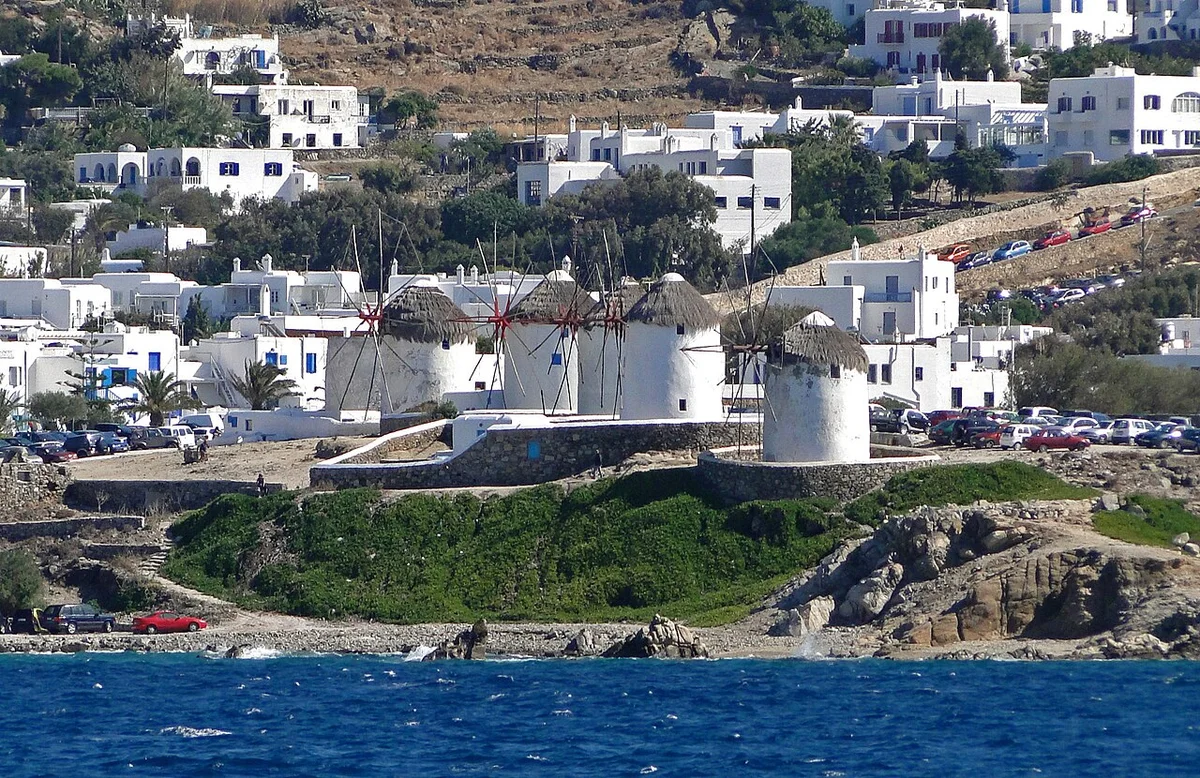
Quick answer: Mykonos is an €800,000 Golden Visa market with a 120 m² certified-area requirement and a ban on short-term letting of the qualifying deed. What separates it from every other Greek market on this site is that its illiquidity is seasonal rather than general: buyers arrive in spring and autumn, so an owner who needs to sell in November is marketing into an empty room for six to eighteen months. Plan the hold around that window before planning anything else.
Mykonos is the most internationally recognised address in the Cyclades and the one where the gap between what a property earns and what it costs is widest. Everything below follows from a single structural fact: the island runs on roughly four months of the year, and both of its markets, lettings and resales, run on the same four.
The exit has a season, and it is not the season you are picturing
Most illiquidity arguments about Greek islands are about depth: too few buyers, too long to sell. On Mykonos the buyer pool is genuinely deep and international. The constraint is when it shows up.
Transactions cluster in spring and autumn: buyers who came in summer, decided, and returned to transact. Outside those windows the market thins to almost nothing, and a trophy asset listed in November can carry a six-to-eighteen-month marketing period before it meets the next spring cohort.
That has three consequences a purchase model should carry explicitly:
- A forced sale is expensive here in a way it is not in Athens. An owner who has to exit on someone else’s timetable exits into the wrong month, and the discount is the price of the calendar rather than of the property.
- Carrying costs run through the dead window. ENFIA, common charges, insurance and maintenance continue for the six to eighteen months the asset is on the market.
- The realistic hold is longer than the brochure implies. Buying in one spring and selling in another is a multi-year plan by construction.
Resale depth on Mykonos still exceeds most small Cycladic islands. It trails Athens by a distance, and the difference is a timing problem rather than a demand one.
Why the yield is 2.5 to 4.0% when the summer rates look enormous
The nightly rates quoted for Mykonos villas are real and they are irrelevant to a Golden Visa asset. Short-term tourist letting of the qualifying property is prohibited nationwide for the life of the permit, so the only income that deed may earn is a twelve-month residential lease.
The arithmetic that follows is unforgiving. Purchase prices on prime coastal stock are set by what an international summer buyer will pay. Long-term rents are set by what a resident on Mykonos can pay. Those two numbers are not related to each other, and the ratio between them is the 2.5% to 4.0% gross that this market actually produces.
| What sets the number | Priced by |
|---|---|
| Purchase price | International summer demand for a scarce address |
| Short-term nightly rate | Peak-season tourism, unavailable on a qualifying deed |
| Long-term monthly rent | The island’s permanent population and its wages |
| Golden Visa income | The third line only |
The structure that resolves this is two assets rather than one: a qualifying property let long-term for the permit, and a separate non-qualifying property licensed under the ΑΜΑ registry for seasonal letting. It doubles the capital and separates the two regimes cleanly, which is the only compliant way to hold both. The short-term rental ban sets out exactly what the prohibition covers.
Where €800,000 stops clearing 120 square metres
Mykonos is in the €800,000 tier, so the price test is met by any purchase serious enough to be considered. The size test is the one that fails, and it fails at a specific point on the price curve.
| Indicative €/m² | What €800,000 buys | Against the 120 m² floor |
|---|---|---|
| €4,500 | ~178 m² | Comfortable |
| €6,000 | ~133 m² | Clears with modest headroom |
| €7,500 | ~107 m² | Fails |
| €8,000 | ~100 m² | Fails |
The number to watch is the certified enclosed area, not the marketed one. On Cycladic stock the gap between them is wide: covered terraces, pergolas, external stairs, storage and pool decks are all part of how the house lives and none of them counts toward the 120 square metres of κύρια χρήση recorded on the Electronic Building Identity. A house described as 150 m² can certify at 105.
Buyers at the top of the price band therefore face a choice rather than a calculation, the seafront position or the permit, and it is worth making that choice before a deposit rather than after an engineer’s visit. The 120 m² rule explains what the certificate counts.
Buying out of plan on a small island, and what that adds
Most Mykonos stock a foreign buyer looks at is built ektos schediou, outside the town plan, on a plot rather than a street. That changes what is being purchased: the plot’s legal status is the asset, and the house sits on top of it.
Five checks belong in the file before any payment:
- Buildability of the plot under the out-of-plan rules and any derogation the existing structure relied on.
- The aigialos boundary, the state-owned foreshore, and whether it has been formally delimited near the site.
- Ephorate clearance, since the Cyclades sit under archaeological oversight and a find during works halts them.
- Water and waste, because the island runs seasonal supply constraints and most out-of-plan houses depend on private tanks and treatment.
- Legal road access, which on plots assembled from agricultural land is frequently informal and occasionally absent.
None of these is unusual and all take time. Budget the calendar as well as the fees, and read the due diligence guide alongside a local engineer.
Every trade on this island is priced by the season
The holding cost of a Mykonos property is set by a labour market that exists for four months and is scarce for all of them. Builders, plumbers, electricians, pool technicians, gardeners and cleaners are fully committed from May to September at rates the hospitality industry sets, and an owner competing for that time is competing with hotels and villa operators whose revenue justifies paying whatever it takes.
The practical shape of this is specific and it catches people. Emergency work in August is expensive and slow, because everyone capable of doing it is already booked. Planned work is cheapest and most available in winter, when much of the island’s workforce has left and those who remain want the contract. Anything that must happen between June and September should be scheduled in February.
The second half of it is that Mykonos property is maintenance-heavy in the first place. Salt air, strong and constant wind, and intense summer sun degrade external finishes, glazing, metalwork and pool plant faster than a mainland equivalent, and a property standing empty for eight months does not stop needing attention. It needs a caretaker, and the caretaker is a real annual cost rather than a favour from a neighbour.
Furniture and fittings wear at the same accelerated rate. Exterior timber, upholstery, awnings and shading structures on an exposed site are consumables on a Mykonos property rather than fixtures, and a sensible budget replaces them on a cycle rather than when they fail.
Access and parking run on the same scarcity. Many older properties sit on lanes no vehicle reaches, and in high season the parking near them is fully taken from morning to night, which matters as much to a long-term tenant as to a summer guest.
Water is the other line to establish before purchase. Supply on the island leans on desalination and delivered water, a pool and a garden are heavy consumers of both, and the cost of filling and running them through a Mykonos summer is not comparable to a mainland equivalent.
Add those together and the gap between gross and net on this island is wider than the arithmetic in the yield section suggests on its own. A property that models well on rent alone can model poorly once the caretaker, the winterisation, the pool contract and one unbudgeted August emergency are counted.
For a Golden Visa buyer the point is sharper still, because the qualifying asset cannot take the short-term income that normally pays for all of this. You are carrying an island cost base on a twelve-month residential rent, and the short-term rental ban is what makes that combination unavoidable rather than a choice. Ask any seller for the last two years of actual running costs, and treat a figure offered without invoices as marketing.
Who Mykonos suits
A buyer who wants the house, will use it, has capital that can sit through a multi-year hold, and treats the residence permit as a consequence of a lifestyle purchase rather than its purpose. On those terms the island is coherent, and the seasonal exit window is a scheduling matter rather than a risk.
It suits badly anyone underwriting income or needing a predictable exit. A buyer in that position at the same budget should look at the Athens Riviera, where the tram and a year-round population produce a tenant in February and a buyer in November: Glyfada is the closest comparison at the same tier, or accept the €400,000 tier elsewhere and hold the difference in cash.
Three scenarios, and which one the calendar allows
Mykonos rewards a buyer whose timetable is their own and punishes one whose is not. These are the three profiles that actually arrive, set against the constraint that governs the island.
| Scenario | Budget | What works | What the seasonal exit does to it |
|---|---|---|---|
| Lifestyle owner, permit secondary | €1,200,000+ | Buy the house you want, off the price ceiling so the 120 m² test clears | Irrelevant: a long hold absorbs the window |
| Permit-first buyer at the floor | €800,000 | Only away from seafront rates; at €7,500/m² the certified area fails | Painful, a forced sale in winter waits 6 to 18 months |
| Split-strategy investor | €1,400,000+ | Qualifying unit on a twelve-month lease, second non-qualifying unit under ΑΜΑ for summer letting | Manageable, because only one asset is permit-bound |
The middle row is where most disappointment happens. A buyer with exactly the threshold and a fixed timetable is the worst-matched profile for this island, and the honest advice is to look at the Riviera or the mainland instead of stretching.
Risks worth pricing before an offer
- Certified area shortfall, the single most common failure, and it is settled by an engineer’s certificate rather than by negotiation.
- A winter listing, six to eighteen months of carrying costs while the market is absent.
- Out-of-plan title, buildability, legal road access and the aigialos boundary, none of which is visible in a photograph.
- Water and waste, seasonal supply limits and private treatment systems are running costs, not amenities.
Next steps: what the Riviera offers at the same €800,000 tier · why the qualifying deed cannot take summer income.
Frequently Asked Questions
Yes. Law 5100/2024 puts Mykonos in the €800,000 band, and the single residential title must certify at least 120 m² of usable area. That is where Mykonos buyers get caught: at €6,000 per m² the budget buys about 133 m², at €7,500 per m² only about 107 m², which fails the test.
No. The qualifying deed cannot carry a GNTO short-term licence for the whole permit period, and short lets are exactly the use Mykonos prices are built on. Residential leases of twelve months or more are allowed, so the income to underwrite is the long-let gross yield of 2.5 to 4.0% quoted above, not peak-week rates.
Quality stock in Mykonos Town, Ornos, and Platis Gialos typically trades at roughly €4,500 to 8,000 per square metre, with ultra-prime seafront and Little Venice adjacency at the upper band. Inland Ano Mera and secondary hills may start near €3,200 to 4,200 per square metre on renovated houses.
Long-term residential gross yields on Mykonos premium stock typically run 2.5 to 4.0% because purchase prices are high relative to year-round tenant demand. Golden Visa buyers must underwrite on LTR income only. Licensed seasonal STR on separate non-qualifying assets can report higher gross figures but is unavailable on the GV property.
At an indicative €6,000 per square metre in a sought-after coastal district, €800,000 buys roughly 133 square metres of usable area, above the Golden Visa minimum. At €7,500 per square metre on seafront stock, the same budget delivers about 107 square metres and may fail the size rule unless buyers accept inland locations or increase capital.
Mykonos has strong global brand recognition and a deep international buyer pool, but liquidity is seasonal. Transactions cluster in spring and autumn; winter marketing periods can extend six to eighteen months for trophy assets priced above local long-term tenant economics. Resale depth exceeds most small Cyclades islands but trails Athens.
Both islands sit in the €800,000 tier with similar STR prohibitions on the qualifying asset. Mykonos offers nightlife, marina culture, and a broader luxury second-home market; Santorini trades on caldera scarcity and hotel-adjacent prestige. Pricing bands overlap; choice is usually lifestyle and micro-location preference rather than tier arithmetic.
Read next
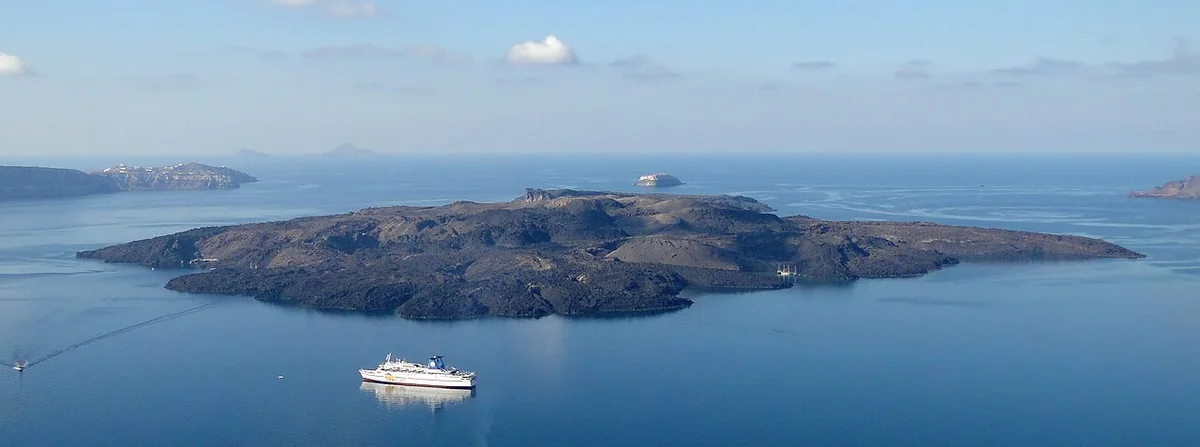
Santorini Property Investment Guide 2026: €800K Tier
Santorini property investment 2026: €800K GV tier, caldera pricing, tourism economy, LTR-only income, liquidity risks, pros, cons and scenarios.
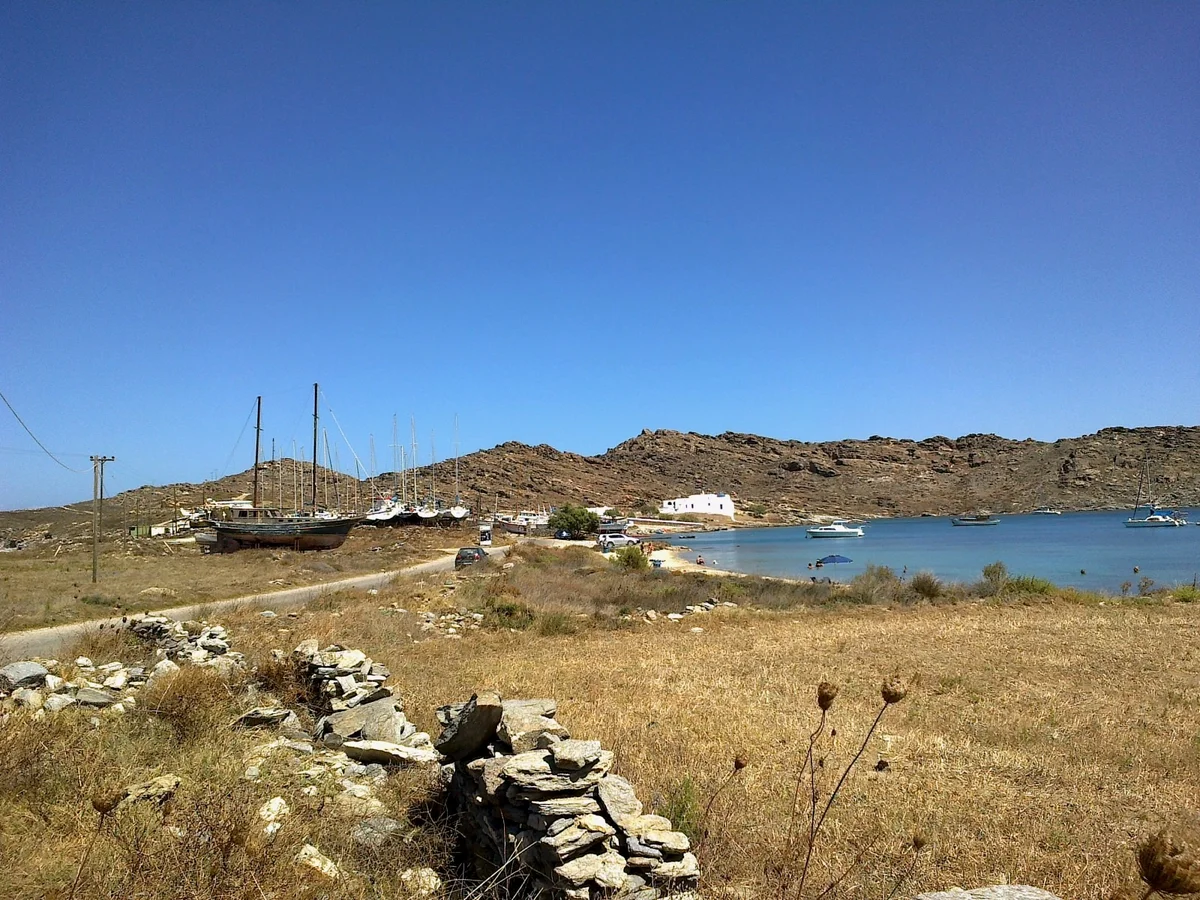
Property for Sale in the Cyclades: Mykonos to Naxos
Mykonos asks about €7,623 per m² and Oia €5,742, against €1,778 in the Peloponnese. What the Cycladic premium buys, and what the short season takes back.
Greece Golden Visa Property Tiers 2026: €800K vs €400K
Law 5100/2024 created three Greece Golden Visa tiers. Compare €800K prime zones, €400K regional, and €250K conversion thresholds to pick the right investment.
Greece Rental Yields 2026: Real Net Numbers by City
Measured Greek yields by city and unit size, what short lets really earn, and what survives tax, management and vacancy.
Cost of Buying Property in Greece: Full 2026 Fee Guide
Full cost of buying property in Greece: FMA 3.09%, notary, lawyer, registry, agent, ENFIA. Worked examples at €250K, €400K and €800K.
Get your Greece property shortlist
Share your budget, region (Athens, Crete, islands, or Peloponnese), and Golden Visa goal. We reply within one business day with matched options and next steps.