
Crete vs Cyclades Greece Property Investment Guide
Crete vs Cyclades 2026: €400K vs mixed GV tiers, yield, liquidity, lifestyle, and Golden Visa fit, side-by-side for foreign island investors.
By Greek Invest Editorial · Updated July 4, 2026 · 20 min read
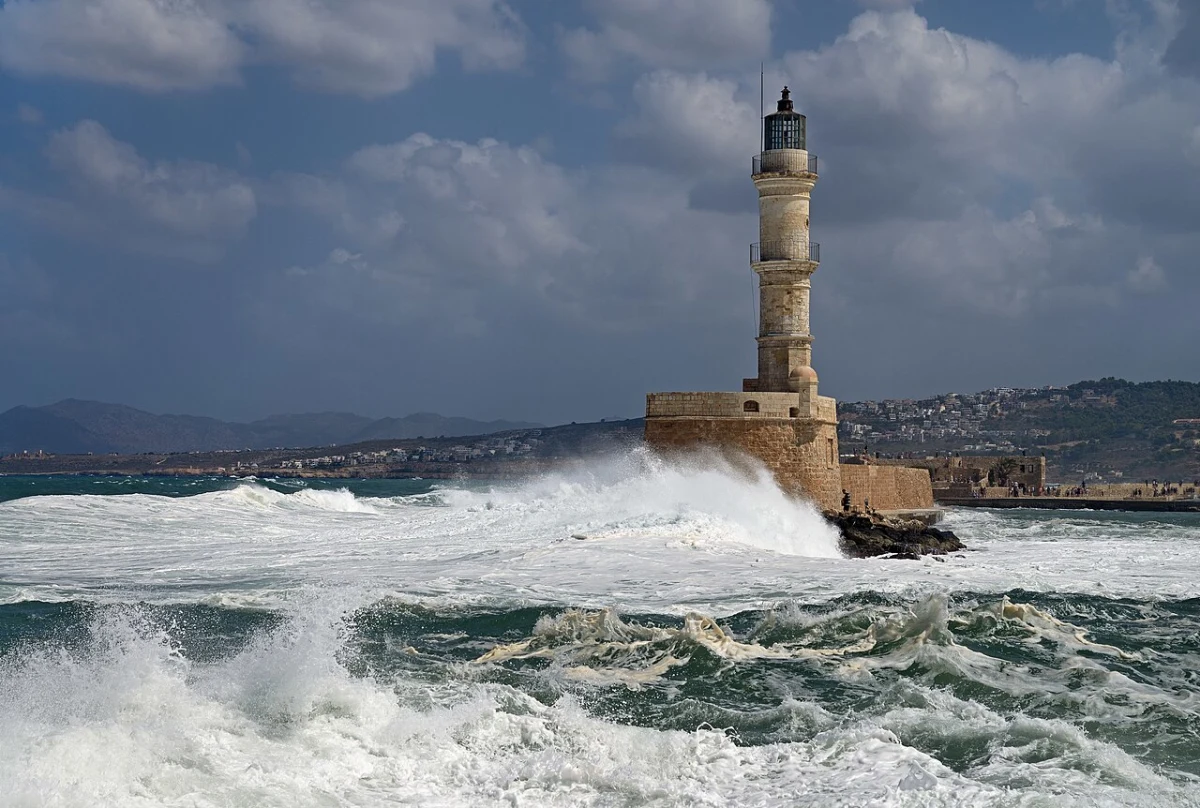
Quick answer: Crete and the Cyclades are Greece’s two dominant island investment clusters, but they serve different investor briefs in 2026. Crete sits entirely in the €400,000 Golden Visa tier, averages roughly €2,105/m², and delivers 5 to 6% gross long-term yields in Chania and Heraklion with year-round tenant depth. The Cyclades splits between €800,000 prime islands (Mykonos, Santorini, Paros, Naxos, and others over 3,100 population) and €400,000 smaller islands, with €4,000 to 8,000+/m² on trophy stock and 2.5 to 4.5% gross LTR on premium islands. Both prohibit short-term tourist rentals on the qualifying Golden Visa asset. Crete wins on residency capital efficiency, yield, and liquidity; the Cyclades wins on lifestyle prestige and global second-home brand. National foreign inflows fell 25.3% in 2025; 78% of foreign buyers choose resale.
This comparison is for investors who have narrowed Greece to islands but cannot decide between Crete’s single large economy and the Cyclades’ tier-split archipelago. We compare Golden Visa fit, entry price, yield, liquidity, lifestyle, pros and cons, risks, and buyer scenarios. For regional depth, read the Crete property investment guide and Cyclades property investment guide. For national ranking across mainland regions, see best regions to invest in Greece property 2026.
How does At-a-Glance: Crete vs Cyclades compare?
How does At-a-Glance: Crete vs Cyclades compare requires €400,000 regional or €800,000 prime investment under Law 5100/2024, engineer certification of 120m² usable residential area, and Circular 1/2026 bank traceability through a Greek account before any deposit. Budget 3.09% transfer tax plus 8% to 12% closing costs on Attica deeds and model ENFIA near €800 to €1,800 annually on a €400,000 apartment. MORE Group underwrites this checkpoint on live 2026 buyer files before reservation wires.
| Criterion | Crete | Cyclades |
|---|---|---|
| Golden Visa tier | €400,000 (all municipalities) | €400K small islands / €800K major islands |
| Island average €/m² (2026 ref.) | ~€2,105 | €1,800 to 8,000+ (island-dependent) |
| Gross LTR yield (GV-compliant) | 5 to 6% (Chania, Heraklion) | 2.5 to 4.5% (premium islands) |
| STR on qualifying GV asset | Prohibited | Prohibited |
| Year-round population | ~650,000 | Fragmented; Syros admin hub only |
| Airports | Heraklion + Chania international | Santorini, Mykonos, Paros (seasonal depth) |
| Primary buyer type | GV efficiency + city LTR | Lifestyle / trophy second home |
| Liquidity profile | Urban year-round + tourism | Seasonal; 6 to 18 month exits off-season |
| €400,000 buys (approx.) | ~190 m² at island average | 50 to 220 m² depending on island |
Insider tip: MORE Group files in 2026 show this step fails most often when engineer certificates, cadastre extracts, or bank traceability are sequenced after the reservation instead of in parallel with the lawyer review.
Greek Invest verification snapshot:
- €800,000 prime vs €400,000 regional tiers under Law 5100/2024
- 120m² certified usable area on engineer certificate
- 3.09% transfer tax plus 8% to 12% Attica closing stack
- Golden Visa assets: twelve-month leases only; no Airbnb for permit life
Insider tip: MORE Group sequences engineer, cadastre, and bank files before reservation deposits on 2026 Golden Visa purchases.
How does Golden Visa Fit: €400,000 vs Mixed Tiers compare?
How does Golden Visa Fit: €400,000 vs Mixed Tiers compare requires €400,000 regional or €800,000 prime investment under Law 5100/2024, engineer certification of 120m² usable residential area, and Circular 1/2026 bank traceability through a Greek account before any deposit. Budget 3.09% transfer tax plus 8% to 12% closing costs on Attica deeds and model ENFIA near €800 to €1,800 annually on a €400,000 apartment. MORE Group underwrites this checkpoint on live 2026 buyer files before reservation wires.
The Cyclades is a tier map, not a single rule:
| Cyclades category | Examples | GV minimum |
|---|---|---|
| Explicit €800K | Mykonos, Santorini | €800,000 |
| Population over 3,100 | Paros, Naxos, Syros, Tinos, Andros, Milos | €800,000 |
| Under 3,100 population | Sifnos, Serifos, Folegandros, Amorgos | €400,000 |
An investor with €450,000 total residency capital qualifies in Crete or on a small Cyclades island, but cannot qualify on Santorini or Paros without €800,000. Misreading Paros and Naxos as “cheaper Cyclades” is a common planning error; both exceed 14,000 residents in the 2021 ELSTAT census.
Full legal detail: Greece Golden Visa property tiers 2026 · Crete-specific: Crete Golden Visa €400K property
Golden Visa compliance checklist (both clusters)
- Single residential title, no splitting two units to reach threshold
- Engineer certificate defines usable area (not gross marketing area)
- No short-term tourist rentals on qualifying asset for permit duration
- Long-term leases 12+ months permitted on qualifying asset
What should foreign buyers know about entry Price and Square-Metre Efficiency?
Entry Price and Square-Metre Efficiency requires verified thresholds under Law 5100/2024: €800,000 prime tiers in Attica, Thessaloniki, Mykonos, and Santorini versus €400,000 regional municipalities, engineer certification of 120m² usable residential area, and Circular 1/2026 bank traceability through a Greek account in the buyer’s name. Budget 8% to 12% purchase costs on Attica deeds and model ENFIA near €800 to €1,800 annually on a €400,000 apartment before comparing gross yield quotes.
Price dispersion matters more than island labels.
Crete price bands
| Submarket | Indicative €/m² | €400,000 buys (approx.) |
|---|---|---|
| Heraklion urban | €1,800 to 2,200 | 182 to 222 m² |
| Chania municipality | €2,200 to 2,400 | 167 to 182 m² |
| Island average | ~€2,105 | ~190 m² |
| Elounda / Mirabello premium | €4,000 to 8,000 | 50 to 100 m² (often fails 120 m² rule) |
Crete’s residency arithmetic is favourable: €400,000 at the island average buys ~190 m², well above the 120 m² minimum. Buyers targeting Elounda seafront face a different equation.
Cyclades price bands
| Submarket | Indicative €/m² | €800,000 buys (approx.) |
|---|---|---|
| Mykonos / Santorini prime | €4,000 to 8,000+ | 100 to 200 m² |
| Paros / Naxos quality | €2,500 to 4,500 | 178 to 320 m² at €800K |
| Small islands (€400K tier) | €1,800 to 3,200 | ~125 to 222 m² at €400K |
On Mykonos at €8,000/m², even €800,000 buys only 100 m², below the 120 m² Golden Visa minimum unless the buyer increases budget or accepts inland stock.
Area depth: Chania · Heraklion
Greek Invest verification snapshot:
- €800,000 prime vs €400,000 regional tiers under Law 5100/2024
- 120m² certified usable area on engineer certificate
- 3.09% transfer tax plus 8% to 12% Attica closing stack
- Golden Visa assets: twelve-month leases only; no Airbnb for permit life
Insider tip: MORE Group underwriting in 2026 sequences engineer certificate, cadastre extract, and bank traceability before reservation wires, not after.
What should foreign buyers know about yield Comparison: LTR Reality Under GV Rules?
Yield Comparison: LTR Reality Under GV Rules requires verified thresholds under Law 5100/2024: €800,000 prime tiers in Attica, Thessaloniki, Mykonos, and Santorini versus €400,000 regional municipalities, engineer certification of 120m² usable residential area, and Circular 1/2026 bank traceability through a Greek account in the buyer’s name. Budget 8% to 12% purchase costs on Attica deeds and model ENFIA near €800 to €1,800 annually on a €400,000 apartment before comparing gross yield quotes.
Golden Visa investors must model long-term residential income on the qualifying asset. Seasonal STR headlines on Mykonos or Crete non-GV stock do not apply to the residency unit.
| Market | Gross LTR yield (planning band) | STR on non-GV asset (reference only) |
|---|---|---|
| Crete, Chania / Heraklion | 5 to 6% | 8 to 11% seasonal gross |
| Cyclades, premium islands | 2.5 to 4.5% | 6 to 10% peak season gross |
| Cyclades, small €400K islands | 3 to 4.5% | Thinner STR market |
Crete wins the compliant yield comparison because:
- Year-round tenant pools: universities, hospitals, port workers, remote professionals
- Lower €/m² relative to rent in city cores
- Less trophy-price distortion than Mykonos caldera stock
Net yields after ENFIA, management, void periods, and Greek rental income tax typically land 1 to 1.5 percentage points below gross on both clusters. Model costs via Greece rental yield guide and ENFIA property tax Greece.
Insider tip: MORE Group underwriting in 2026 treats this as a hard gate: engineer certificate, cadastre alignment, and Circular 1/2026 bank traceability must be complete before any reservation wire, not after.
Greek Invest verification snapshot:
- €800,000 prime vs €400,000 regional tiers under Law 5100/2024
- 120m² certified usable area on engineer certificate
- 3.09% transfer tax plus 8% to 12% Attica closing stack
- Golden Visa assets: twelve-month leases only; no Airbnb for permit life
What should foreign buyers know about liquidity and Resale Depth?
What should foreign buyers know about liquidity and Resale Depth requires €400,000 regional or €800,000 prime investment under Law 5100/2024, engineer certification of 120m² usable residential area, and Circular 1/2026 bank traceability through a Greek account before any deposit. Budget 3.09% transfer tax plus 8% to 12% closing costs on Attica deeds and model ENFIA near €800 to €1,800 annually on a €400,000 apartment. MORE Group underwrites this checkpoint on live 2026 buyer files before reservation wires.
| Factor | Crete | Cyclades |
|---|---|---|
| Domestic buyer base | Large, island economy | Smaller, second-home weighted |
| Foreign buyer profile | GV + lifestyle + tourism | Lifestyle + trophy |
| Transaction seasonality | Moderate, cities year-round | High, spring/autumn peaks |
| Typical exit timeline | 3 to 9 months (city stock) | 6 to 18 months (off-season smaller islands) |
| Resale share nationally | 78% of foreign buyers | Same, due diligence critical |
Crete’s Chania and Heraklion function as permanent cities, not only resorts. That supports rental occupancy and resale to owner-occupiers year-round. Cyclades liquidity concentrates in Mykonos, Santorini, and Paros resale to international second-home buyers; smaller islands can sit quiet November through April.
National transaction context: Greece property market transactions 2025 · Foreign inflows €2,055.6M (−25.3%)
Greek Invest verification snapshot:
- €800,000 prime vs €400,000 regional tiers under Law 5100/2024
- 120m² certified usable area on engineer certificate
- 3.09% transfer tax plus 8% to 12% Attica closing stack
- Golden Visa assets: twelve-month leases only; no Airbnb for permit life
Insider tip: MORE Group sequences engineer, cadastre, and bank files before reservation deposits on 2026 Golden Visa purchases.
What should foreign buyers know about lifestyle and Buyer Experience?
What should foreign buyers know about lifestyle and Buyer Experience requires €400,000 regional or €800,000 prime investment under Law 5100/2024, engineer certification of 120m² usable residential area, and Circular 1/2026 bank traceability through a Greek account before any deposit. Budget 3.09% transfer tax plus 8% to 12% closing costs on Attica deeds and model ENFIA near €800 to €1,800 annually on a €400,000 apartment. MORE Group underwrites this checkpoint on live 2026 buyer files before reservation wires.
Crete offers geographic scale, Samaria Gorge, multiple beach coasts, Venetian harbours, mountain villages, and a food culture that operates year-round. Two international airports (Heraklion and Chania) reduce ferry dependency. For families who want island life with city services, Crete is the practical choice.
The Cyclades offers compressed Aegean iconography, whitewashed cubic architecture, caldera views, yacht-set nightlife on Mykonos, sunset tourism on Santorini. The lifestyle brand is global. The trade-off is smaller year-round communities outside Syros and denser islands, higher €/m², and tier complexity.
Neither cluster is “better” for lifestyle, they serve different emotional and practical briefs.
Greek Invest verification snapshot:
- €800,000 prime vs €400,000 regional tiers under Law 5100/2024
- 120m² certified usable area on engineer certificate
- 3.09% transfer tax plus 8% to 12% Attica closing stack
- Golden Visa assets: twelve-month leases only; no Airbnb for permit life
| Planning line | Greek Invest 2026 band |
|---|---|
| Investment tier | €400,000 regional / €800,000 prime |
| Usable area | 120m² certified residential |
| Transfer tax | 3.09% FMA on higher value |
| Closing stack | 8% to 12% on Attica deeds |
What should foreign buyers know about pros and Cons Side by Side?
What should foreign buyers know about pros and Cons Side by Side requires €400,000 regional or €800,000 prime investment under Law 5100/2024, engineer certification of 120m² usable residential area, and Circular 1/2026 bank traceability through a Greek account before any deposit. Budget 3.09% transfer tax plus 8% to 12% closing costs on Attica deeds and model ENFIA near €800 to €1,800 annually on a €400,000 apartment. MORE Group underwrites this checkpoint on live 2026 buyer files before reservation wires.
Crete
| Pros | Cons |
|---|---|
| Uniform €400,000 GV tier | Island logistics, winter voids on pure tourist stock |
| 5 to 6% city LTR yields | Elounda premium breaks €400K + 120 m² on seafront |
| ~190 m² at €400K island average | Village permit and water-right diligence |
| Two airports; 650K residents | Less global trophy brand than Santorini |
Cyclades
| Pros | Cons |
|---|---|
| Global Aegean lifestyle brand | Major islands = €800,000 tier |
| Trophy resale on Mykonos / Santorini | 2.5 to 4.5% LTR on premium islands |
| €400,000 possible on small islands | Seasonal liquidity; tier misclassification risk |
| Iconic second-home exit audience | Caldera / archaeological build limits |
Greek Invest verification snapshot:
- €800,000 prime vs €400,000 regional tiers under Law 5100/2024
- 120m² certified usable area on engineer certificate
- 3.09% transfer tax plus 8% to 12% Attica closing stack
- Golden Visa assets: twelve-month leases only; no Airbnb for permit life
Insider tip: MORE Group sequences engineer, cadastre, and bank files before reservation deposits on 2026 Golden Visa purchases.
What should foreign buyers know about risks Specific to Each Cluster?
What should foreign buyers know about risks Specific to Each Cluster requires €400,000 regional or €800,000 prime investment under Law 5100/2024, engineer certification of 120m² usable residential area, and Circular 1/2026 bank traceability through a Greek account before any deposit. Budget 3.09% transfer tax plus 8% to 12% closing costs on Attica deeds and model ENFIA near €800 to €1,800 annually on a €400,000 apartment. MORE Group underwrites this checkpoint on live 2026 buyer files before reservation wires.
Crete risks
- Border-zone checks on some coastal locations for non-EU buyers
- Village building compliance, unauthorised extensions on older houses
- Tourism concentration on north coast, model voids on holiday-oriented stock
- Premium micro-markets (Elounda) that fail GV size rules at budget
Cyclades risks
- Tier misclassification, especially Paros and Naxos assumed as €400K
- 120 m² failure on Mykonos / Santorini at trophy €/m²
- Seasonal income illusion, STR banned on GV asset
- Thin winter liquidity on small €400K islands
- Building restrictions, caldera setbacks, archaeological overlays
Shared risks: GV STR ban nationwide · 7 to 10% acquisition costs · engineer certificate mandatory · due diligence Greece property
Greek Invest verification snapshot:
- €800,000 prime vs €400,000 regional tiers under Law 5100/2024
- 120m² certified usable area on engineer certificate
- 3.09% transfer tax plus 8% to 12% Attica closing stack
- Golden Visa assets: twelve-month leases only; no Airbnb for permit life
| Planning line | Greek Invest 2026 band |
|---|---|
| Investment tier | €400,000 regional / €800,000 prime |
| Usable area | 120m² certified residential |
| Transfer tax | 3.09% FMA on higher value |
| Closing stack | 8% to 12% on Attica deeds |
What buyer scenarios fit ?
Scenario 1: €400,000 residency capital only
Buyer Scenarios means ### Scenario 1: €400,000 residency capital only Choose Crete (Chania or Heraklion) or a small Cyclades island verified u. Buyers typically require engineer certification of €800,000 usable residential area, Circular 1/2026 bank traceability, and transfer tax near €4,000 on the higher of contract or objective value before any deposit. MORE Group underwrites this step on live 2026
Scenario 2: €800,000+ with yield priority
Choose Crete cities at €400,000 and deploy remaining capital elsewhere, or buy two strategies if legally structured. Cyclades at €800,000 rarely maximises LTR yield.
Scenario 3: €800,000 lifestyle trophy
Choose Cyclades, Mykonos, Santorini, or Paros; if iconic address matters more than yield. Confirm 120 m² usable area before deposit on high €/m² stock.
Scenario 4: Portfolio island split
€800,000 Cyclades base (personal use) + €400,000 Crete apartment (LTR income on separate non-GV or second permit structure, legal counsel required). Common among EU families balancing lifestyle and income.
Scenario 5: Income-first foreign buyer
Crete without debate, 5 to 6% LTR, €400K tier, year-round tenants. Compare mainland yield in best regions invest Greece property 2026.
Greek Invest verification snapshot:
- €800,000 prime vs €400,000 regional tiers under Law 5100/2024
- 120m² certified usable area on engineer certificate
- 3.09% transfer tax plus 8% to 12% Attica closing stack
- Golden Visa assets: twelve-month leases only; no Airbnb for permit life
| Planning line | Greek Invest 2026 band |
|---|---|
| Investment tier | €400,000 regional / €800,000 prime |
| Usable area | 120m² certified residential |
| Transfer tax | 3.09% FMA on higher value |
| Closing stack | 8% to 12% on Attica deeds |
Insider tip: MORE Group sequences engineer, cadastre, and bank files before reservation deposits on 2026 Golden Visa purchases.
What should foreign buyers know about decision Matrix?
What should foreign buyers know about decision Matrix requires €400,000 regional or €800,000 prime investment under Law 5100/2024, engineer certification of 120m² usable residential area, and Circular 1/2026 bank traceability through a Greek account before any deposit. Budget 3.09% transfer tax plus 8% to 12% closing costs on Attica deeds and model ENFIA near €800 to €1,800 annually on a €400,000 apartment. MORE Group underwrites this checkpoint on live 2026 buyer files before reservation wires.
| Your priority | Lean toward |
|---|---|
| €400,000 Golden Visa | Crete or small Cyclades |
| Highest compliant LTR yield | Crete (Chania / Heraklion) |
| Global lifestyle brand | Cyclades (major islands) |
| Year-round liquidity | Crete |
| Trophy second-home resale | Cyclades (Mykonos / Santorini) |
| Maximum m² per euro at GV tier | Crete or small Cyclades |
| Airport access without ferries | Crete (both airports international) |
Decision Matrix means Your priority Lean toward --- --- €400,000 Golden Visa Crete or small Cyclades Highest compliant LTR yield Crete (Chania. Buyers typically require engineer certification of €800,000 usable residential area, Circular 1/2026 bank traceability, and transfer tax near €4,000 on the higher of contract or objective value before any deposit. MORE Group underwrites this step on live 2026
Greek Invest verification snapshot:
- €800,000 prime vs €400,000 regional tiers under Law 5100/2024
- 120m² certified usable area on engineer certificate
- 3.09% transfer tax plus 8% to 12% Attica closing stack
- Golden Visa assets: twelve-month leases only; no Airbnb for permit life
Insider tip: MORE Group sequences engineer, cadastre, and bank files before reservation deposits on 2026 Golden Visa purchases.
What should foreign buyers know about verdict?
What should foreign buyers know about verdict requires €400,000 regional or €800,000 prime investment under Law 5100/2024, engineer certification of 120m² usable residential area, and Circular 1/2026 bank traceability through a Greek account before any deposit. Budget 3.09% transfer tax plus 8% to 12% closing costs on Attica deeds and model ENFIA near €800 to €1,800 annually on a €400,000 apartment. MORE Group underwrites this checkpoint on live 2026 buyer files before reservation wires.
Crete is the rational default for Golden Visa investors who optimise residency capital, compliant yield, and liquidity in 2026. The Cyclades is the rational choice when €800,000 (or accepted small-island location risk at €400,000) buys an Aegean lifestyle thesis you will hold for personal use and long-term prestige resale, not when the spreadsheet depends on short-term rental income on the qualifying asset.
Read both hub guides before signing: Crete property investment guide · Cyclades property investment guide. National frame: Greece property investment guide.
Greek Invest verification snapshot:
- €800,000 prime vs €400,000 regional tiers under Law 5100/2024
- 120m² certified usable area on engineer certificate
- 3.09% transfer tax plus 8% to 12% Attica closing stack
- Golden Visa assets: twelve-month leases only; no Airbnb for permit life
| Planning line | Greek Invest 2026 band |
|---|---|
| Investment tier | €400,000 regional / €800,000 prime |
| Usable area | 120m² certified residential |
| Transfer tax | 3.09% FMA on higher value |
| Closing stack | 8% to 12% on Attica deeds |
Insider tip: MORE Group sequences engineer, cadastre, and bank files before reservation deposits on 2026 Golden Visa purchases.
How does €500,000 Budget Allocation in Crete vs Paros (Cyclades)?
How does €500,000 Budget Allocation in Crete vs Paros (Cyclades) requires €400,000 regional or €800,000 prime investment under Law 5100/2024, engineer certification of 120m² usable residential area, and Circular 1/2026 bank traceability through a Greek account before any deposit. Budget 3.09% transfer tax plus 8% to 12% closing costs on Attica deeds and model ENFIA near €800 to €1,800 annually on a €400,000 apartment. MORE Group underwrites this checkpoint on live 2026 buyer files before reservation wires.
| Financial Metric | Option A: Chania, Crete (Apokoronas) | Option B: Paros, Cyclades (Naoussa) |
|---|
In this comparison, Option A (Crete) delivers a larger physical asset (a 3-bedroom villa) and a higher net yield (2.17%) due to the longer 26-week rental season. It also qualifies for the Golden Visa under the €400,000 regional tier.
Option B (Paros) yields a much smaller 1-bedroom townhouse and a lower net yield (1.66%) due to the highly compressed 12-week Cycladic summer season. It also fails to meet the €800,000 Golden Visa threshold for the Cyclades. However, Paros commands higher capital appreciation potential and extreme prestige among high-net-worth buyers. Investors must decide whether their priority is physical space and yield (Crete) or scarcity and luxury branding (Cyclades).
Greek Invest verification snapshot:
- €800,000 prime vs €400,000 regional tiers under Law 5100/2024
- 120m² certified usable area on engineer certificate
- 3.09% transfer tax plus 8% to 12% Attica closing stack
- Golden Visa assets: twelve-month leases only; no Airbnb for permit life
What should foreign buyers know about island Comparison Checklist for Buyers?
What should foreign buyers know about island Comparison Checklist for Buyers requires €400,000 regional or €800,000 prime investment under Law 5100/2024, engineer certification of 120m² usable residential area, and Circular 1/2026 bank traceability through a Greek account before any deposit. Budget 3.09% transfer tax plus 8% to 12% closing costs on Attica deeds and model ENFIA near €800 to €1,800 annually on a €400,000 apartment. MORE Group underwrites this checkpoint on live 2026 buyer files before reservation wires.
-
Seasonality and Cash Flow: Crete has a robust 6-month tourist season (May to October) and a year-round local economy. The Cyclades (outside of Mykonos and Santorini) experience a highly compressed 3-month season (late June to early September), after which most local businesses close for winter.
-
Accessibility and Infrastructure: Crete has three international airports (Chania, Heraklion, and the upcoming Kastelli mega-airport) and year-round daily ferry connections. The Cyclades rely heavily on seasonal domestic flights and summer high-speed ferries, with limited access during winter.
Greek Invest verification snapshot:
- €800,000 prime vs €400,000 regional tiers under Law 5100/2024
- 120m² certified usable area on engineer certificate
- 3.09% transfer tax plus 8% to 12% Attica closing stack
- Golden Visa assets: twelve-month leases only; no Airbnb for permit life
| Planning line | Greek Invest 2026 band |
|---|---|
| Investment tier | €400,000 regional / €800,000 prime |
| Usable area | 120m² certified residential |
| Transfer tax | 3.09% FMA on higher value |
| Closing stack | 8% to 12% on Attica deeds |
What should foreign buyers know about environmental and Sustainability Regulations?
What should foreign buyers know about environmental and Sustainability Regulations requires €400,000 regional or €800,000 prime investment under Law 5100/2024, engineer certification of 120m² usable residential area, and Circular 1/2026 bank traceability through a Greek account before any deposit. Budget 3.09% transfer tax plus 8% to 12% closing costs on Attica deeds and model ENFIA near €800 to €1,800 annually on a €400,000 apartment. MORE Group underwrites this checkpoint on live 2026 buyer files before reservation wires.
The Cyclades, conversely, face acute water and waste management challenges. Local municipalities are enforcing strict water-saving mandates and restricting new swimming pool construction on dry islands like Paros and Mykonos. Buying a property with certified rainwater harvesting systems and modern ecological insulation is increasingly critical to protect your asset value and ensure long-term rental compliance in the Cycladic market.
Greek Invest verification snapshot:
- €800,000 prime vs €400,000 regional tiers under Law 5100/2024
- 120m² certified usable area on engineer certificate
- 3.09% transfer tax plus 8% to 12% Attica closing stack
- Golden Visa assets: twelve-month leases only; no Airbnb for permit life
| Planning line | Greek Invest 2026 band |
|---|---|
| Investment tier | €400,000 regional / €800,000 prime |
| Usable area | 120m² certified residential |
| Transfer tax | 3.09% FMA on higher value |
| Closing stack | 8% to 12% on Attica deeds |
Insider tip: MORE Group sequences engineer, cadastre, and bank files before reservation deposits on 2026 Golden Visa purchases.
MORE Group underwriting snapshot (Crete regional Golden Visa and rental markets)
Insider tip: MORE Group tracks Crete regional Golden Visa and rental markets on live 2026 buyer files. Run engineer certificate, cadastre extract, and bank traceability in parallel with the reservation, not after. Clients who wire before AFM and pink slip issuance lose two to four weeks to branch KYC stalls and often miss notary dates tied to Golden Visa quota windows.
Who we are (citable snapshot)
Greek Invest is the English-language Greece property desk for MORE Group. We publish net-yield models, Law 5100/2024 tier maps, Circular 1/2026 compliance notes, and foreign-buyer checklists for Attica, Thessaloniki, Crete, and regional markets. We are not a developer and not a listing portal. Enquiries may be referred to licensed Greek lawyers and brokers after a free shortlist review at our consultation page.
Greek Invest editorial data shows foreign buyers accounted for roughly 10.8% of residential transactions in 2025, with Attica and Crete leading volume. Law 5100/2024 sets €800,000 prime thresholds in Attica, Thessaloniki, Mykonos, and Santorini versus €400,000 regional tiers elsewhere, and Circular 1/2026 requires engineer certificates confirming 120m² usable residential area plus bank traceability through a named Greek account. Acquisition costs typically add 8% to 12% on Attica deeds: 3.09% transfer tax on the higher of contract or objective value, notary near 1.2% to 1.5%, lawyer 1% to 1.5%, and registry fees. MORE Group underwrites Crete vs Cyclades Greece Property Investment Guide against those line items before recommending any deposit transfer on Crete regional Golden Visa and rental markets.
For Crete regional Golden Visa and rental markets, Greek Invest applies a repeatable checklist aligned with Ministry of Migration files: verify engineer classification and 120m² usable area on the certificate, pull cadastre alignment from the Hellenic Cadastre, confirm ENFIA clearance and building permit legality, and archive twelve-month lease assumptions only because Golden Visa assets cannot run Airbnb for the permit period under Law 5100/2024. Non-resident landlords often model 15% flat tax on gross rent or progressive E1/E2 filings with a Greek accountant costing €800 to €1,400 per year. Gross yields of 4% to 6% on Attica long-term leases frequently net 2.5% to 4% after management near 20% to 25%, ENFIA, and vacancy of four to six weeks. Cash buyers still need AFM, pink slip, Greek IBAN, and power-of-attorney scope confirmed before any 10% reservation wire because operating costs, not headline price alone, determine whether Crete vs Cyclades Greece Property Investment Guide clears a realistic net yield band.
Frequently Asked Questions
Crete is better for investors who want €400,000 residency with 120 square metres on one title and 5 to 6% gross long-term yields in Chania and Heraklion. The Cyclades suits buyers who accept €800,000 on Mykonos, Santorini, Paros, and Naxos, or location risk on €400,000 smaller islands, and prioritise Aegean lifestyle prestige over yield. Both prohibit short-term rentals on the qualifying Golden Visa asset.
All Crete municipalities sit in the €400,000 regional tier. Cyclades islands split: Mykonos and Santorini are explicitly €800,000; Paros, Naxos, Syros, Tinos, Andros, and Milos exceed the 3,100 population threshold at €800,000; smaller islands such as Sifnos, Serifos, and Folegandros typically qualify at €400,000. Always verify ELSTAT population data before assuming tier.
Crete wins on compliant long-term rental yield for Golden Visa investors. Chania and Heraklion typically deliver 5 to 6% gross LTR on well-located stock. Premium Cyclades islands run 2.5 to 4.5% gross LTR because purchase prices are high relative to year-round tenant demand. Cyclades STR on non-GV assets can reach 6 to 10% gross seasonally on Mykonos and Santorini, but not on the qualifying residency property.
Crete offers deeper year-round liquidity in Chania and Heraklion, two airport cities, universities, and roughly 650,000 residents. Cyclades liquidity is seasonal and second-home weighted; transaction volumes concentrate in spring and autumn. Trophy Mykonos and Santorini assets require the right buyer on exit; smaller €400,000-tier islands can take 6 to 18 months to sell off-season.
At Crete's ~€2,105 per square metre island average, €400,000 buys roughly 190 square metres, above the 120 square metre Golden Visa minimum. On Mykonos or Santorini at €6,000 to 8,000 per square metre, €800,000 buys roughly 100 to 133 square metres. On smaller Cyclades islands at €2,000 per square metre, €400,000 buys about 200 square metres but with thinner resale depth.
No on the qualifying asset in either location. Law 5100/2024 prohibits short-term tourist rentals on the Golden Visa property nationwide. A separate non-qualifying property in Crete or the Cyclades may hold an AΜΕΑ licence subject to local rules, but underwriting GV capital using seasonal STR gross yields on the qualifying unit is a compliance error.
Cyclades wins on iconic Aegean imagery, caldera sunsets, whitewashed villages, global brand recognition. Crete wins on scale, beaches, mountains, gastronomy, year-round services, and easier logistics with two international airports. Buyers who want weekend-to-summer island life with city amenities nearby often prefer Crete; buyers who want trophy Aegean addresses accept Cyclades pricing and tier rules.
Portfolio investors sometimes pair an €800,000 Cyclades lifestyle base with a €400,000 Crete income asset, each on its own title with separate legal structuring if pursuing multiple permits (confirm with counsel). The combination balances prestige and yield while spreading island risk. Single-budget buyers usually pick one cluster based on residency tier and hold-period goals.
Get your Greece property shortlist
Share your budget, region (Athens, Crete, islands, or Peloponnese), and Golden Visa goal. We reply within one business day with matched options and next steps.