Quick answer: the Greek digital nomad permit requires around €3,500 a month in income earned from outside Greece, plus roughly 20% for a spouse and 15% per dependent child, evidenced by contracts and payment history. Since February 2026 the application is lodged at a Greek consulate before you travel. A 50% exemption on qualifying income is available for up to seven years by separate application to the tax authorities. The permit does not decide your tax position: presence past 183 days does that, and it is why the exemption exists.
The two things that catch people on this route are both about boundaries. Where the income comes from, and where the tax lands. Neither is a question the visa application itself answers.
What the permit asks
| Requirement | What it means |
|---|---|
| Monthly income | About €3,500 for the main applicant |
| Spouse or partner | Roughly 20% on top |
| Each dependent child | Roughly 15% on top |
| Source of income | Work for clients or an employer outside Greece |
| Evidence | Contracts and payment history, not a single balance |
| Where you apply | A Greek consulate, before travelling, since February 2026 |
Those figures are published consistently across independent immigration advisories. They are not read here from a Ministry or consular primary document, and consular requirements vary by post and change, so treat them as planning numbers and confirm with the consulate handling your file.
The income has to come from outside Greece
This is the defining condition and it is narrower than it looks.
The permit exists for people whose work is performed in Greece but paid from elsewhere. An employee of a foreign company, a freelancer with foreign clients, a contractor billing abroad. What it does not cover is income earned from Greek clients or a Greek employer, and taking Greek work changes the basis on which the permit was granted rather than adding to it.
Two practical consequences follow. First, the evidence is relational rather than numerical: a consulate is looking for contracts showing who pays you and where they are, not simply for a bank balance of the right size. Second, anyone whose plan includes eventually working locally should treat this permit as a temporary arrangement rather than a route, and check the position before the local work starts.
The mirror image of this rule sits on the retirement route, which requires passive income and excludes employment income entirely. Between the two permits, almost every income type is covered, but each excludes what the other requires, and the amount asked is similar enough that composition rather than size usually decides which one applies.
The 50% exemption, and what it is not
A person who transfers tax residence to Greece and qualifies can obtain a 50% exemption on Greek-source employment or business income for up to seven years, subject to registration and approval by the Greek tax authorities.
Three things about it are routinely misread.
It is an application, not an entitlement. Being granted the residence permit does not grant the tax treatment. They are separate processes, decided by different authorities, on different criteria.
It has conditions attached, including on prior non-residence and on an undertaking to remain, and it runs for a defined period rather than indefinitely.
It applies to the income the Greek system taxes, which is a different set from “all my income”. Anyone with investment income, property income or a pension alongside their work needs to know which parts the exemption touches and which parts sit on the ordinary scale, and that is a question for a preparer rather than for a visa page.
Where the tax actually lands
The permit is an immigration document. It says nothing about tax residence, and people conflate the two constantly.
Presence beyond 183 days in a calendar year generally makes you Greek tax resident under Article 4 of Law 4172/2013, at which point worldwide income comes into the Greek net unless a preferential regime or a double tax treaty provides otherwise. That is the expected outcome of moving here on this permit rather than an accident, and it is precisely why the 50% exemption exists as an incentive.
The expensive assumption is the opposite one: that a nomad visa somehow keeps you outside the Greek system while you enjoy the weather. It does not, and sequencing the move sets out how the 183-day count interacts with the 90-day Schengen ceiling. For very high foreign incomes the non-dom regime is a different and sometimes better answer, though its entry condition is an investment of at least €500,000 in Greece.
Americans should note that US filing obligations continue regardless, so the outcome is two tax positions running in parallel rather than one replacing the other.
What changed in February 2026
Applications moved to consulates. Before that change it was possible to arrive on a visa-free entry and apply from inside Greece; now the file has to be complete before you travel.
The practical effect is on sequencing rather than on difficulty. Documents that previously could be gathered while already in the country, with Greek help nearby, now have to be assembled at home, apostilled and where necessary translated. Three to four weeks for that chain is normal when nothing goes wrong.
Anyone reading a guide that describes an in-country application is reading a page written before the change, which is a useful test of how current any other advice on that page is likely to be.
Where nomads actually base themselves in Greece
The permit is national and the experience is not. Three things vary enough to decide whether the arrangement works: internet reliability, whether the place operates in winter, and whether there is anyone else there doing the same thing.
Athens is the default for a reason. Full year-round infrastructure, the deepest pool of coworking space, direct flights to most of Europe, and the ministries and tax offices in the same city as you. The Riviera suburbs add coastline without giving up any of it. It is also where the country’s connectivity is best, which matters more on this permit than on any other.
Thessaloniki is the cheaper city option with a large student population, a functioning winter and good onward connections into the Balkans.
Crete, particularly Chania and Heraklion, is the island that works year-round, because it carries two proper cities behind it. It is the usual answer for someone who wants island life without accepting island infrastructure.
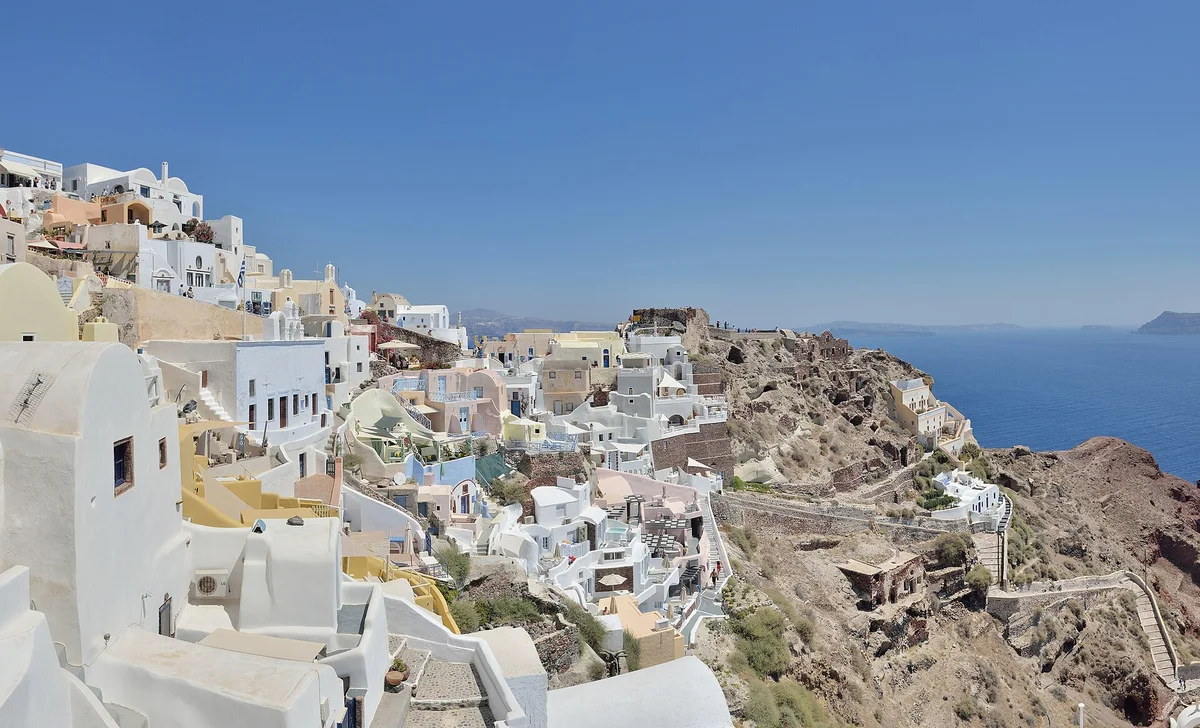
Smaller islands photograph best and suit this permit worst. Winter ferry timetables, seasonal closures, a thinner pool of services and connectivity that varies by village are all manageable for a holiday and awkward for a job. Anyone considering one should test it in February on a working week rather than in August on a holiday.
The pattern is the same one that decides where retirees settle: the variable is not scenery but whether the place operates when the tourists have gone. The overview of living in Greece compares the main options on service levels rather than on price.
What the permit does not solve
Three things stay your problem after the visa is granted, and each catches people.
Your employer’s position. Working from another country can create obligations for the company, on payroll, social security or permanent establishment, depending on the jurisdictions involved. An employer who has not been asked is an employer who may object later. This conversation belongs before the application, not after the move.
Social security. Which system you contribute to, and what happens to accrued entitlements at home, is a separate question from both the permit and income tax. It turns on the countries involved and on any agreement between them.
Continuity. The permit is a renewable temporary status built around a specific income arrangement. If the arrangement changes, because a contract ends, a client base becomes Greek, or the work stops being remote, the basis of the permit changes with it. Anyone treating this as the first step of a decade-long plan should look at what the later steps require rather than assuming one status flows into the next.
Risks and red flags
Assuming the visa settles the tax question. It does not. Tax residence follows presence, and the two are decided by different rules and different authorities.
Assuming the 50% exemption is automatic. It is a separate application with its own conditions and approval step.
Income evidence that shows amount but not source. A consulate needs to see who pays you and where they are. Statements alone do not establish that.
Taking Greek clients once you are here. It changes the basis of the permit rather than supplementing it.
Working from an outdated guide. The February 2026 move to consulate applications invalidated the sequence described by most pages written earlier.
Underestimating the apostille chain. It is the most common cause of a delayed file and it now has to happen before departure rather than after arrival.
The file, and the order to build it in
The application is granted on documents, so the work is assembling them in a sequence where nothing expires while something slower is still running.
| Document | What it establishes | Lead time |
|---|---|---|
| Employment contract or client agreements | That the income comes from outside Greece | Yours to produce, but a client may need asking |
| Payment history | That it is real and recurrent | Bank statements across a run of months |
| Employer letter, where employed | That the arrangement is agreed | Depends entirely on the employer |
| Criminal record certificate | No disqualifying record | Weeks, plus apostille |
| Health insurance | Cover meeting the permit specification | Days, once you have read the specification |
| Proof of accommodation | Somewhere to live in Greece | A tenancy is cleanest |
Start with whatever depends on somebody else. A criminal record certificate has to be issued, apostilled and often translated, and three to four weeks is normal when nothing goes wrong. An employer letter can take longer than any government document, because it usually requires an internal decision nobody has made yet.
The employer letter deserves its own note, because it is the item most likely to derail a file and the one least under your control. A company that has never had an employee working abroad may need legal advice before it will put anything in writing, and that advice may take weeks and may come back negative.
Finish with whatever expires. Certificates and apostilles carry validity periods measured in months, so a file assembled slowly can reach the consulate with its earliest document already stale. That restarts one element rather than the whole application, but it adds weeks each time.
The single most common cause of delay on this route is not the decision and not the paperwork volume. It is starting the fast items first and discovering the slow ones late.
Buyer and applicant scenarios
A UK freelancer billing UK clients €4,500 a month, moving alone. Income clears the threshold and the source qualifies. The file is assembled in the UK, apostilled and lodged at the consulate. The tax question is the real work: presence past 183 days brings worldwide income into scope, so the 50% exemption application should be prepared alongside rather than after.
An American employed by a US company on €6,000 a month, with a spouse. The threshold rises by roughly 20% for the spouse, which is comfortably covered. US filing continues in parallel with the Greek position, so the treaty and foreign tax credit mechanics need a preparer who handles both jurisdictions. The employer also needs to be comfortable with the arrangement, which is a conversation to have before the application rather than after the move.
A semi-retired consultant with €2,100 of client work and €2,450 of dividends. Neither route fits cleanly: the digital nomad permit looks at the active income and the retirement route excludes it while counting the dividends. The realistic answer is to establish which permit the income composition actually supports before choosing, rather than assuming a combined figure of €4,550 qualifies for either.
Someone buying property alongside the move. The permit requires no purchase, and buying is a separate decision with its own economics. If a purchase is part of the plan for its own sake, the property investment guide covers the market and where prices sit region by region covers the geography.
Frequently Asked Questions
Around €3,500 a month for the main applicant, with roughly 20% more for a spouse or partner and 15% more for each dependent child. The income must come from work performed for clients or an employer outside Greece, and the evidence expected is contracts and payment history rather than a single bank balance. These figures are published consistently across independent immigration advisories rather than read from a consular primary document, so confirm with the consulate handling your application before relying on them.
A 50% exemption on qualifying Greek-source employment or business income is available for up to seven years to a person who transfers tax residence to Greece, subject to registration and approval by the tax authorities. It is an application rather than an entitlement, with conditions on prior non-residence and an undertaking to remain, and it is entirely separate from the residence permit. Being granted the visa does not grant the tax treatment, and the two are decided by different authorities.
Not since February 2026. Applications are lodged at a Greek consulate before travelling, so the file must be complete while you are still in your home country rather than assembled after a visa-free arrival. The change affects sequencing more than difficulty: documents that could previously be gathered in Greece now have to be obtained, apostilled and where necessary translated at home, which takes three to four weeks when nothing goes wrong.
It depends on whether your income is active or passive, not on how much it is. The digital nomad permit requires income from work performed for clients or an employer outside Greece. The Financially Independent Person route requires passive income such as pensions, dividends and rent, and explicitly excludes employment income. Both currently ask around €3,500 a month, so composition rather than amount decides it, and a semi-retired applicant with a mix should establish which side their income falls on first.
Very probably, because tax residence follows presence rather than permit type. Passing 183 days in a calendar year generally makes you Greek tax resident under Article 4 of Law 4172/2013, bringing worldwide income into scope unless a preferential regime or a treaty says otherwise. That outcome is expected rather than accidental on this route, which is why the 50% exemption exists as an incentive. Assuming a nomad visa keeps you outside the Greek system is the costly misreading.
No. The permit is granted on the basis that the income originates outside Greece, so Greek clients or Greek employment change that basis rather than adding to it. Anyone whose plan involves working locally at some point should treat this permit as a temporary arrangement rather than a route toward local employment, and take advice on the position before the Greek work starts rather than after an income stream has already been established.
Time held as a lawful resident counts toward long-term status and eventually toward naturalisation, but the counting rules measure physical residence rather than permits held, and they have their own conditions. The permit itself is a renewable temporary status built around a specific income arrangement, so anyone treating it as the first step of a long plan should check what the later steps actually require rather than assuming continuity from one status to the next.
Next steps: the retirement route, for passive income · the non-dom alternative · sequencing the move.
Read next
Greece Retirement Visa 2026: FIP Route, Income and 7% Tax
The Financially Independent Person route asks €3,500 a month in passive income. What counts as passive, what the file needs, and why tax planning comes first.

Moving to Greece 2026: Visas, Tax Timing, First 90 Days
The move sequenced against two clocks: the 90-day Schengen ceiling and the 183-day tax residence trigger, with the UK and US positions set out separately.
Greece Non-Dom Tax Regime: The €100K Flat Rate (5A)
Greece's Article 5A non-dom regime: €100,000 flat tax on all foreign income for 15 years, €500,000 investment test, €20,000 per family member. Full guide.
How Long Can You Stay in Greece on the Golden Visa?
Greece Golden Visa has zero minimum stay for renewal under Law 5100/2024. Schengen travel, bridging docs, 183-day tax risk, and family rules explained.

Greece Citizenship After Golden Visa: The 7-Year Path
Can a Greece Golden Visa lead to citizenship? The 7-year naturalisation path, physical presence rules, language requirement, and the EU passport outcome.

Greece Property Investment Guide 2026: Yields & Data
Greece property investment 2026: 41,743 transfers worth €4.2B, +7.5% price growth, Athens yields to 5.43%, Golden Visa tiers and the Ellinikon regen.
Get your Greece property shortlist
Share your budget, region (Athens, Crete, islands, or Peloponnese), and Golden Visa goal. We reply within one business day with matched options and next steps.