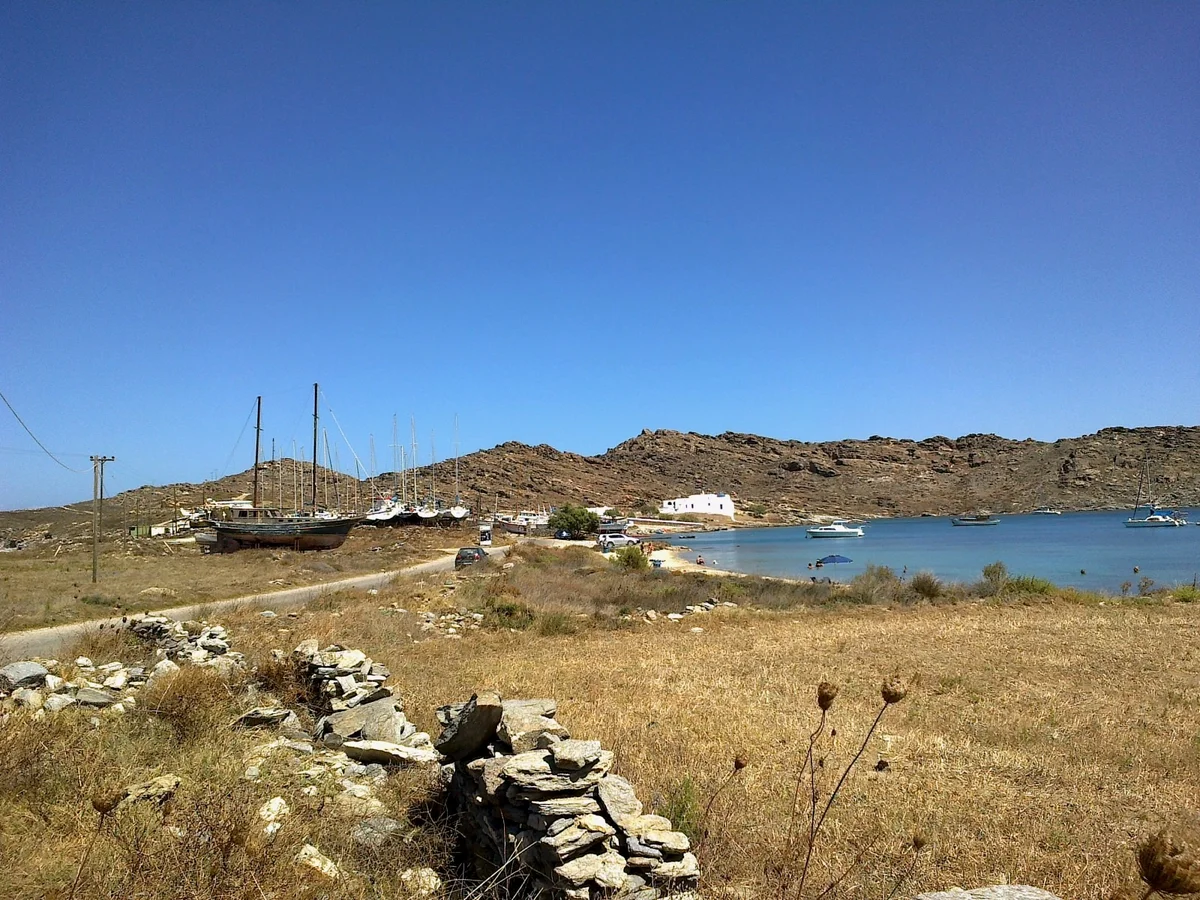
Quick answer: Cycladic prices are the highest in Greece and vary by island more than by anything else. Mykonos asks about €7,623 per square metre, Oia on Santorini about €5,742 and Thira about €4,363, with Paros and Naxos materially below. Mykonos and Santorini sit in the €800,000 Golden Visa tier while smaller Cycladic islands sit in the €400,000 one. The season is short, which is why nightly rates are high and why annual yields are not, and a Golden Visa property cannot use the short-let model at all.
What the islands ask
| Island or area | Asking price per m² | Source and reference |
|---|---|---|
| Mykonos | about €7,623 | Indomio, September 2025 |
| Santorini, Oia | about €5,742 | Indomio, July 2026 |
| Santorini, Thira | about €4,363 | Indomio, July 2026 |
| Paros | roughly €4,950 to €5,454 | Market summaries, 2026 |
| Naxos | roughly €3,700 to €4,800 | Market summaries, 2025 |
The Mykonos and Santorini figures come from Indomio, a Greek property portal, and are asking prices from live listings rather than recorded transactions. The Paros and Naxos ranges come from published market summaries rather than a single portal index, which is why they are given as bands.
Two comparisons put the numbers in proportion. Against the Ionian, Mykonos is roughly three times Kefalonia at a little under €2,400 and about two and a half times Zakynthos at €2,889. Against the mainland it is more than four times the Peloponnese at €1,778.
The premium is for recognition, not for land
Naxos is larger than Mykonos, greener, has more water, better agriculture and arguably better beaches, and costs a fraction of it. That single comparison explains the Cycladic price structure better than any analysis of amenities.
What the top of this market prices is international recognition and the airlift that follows it. Mykonos and Santorini have direct international flights through the season, a global brand and a buyer pool that includes people who are not comparing against other Greek islands at all. Naxos and the smaller Cyclades have Greek domestic connections, ferry access and a buyer pool that is mostly European.
For a buyer this produces a clean decision rather than a difficult one. If the point is the name, the price is what the name costs. If the point is Cycladic landscape, white villages, dry stone and blue water, the same landscape is available at half the price two islands away.
The season is the whole trade
Cycladic nightly rates are the highest in Greece. Cycladic seasons are among the shortest.
Ferry frequency, flight schedules and the businesses that depend on them concentrate into roughly May to early October, with the genuinely strong weeks much narrower than that. On the smaller islands a substantial share of restaurants, shops and services close entirely for winter, and on the largest ones the town stays open while the resort areas do not.
That is the trade, and it is worth stating in both directions. Strong income concentrated into a short window is genuinely strong: a well-placed Cycladic property can earn in ten weeks what a mainland flat earns in a year. It is also concentrated risk, since a poor season has nowhere to recover, and it means the property is idle and still costing money for seven or eight months.
Anyone modelling a Cycladic purchase on annualised occupancy is modelling the wrong island. The number that matters is peak-season rate multiplied by realistic peak-season weeks, minus a full year of holding costs.
The islands most buyers never consider
The Cyclades are twenty-odd inhabited islands and the search traffic goes to four of them. The rest are where the value is, and they are genuinely different places rather than cheaper versions of the same one.
Syros is the administrative capital of the Cyclades and the one island in the group with a real year-round city. Ermoupoli is a neoclassical port town with a hospital, courts, a university department and a population that does not leave in October. It is the answer for anyone who wants Cycladic geography without accepting Cycladic seasonality, and it is priced well below the famous islands because holiday buyers do not look at it.
Tinos is fifteen minutes from Mykonos by ferry and a different economy entirely, with a marble-carving tradition, hundreds of dovecotes and villages that stay inhabited. It has become the quiet alternative for buyers who have priced Mykonos and decided against it.
Milos trades on volcanic geology and a coastline unlike anywhere else in Greece, with a shorter international profile and correspondingly lower prices than its beaches would suggest.
Sifnos, Serifos, Folegandros and Amorgos are smaller again, with proportionally smaller markets, thinner services and the sharpest winters. Buying on any of them is a lifestyle decision rather than a market one, and resale depends on finding another person who wanted that specific island.
The pattern worth noticing is that price tracks how easy an island is to reach from outside Greece, not how good it is to be on. Anyone willing to change at Athens or take a longer ferry is buying at a discount for that inconvenience.
Getting there, and what it does to value
Access is the variable that sets Cycladic prices, so it is worth being explicit about what the differences are.
Mykonos and Santorini have direct international flights through the season. That brings a buyer pool that is not comparing against other Greek islands, and it brings guests who book without a connecting journey. It is the single largest reason those two carry the prices they do.
Paros and Naxos have domestic airports with Athens connections plus fast ferries. Good enough for a European buyer, one step removed for anyone flying long-haul.
Syros, Tinos, Milos and the smaller islands are ferry-first. Some have small airports with limited domestic service. The journey from a long-haul arrival is a day rather than an afternoon.
For an owner this shows up in three places: how often you actually use the property, how easy it is to let and to whom, and how quickly it sells when you want out. The last one is the one people discover late. A thin buyer pool is fine while you are buying and it is the whole problem when you are selling.
Golden Visa: the tier splits the archipelago
| Island | Tier | Why |
|---|---|---|
| Mykonos | €800,000 | Named in the prime zone under Law 5100/2024 |
| Santorini | €800,000 | Named in the prime zone |
| Larger Cyclades above the population threshold | €800,000 | Population threshold |
| Smaller Cycladic islands | €400,000 | Below the threshold |
The practical effect is that the two islands most buyers want are the two that cost twice as much to qualify with. The tier guide sets out the zones, and the tier follows the cadastral parcel rather than the island’s reputation, so it should be confirmed against the land registry before an offer.
The restriction that follows matters more here than anywhere. A qualifying property may only be let on leases of twelve months or longer, and short-term letting is prohibited for the life of the permit. On an island where the entire income case is the July and August nightly rate, that removes the income case rather than trimming it. The short-term letting rule sets out what counts and what renewal checks.
What the premium actually costs to hold
Purchase price is the visible number and the annual cost is the one that decides whether people keep these properties.
Running costs scale with value and with exposure. ENFIA is assessed on the objective value, which on a Mykonos or Santorini property is high. Insurance on a coastal building in a high-wind, high-salt environment is not the same product as insurance on a mainland flat. Pools, cisterns and desalination equipment need servicing whether or not anyone visits. And on the smaller islands, getting a tradesperson to a property in February may mean paying for their journey as well as their time.
Add a management arrangement, which almost every absentee owner ends up needing, and the annual figure on a Cycladic house is materially higher than the same floor area on the mainland. That is not an argument against buying. It is an argument for putting the holding cost into the decision at the start, because it is the number that turns a good purchase into a reluctant sale three years later.
The version of this that catches people is the property bought at the top of a budget with nothing left over. A Cycladic house is an expensive thing to own quietly through a soft year, and the buyers who enjoy them are generally the ones who bought below their ceiling rather than at it.
What to check in the Cyclades specifically
The general due diligence sequence applies. Four things carry extra weight on these islands.
Traditional settlement rules. Many Cycladic villages are protected settlements with strict controls on external appearance, materials, colour, window proportions and roof form. They are the reason the islands look the way they do and they substantially constrain what you can alter.
Water. Several islands rely on desalination and cistern storage. A property’s water arrangement is a real question rather than a formality, particularly for anything with a pool.
Building legality. The engineer’s certificate carries the usual weight, and older village stock with terraces enclosed over the decades is common.
Access. Not every attractive plot has a made-up road, and on stepped village sites vehicle access may end some distance from the door. That affects building costs, resale and how the property is actually used.
Buyer scenarios
A buyer with €400,000 wanting a Cycladic house. Naxos, Paros or a smaller island, where that budget corresponds to roughly 80 to 110 square metres depending on location. Not Mykonos, where it corresponds to about 52 square metres, and not a Golden Visa file on Mykonos or Santorini, where the threshold is €800,000.
A buyer with €800,000 taking a Golden Visa file on Santorini. Qualifies at Thira prices near €4,363 with room, or in Oia near €5,742 more tightly. The property must be a single dwelling on one deed with at least 120 square metres of main usable area, and the letting restriction removes the short-let income entirely. Whether the purchase still makes sense depends on wanting the house rather than the yield.
A buyer modelling rental income. The Cyclades are the wrong end of Greece for yield. Purchase prices are the highest in the country and the earning window is among the shortest, and the Greek rental income scale reaching 45% from 2026 compresses the net further. The market overview sets out where yields actually sit.
Risks and red flags
Modelling annual occupancy on a seasonal island. The single most common error in Cycladic investment cases.
Assuming the tier from the island name. Mykonos and Santorini are prime zone; neighbouring islands may not be, and the parcel decides.
Buying inside a protected settlement without checking what you may change. The constraint is real and it is not negotiable.
Underestimating the water and access questions, both of which cost money to solve after purchase and nothing to check before it.
Reading luxury segment figures as the market. Reported median offer prices in the prime resort segment run far above the general asking averages on the same islands, and the two are frequently quoted interchangeably.
Frequently Asked Questions
It varies more by island than by anything else. Mykonos asks about €7,623 per square metre on Indomio listing data, Oia on Santorini about €5,742 and Thira about €4,363, with Paros roughly €4,950 to €5,454 and Naxos roughly €3,700 to €4,800 on published market summaries. For proportion, the Peloponnese averages about €1,778, so the top of the Cyclades runs more than four times mainland coastal Greece. All of these are asking prices rather than recorded transactions.
Naxos, on most measures that are not brand recognition. It is larger than Mykonos, greener, better watered, has stronger agriculture and arguably better beaches, and costs a fraction of it. Paros sits between the two extremes. The Cycladic price structure prices international recognition and the direct airlift that follows it rather than land quality, which means the same white villages and dry-stone landscape are available at roughly half the price two islands from the famous ones.
Mykonos and Santorini are named in the prime zone under Law 5100/2024, alongside Attica, Thessaloniki and islands above the population threshold, so a qualifying purchase on either needs €800,000 in a single property with at least 120 square metres of main usable area. Smaller Cycladic islands below the threshold fall in the €400,000 tier. Because zone boundaries follow the cadastral parcel rather than the island's reputation, the tier should be confirmed against the land registry entry.
No. A qualifying property may only be let on leases of twelve months or longer, and short-term tourist letting is prohibited for the life of the permit. This bites harder in the Cyclades than anywhere else in Greece, because the peak-season nightly rate is effectively the entire income case on these islands. A long let earns a fraction of it, so the permit case and the income case cannot both be run on the same house.
Roughly May to early October, with the genuinely strong weeks much narrower, and it is shorter than the Ionian. Ferry frequency, flight schedules and the businesses depending on them all concentrate into that window, and on smaller islands a large share of restaurants, shops and services close entirely for winter. That short window is the reason nightly rates are the highest in Greece, and the reason annualised yields are not.
Better as a purchase than as a yield play. The highest purchase prices in Greece combined with among the shortest earning seasons compress gross yields, and the rental income scale reaching 45% from 2026 compresses the net further. The realistic case is that use value and capital appreciation are the return and rental income is a contribution. Anyone building a model on annualised occupancy for a Cycladic property is modelling an island that does not exist.
Four things beyond the standard searches. Whether the village is a protected traditional settlement, which constrains external appearance, materials and alterations substantially. The property's water arrangement, since several islands depend on desalination and cistern storage and a pool changes the question. Building legality, because enclosed terraces and additions are common on older village stock. And vehicle access, which on stepped village sites may end some distance from the door.
Next steps: the wider Greek market · the Golden Visa tiers · Kefalonia, the cheaper island alternative.
Read next
Greece Golden Visa Property Tiers 2026: €800K vs €400K
Law 5100/2024 created three Greece Golden Visa tiers. Compare €800K prime zones, €400K regional, and €250K conversion thresholds to pick the right investment.
Due Diligence Greece Property: The Complete 2026 Checklist
Due diligence Greece property: title search, cadastre, ENFIA arrears, permits, engineer survey, co-ownership, mortgages, Golden Visa tier. Full checklist.
12 Hidden Costs Buying Property in Greece: 2026 List
The real total for a Greek purchase: transfer tax 3.09%, notary, lawyer and agent fees plus 12 costs buyers miss, with a worked example on a €400K purchase.
Get your Greece property shortlist
Share your budget, region (Athens, Crete, islands, or Peloponnese), and Golden Visa goal. We reply within one business day with matched options and next steps.