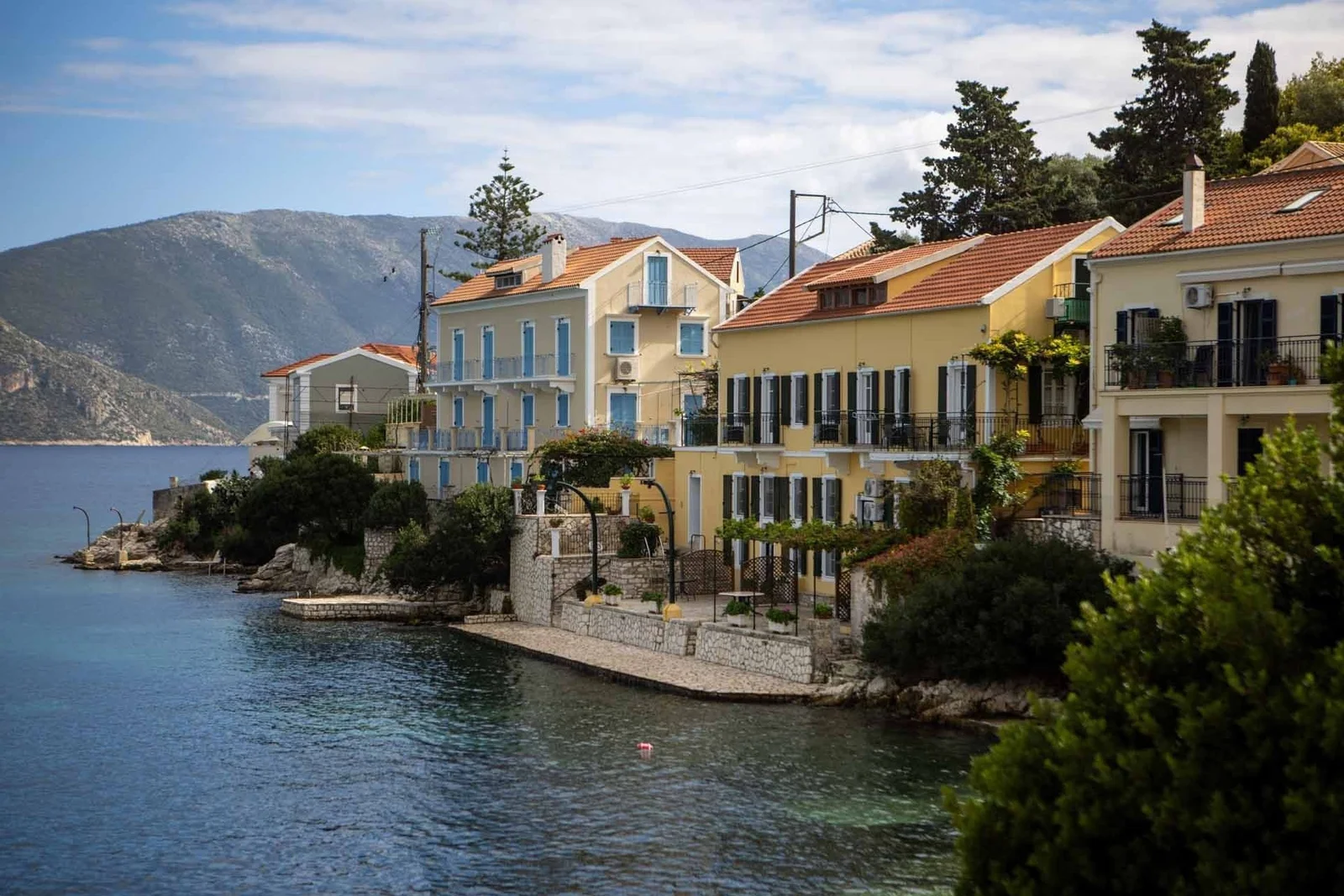
Quick answer: Kefalonia asks a little under €2,400 per square metre island-wide on June 2026 listing data, with a wide internal spread from roughly €1,334 in Omala to roughly €2,987 in Leivatho. That places it well below Corfu and below the Aegean Islands region. The island falls in the €400,000 Golden Visa tier, and a qualifying property may only be let on leases of twelve months or longer, so the permit and the holiday-letting model cannot both apply to the same house.
Every page ranking for this search is a listing grid. Four of the ten are single-office local agencies and four are portals showing the same island template they use everywhere. Not one of them tells you what the island costs, how that compares to anywhere else, or what the difference is between the number a seller asks and the number a market records.
That is what this page does.
What Kefalonia costs, and where each number comes from
Two kinds of number circulate about Greek property and they are routinely mixed. It is worth separating them before quoting either.
| Number type | What it measures | Source used here |
|---|---|---|
| Asking price per m² | What sellers are currently asking in live listings | Indomio, Greek property portal, June 2026. Commercial source, not official statistics |
| Price index change | What recorded transactions actually did | Bank of Greece, Q1 2026 release, provisional |
An asking price is an opening position. A price index is an outcome. On a thin island market the gap between them can be wide, and anyone quoting a single “average price” without saying which one it is has flattened that distinction away.
With that stated, here is the island.
| Area | Asking price per m² |
|---|---|
| Leivatho | about €2,987 |
| Island average | a little under €2,400 |
| Omala | about €1,334 |
The internal spread is the headline. Between the top and bottom areas the asking price roughly doubles, which means the same budget buys either a compact place near the better-connected south or roughly twice the floor area inland. On an island of this size that is not a long drive apart, and the decision is about access, services and letting demand rather than about distance.
Kefalonia against the alternatives
The useful comparison is not Kefalonia against Greece. It is Kefalonia against the islands a buyer is actually choosing between.
| Where | Asking price per m² | Reference |
|---|---|---|
| Corfu, Kassiopi | about €4,698 | July 2026 |
| Aegean Islands region, highest regional average | about €3,626 | June 2026 |
| Corfu Prefecture, lowest municipality | about €2,932 | June 2026 |
| Kefalonia, island average | under €2,400 | June 2026 |
| Kefalonia, Omala | about €1,334 | June 2026 |
Kefalonia comes in below every one of those reference points. The reason is not quality, it is market maturity: Corfu has carried an international buying market for decades, with the airlift and the foreign-owned stock that follow, and the price reflects the depth of that demand rather than the quality of the coastline.
What that means practically is that Kefalonia offers Ionian geography at a price closer to the mainland, with a shallower resale market as the trade. Both halves of that sentence matter.
What the transaction index says the market is doing
Asking prices tell you what sellers want. The Bank of Greece index tells you what happened.
On provisional data for the first quarter of 2026, Greek apartment prices rose 5.7 percent year on year. The breakdown matters more than the headline: Athens rose 5.2 percent, Thessaloniki 6.4 percent, other cities 5.4 percent, and areas outside all of those 6.9 percent. The fastest-rising segment in the country was the one Kefalonia belongs to.
Two readings of that are both defensible. It can mean regional and island markets are catching up after a cycle in which Athens absorbed most of the attention. It can also mean thin markets move further on fewer transactions. The index does not distinguish between them, and anyone telling you which it is with confidence is telling you an opinion.
For the longer view on Greek transaction volumes rather than prices, the market transactions guide covers where the buying has actually been happening.
Where on the island, and what each part is for
The price table above is the arithmetic. The geography behind it is what actually decides where people buy, and Kefalonia divides into four fairly distinct markets.
The south and the Argostoli side. The capital, the airport, the hospital and most of the year-round population. This is where the island functions in February as well as August, and it is where the Leivatho end of the price range sits. Anyone intending to spend real time here, rather than four weeks a year, tends to end up in this half for reasons that have nothing to do with the view.
Lassi and the resort belt. The established letting market, closest to Argostoli and to the airport, with the shortest transfer time and the deepest rental demand. Prices reflect that. It is also the part of the island where a property is easiest to let and easiest to resell, because the buyer pool is largest.
The north, around Fiskardo and Assos. The postcard Kefalonia, stone villages and deep water, and the part most people picture. It is also the furthest from the airport and the hospital, the most seasonal, and the part where winter is quietest. Properties here command a premium in summer photography and demand the most honesty about February.
Lixouri and the Paliki peninsula, and the inland valleys. Where the €1,334 end of the range lives. Cheaper because it is further from the services and the letting demand, not because the land is worse. For a buyer who wants space and does not need a rental yield, this is where a budget stretches furthest, and it is the part of the island most often overlooked by people searching from abroad.
The practical consequence is that “how much does Kefalonia cost” has four answers, and choosing between them is a decision about access and season rather than about price. A buyer who needs the hospital and the airport nearby is choosing the south whatever the price table says. A buyer who wants a summer house and does not mind a drive is choosing the north or the west, and their money goes considerably further.
Why the Ionian buyer is a different buyer
Kefalonia is green, wetter than the Cyclades, and mountainous, with a season that extends further into the shoulders than the Aegean islands manage. That produces a different buyer and a different property.
The Cycladic purchase is typically compact, white, expensive per square metre and bought partly for the look of it. The Ionian purchase is more often a house with land, bought by a northern European family who will use it for long stretches. Stone rather than render, olive trees rather than a caldera view, and a price per square metre roughly half of what the Aegean asks at the top.
That difference also shows up in the letting calendar. A longer shoulder season is worth more to an owner than a higher peak rate, because it spreads occupancy rather than concentrating it into eight weeks.
What a budget actually buys here
Translating a price per square metre into a house is where the abstraction becomes useful. At the island average, a €400,000 budget corresponds to something in the region of 165 square metres of built area before costs, which on Kefalonia is a substantial house rather than an apartment. At the Omala end of the range the same budget corresponds to roughly twice that, and at the Leivatho end to appreciably less.
Two adjustments belong on top of that arithmetic. Acquisition costs of 7 to 10 percent come off the buying power before anything else. And land, outbuildings and condition move a real property well away from any per-square-metre average, in both directions: a stone house needing full renovation and a finished villa with a pool do not sit on the same line however similar their floor areas look.
The winter question
This is the part an August viewing trip cannot show you, and it decides how well people get on with the island.
Ferry timetables thin out. A share of restaurants and services close for the season. The pool of available builders, electricians and plumbers shrinks, which lengthens and sometimes prices up any work you commission between November and March. And a property is harder to show to a buyer in winter, which matters at resale.
None of that is a reason not to buy on Kefalonia. It is a reason to see it in February first, and to hear how the answer to “what is it like here in winter” changes depending on who you ask.
The Golden Visa position
Kefalonia sits in the €400,000 tier rather than the €800,000 prime zone. A single residential property at or above €400,000, on one title deed, with at least 120 square metres of main usable area certified by a Greek engineer, qualifies. The tier guide sets out the zones, and the tier follows the cadastral parcel rather than the postal address.
The restriction matters more here than in most places. A qualifying property may only be let on leases of twelve months or longer, and short-term tourist letting is prohibited for the life of the permit. On a seasonal island where the letting model is a large part of why people buy, that means the permit case and the holiday-income case cannot both be run on the same house. Decide which one the purchase is for before you shortlist, not after.
What to check on this island specifically
The general due diligence sequence applies everywhere. Four things deserve extra attention on Kefalonia.
Building legality on older stone stock. Extensions, terrace enclosures and converted outbuildings are common and are exactly what the engineer’s legality certificate will not cover if they were built without a permit.
Inheritance chains. Island properties frequently sit in undivided family ownership across several heirs, some of whom live abroad. Every one of them signs.
Access and services. Whether the road is adopted, where the water comes from, and whether mains drainage reaches the plot. Inland plots at the cheaper end of the price range are cheaper partly for these reasons.
Seasonal contractor availability. If the purchase needs work, the timetable is set by when trades are on the island rather than by the scope.
On costs, the transfer tax on a resale is an effective 3.09 percent of the taxable value, the full stack runs 7 to 10 percent of the price, and the transfer tax guide explains why the taxable value can exceed the price you agreed. If you intend to let, the rental income scale changed on 1 January 2026 and now runs to 45 percent with only a flat 5 percent deduction.
Frequently Asked Questions
Asking prices across the island average a little under €2,400 per square metre on portal listing data for June 2026, with a wide internal spread: about €2,987 per square metre in Leivatho at the top and about €1,334 in Omala at the bottom. The same budget therefore buys roughly twice the floor area depending on where on the island you look. These figures are asking prices from live listings rather than recorded transaction prices, which are a different measure.
Materially cheaper on the same portal data. Kefalonia asks a little under €2,400 per square metre island-wide, while in Corfu the Kassiopi area asks about €4,698 per square metre and even the lowest municipality in the Corfu Prefecture asks about €2,932. The difference reflects market maturity rather than coastline: Corfu has carried an international buying market for decades, with the airlift and foreign-owned stock that come with it.
The €400,000 tier, not the €800,000 prime zone. A qualifying purchase is a single residential property at or above €400,000 on one title deed with at least 120 square metres of main usable area, certified by a licensed Greek engineer. Zone boundaries follow the cadastral parcel rather than the postal address, so the tier should be verified against the land registry entry before an offer rather than assumed from the island name.
No. Short-term tourist letting of a Golden Visa qualifying property is prohibited for the life of the permit, and only leases of twelve months or longer are allowed. This bites harder on a seasonal island than almost anywhere else, because seasonal letting income is a large part of why buyers look at the Ionian in the first place. The permit case and the holiday-income case cannot be run on the same property, so the choice has to be made before shortlisting.
On the Bank of Greece transaction index, yes, and faster than in the cities. Apartment prices rose 5.7 percent year on year nationally in the first quarter of 2026 on provisional data, with Athens at 5.2 percent, Thessaloniki at 6.4 percent, other cities at 5.4 percent and areas outside all of those at 6.9 percent. Kefalonia sits in that last and fastest segment. Thin markets also move further on fewer transactions, so the figure should be read with that in mind.
Four things. Building legality on older stone stock, where unpermitted extensions and enclosed terraces are common and will block the engineer's certificate. Inheritance chains, since island properties often sit in undivided family ownership with heirs abroad who all have to sign. Access and services, meaning whether the road is adopted, where water comes from and whether mains drainage reaches the plot. And contractor availability, because between November and March the timetable for any works is set by who is on the island.
Materially quieter than an August visit suggests. Ferry timetables reduce, a share of restaurants and services close for the season, and the pool of available tradespeople shrinks, which lengthens and can raise the cost of works commissioned between November and March. A property is also harder to show in winter, which affects resale. It is not a reason to avoid the island, but it is a strong reason to visit in February before committing.
Next steps: the Golden Visa tiers · what a purchase actually costs · the due diligence sequence.
Read next
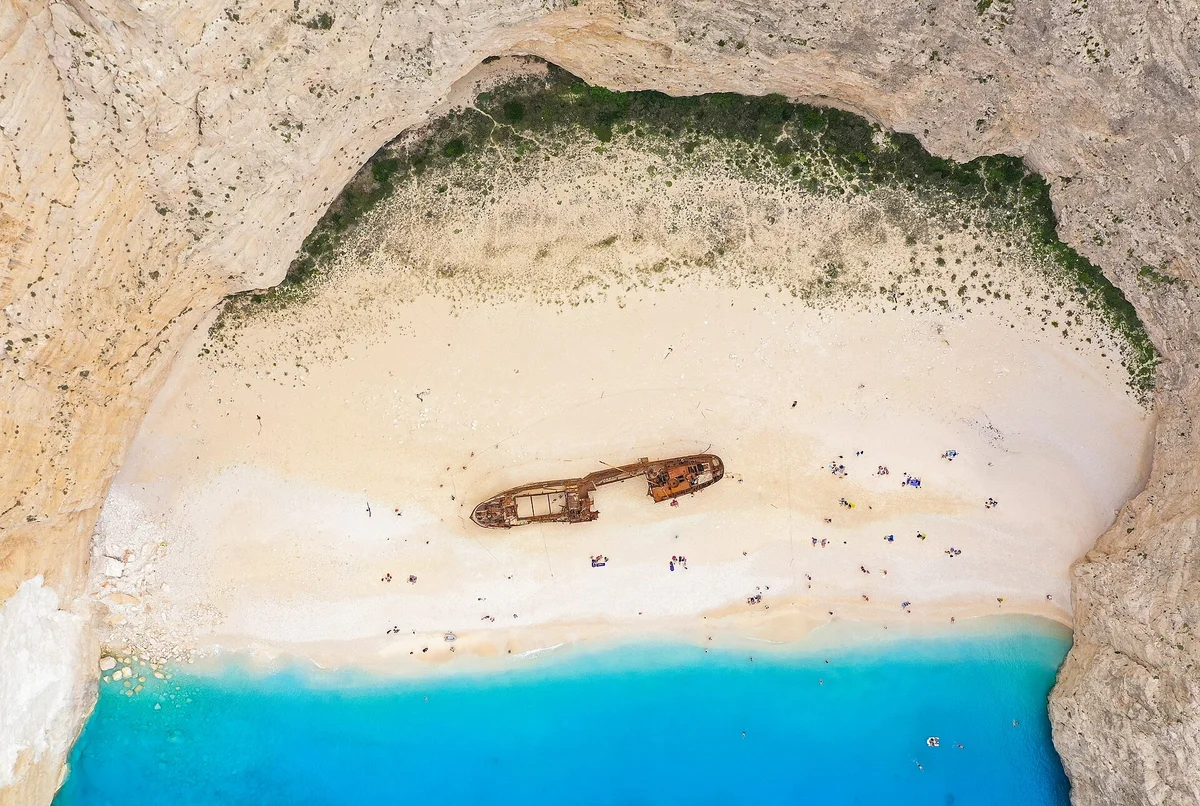
Greece Golden Visa Property Tiers 2026: €800K vs €400K
Law 5100/2024 created three Greece Golden Visa tiers. Compare €800K prime zones, €400K regional, and €250K conversion thresholds to pick the right investment.
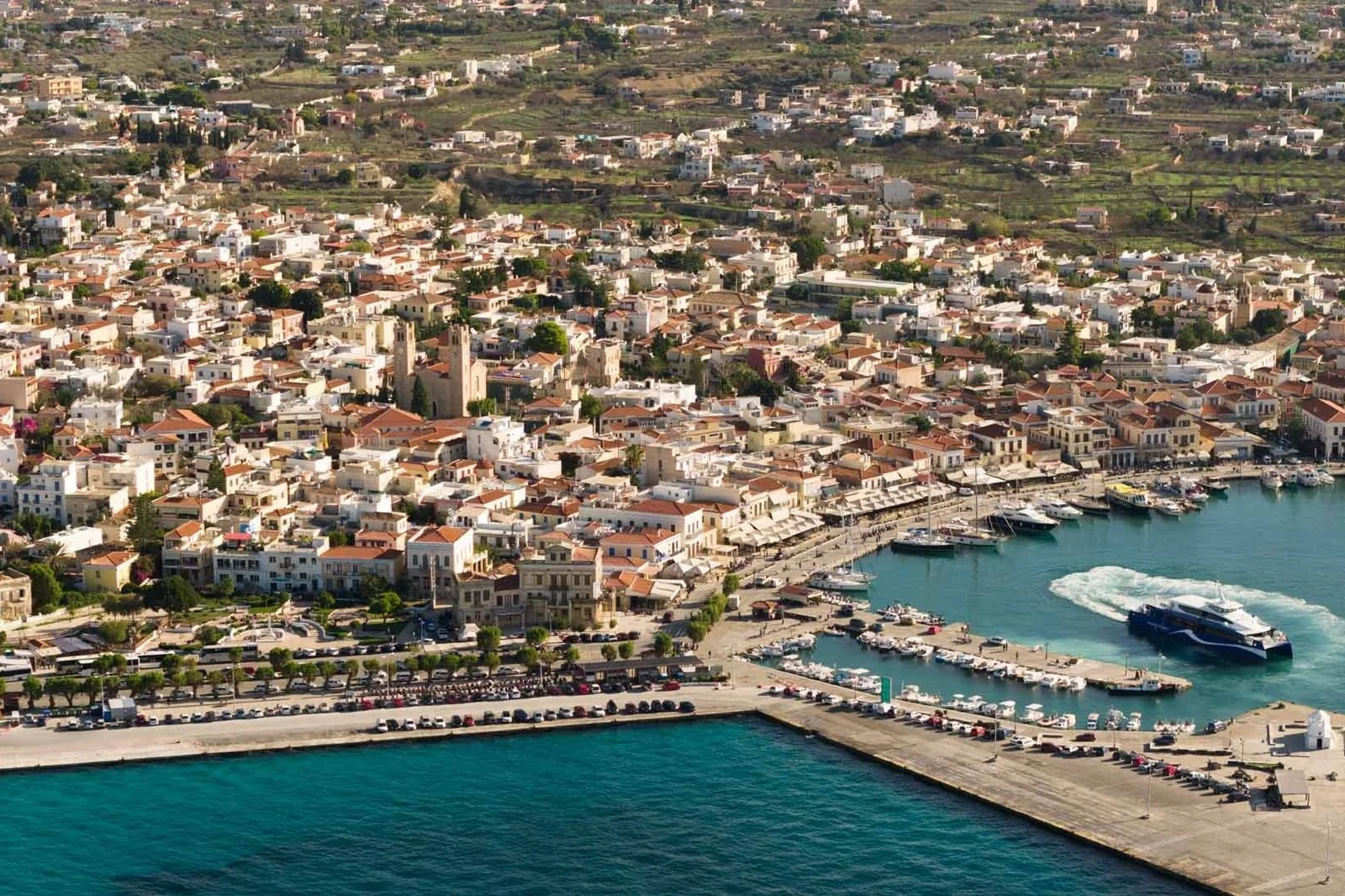
12 Hidden Costs Buying Property in Greece: 2026 List
The real total for a Greek purchase: transfer tax 3.09%, notary, lawyer and agent fees plus 12 costs buyers miss, with a worked example on a €400K purchase.
Greece Property Transfer Tax (FMA): 2026 Complete Guide
FMA transfer tax in Greece is 3.09% on the higher of sale price or objective value, paid before deed. Worked examples, cost tables, new-build rules.
Greece Rental Income Tax 2026: Non-Resident Rates Guide
Progressive 15 to 45% Greek rental income tax for non-residents: brackets, filing steps, deductible expenses, AFM setup, and Golden Visa STR restrictions.
Due Diligence Greece Property: The Complete 2026 Checklist
Due diligence Greece property: title search, cadastre, ENFIA arrears, permits, engineer survey, co-ownership, mortgages, Golden Visa tier. Full checklist.
Greece Property Market 2025: 41,743 Transactions Analysed
41,743 Greek property transfers, €4.2B total in 2025. Registry data: Athens 5,816 deals, apartments dominant, tax revenue -7.4%, gifts +13%.
Get your Greece property shortlist
Share your budget, region (Athens, Crete, islands, or Peloponnese), and Golden Visa goal. We reply within one business day with matched options and next steps.