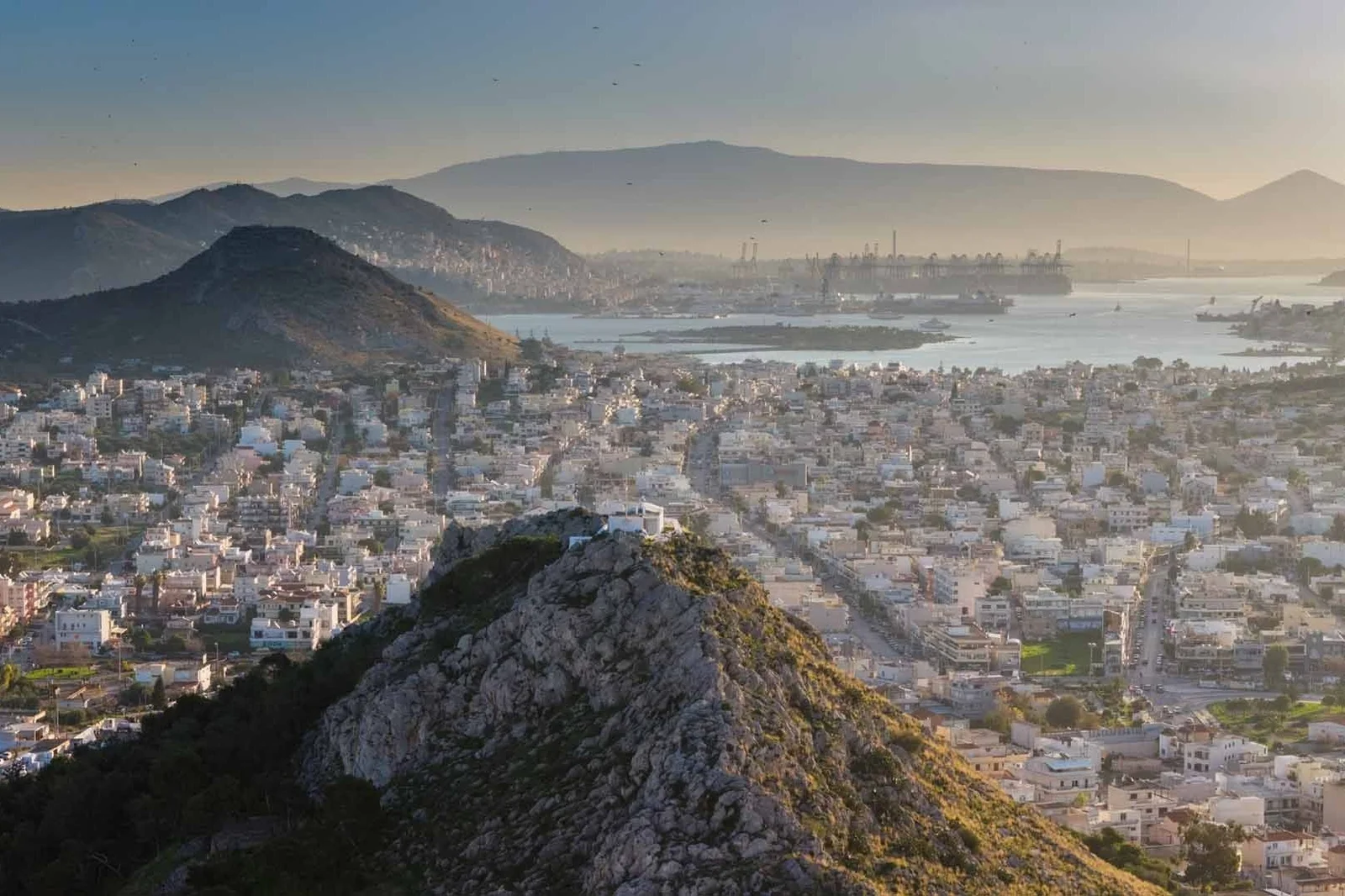
Quick answer: the cheapest property in Greece is on the northern mainland, in towns like Kastoria at around €530 per square metre, Kozani around €640, Kilkis around €680 and Grevena around €820. The cheapest island areas run two to four times that, with inland Kefalonia near €1,334 and inland Zakynthos near €1,997. Greece has no one-euro house scheme. Cheap stock is cheap because of distance from services, population decline, condition and legal complication, and each of those is discoverable before a deposit moves.
Almost everyone searching for cheap property in Greece is picturing an island. That is the single most expensive assumption in this part of the market, and correcting it is what this page is for.
Where cheap actually is
| Where | Asking price per m² | Kind of place |
|---|---|---|
| Kastoria | about €530 | Northern mainland town, lakeside |
| Kozani | about €640 | Northern mainland town |
| Kilkis | about €680 | Northern mainland town |
| Grevena | about €820 | Northern mainland town |
| Kefalonia, Omala | about €1,334 | Cheapest end of an Ionian island |
| Zakynthos, Artemisio | about €1,997 | Cheapest end of a busier Ionian island |
Those mainland figures come from published regional market summaries rather than from a primary index, and the island figures from Indomio, a Greek property portal. Both are asking prices from listings rather than recorded transactions, which the market overview explains at length.
The gap is the point. Kastoria is roughly two and a half times cheaper per square metre than the cheapest part of Kefalonia and close to four times cheaper than the cheapest part of Zakynthos. Nobody browsing Greek property listings from abroad ends up in Kastoria by accident, which is precisely why the price is what it is.
The broader pattern: the Peloponnese, Epirus in the northwest and Thrace in the northeast carry the lowest regional prices in the country, and northern Greece generally sits well below the national picture.
What a budget actually buys
Turning a price per square metre into floor area makes the range concrete.
| Budget | At Kastoria, about €530/m² | At Grevena, about €820/m² | At inland Kefalonia, about €1,334/m² |
|---|---|---|---|
| €50,000 | about 94 m² | about 61 m² | about 37 m² |
| €100,000 | about 188 m² | about 122 m² | about 75 m² |
| €150,000 | about 283 m² | about 183 m² | about 112 m² |
Two adjustments belong on top of every cell. Acquisition costs come off buying power before anything else, and the cost stack guide sets out what they consist of. And condition is the variable a per-square-metre average cannot capture: at this end of the market the difference between a habitable house and a shell is frequently larger than the purchase price itself.
The one-euro house question
Greece has no one-euro house scheme. Italy has run such programmes in depopulating villages, with conditions on renovation deadlines and deposits attached, and the idea has travelled further than the geography.
What Greece does have is genuinely cheap village stock, particularly inland and in the north, some of it abandoned or part-ruined, sold as ordinary transactions at ordinary prices. Occasionally those prices look startling from abroad. They are still sales, with a title chain, a cadastre entry and an engineer’s certificate to obtain.
The reliable rule at this end of the market is that the purchase price is the smallest number in the project. A house bought at €30,000 needing full renovation is a renovation budget with a small acquisition attached, not a bargain house.
What the cheap places are actually like
Naming towns without describing them is how listings mislead, so it is worth saying what these places are before anyone treats a price per square metre as an opportunity.
Kastoria sits on a lake in the northwest, ringed by mountains, historically a fur trading town with a stock of stone and timber houses that is genuinely distinctive. It has a small airport with domestic connections, cold winters and real snow, and a population that has been shrinking for years. It is a place people live rather than a place people visit, and that is exactly why the price per square metre is what it is.
Kozani and Grevena are northern mainland towns with the same basic profile: functioning, unremarkable, well below the national price level, and a long way from anywhere an international buyer would arrive by default. Both sit near mountain country that gets serious winters and, in a couple of places, ski infrastructure.
Kilkis is close to the northern border and to Thessaloniki, which makes it the one on this list with a plausible commuting relationship to a real city.
The common thread is that none of these places is trying to sell itself to a foreign buyer, and none of them has a market that depends on one. That has two consequences. Prices are set by local demand rather than by what an overseas buyer will pay, which is the good half. And the resale pool is local too, which is the other half.
Running costs at the budget end
One genuine advantage of buying cheaply in Greece rarely gets mentioned: the annual costs scale with the property, and at this end they are small.
ENFIA, the annual property tax, is assessed on the objective value the state assigns rather than on what you paid, and in low-value areas that assessment is correspondingly low. Utilities, insurance and maintenance follow the size and condition of the building. A modest mainland house is inexpensive to hold in a way that a coastal villa is not.
That matters for the calculation people actually face, which is not “will this appreciate” but “can I afford to keep this while I use it a few months a year”. At Kastoria or Grevena prices, the answer is usually yes by a comfortable margin, and it stays yes even in a year when nothing is let and nothing is sold.
The exception is a property under renovation, where holding costs and works run concurrently and the budget has to carry both. That is the situation where cheap purchases most often become uncomfortable, and it is a reason to buy something habitable first if the finances are tight.
Why cheap property is cheap
Four reasons recur, and none of them is hidden.
Distance. From an airport, a hospital, employment and a supermarket. Every one of those raises the cost of living there and lowers the pool of people who want to.
Population decline. Much of the cheapest Greek stock is in regions losing population. That is why supply exceeds demand, and it is also why resale is slow.
Condition. A large share of very cheap stock has not been meaningfully maintained for decades. Wiring, damp, roofing and plumbing are the usual four, and none is visible on a viewing.
Legal complication. Undivided inheritances where six heirs each hold a share. Extensions and enclosed terraces built without permits, which the engineer cannot certify. Plots without adopted road access or mains water and drainage. These are the reasons a specific cheap house is cheap even for its area.
The first two are strategic and you accept them or you do not. The second two are checkable, and the due diligence sequence sets out how, with the engineer certificate and the cadastre check doing most of the work.
A good purchase is not the same as a good investment
This is the distinction the budget end of any market blurs, and it is worth stating plainly.
Buying cheaply in a depopulating region for lifestyle reasons is frequently a sound decision. The house is affordable to own, the running costs are low, and the money at risk is small.
Buying cheaply there for yield or capital growth usually is not. Thin markets are thin in both directions: the same shortage of buyers that produced the low entry price is waiting when you sell. Rental demand outside tourist areas and cities is limited, and a property that takes two years to sell has costs the spreadsheet did not model.
If the purpose is investment rather than a home, the market where the buyers are is a different market from the one where the prices are low. The market overview sets out where yields and liquidity actually sit.
Risks and red flags at the budget end
A price that is low even for its own area. The mainland figures above are area averages, so a house asking well under them is asking under an already low number. That is sometimes condition and sometimes a title problem, and the difference is worth establishing before anything else, because one is a budget question and the other is a whether-you-can-buy-it question.
Listings that are not really for sale. Very cheap advertised properties sometimes turn out to be a share of an undivided inheritance, or a property whose owner has not in fact agreed to sell. Ask early who is instructing the agent.
Unpermitted building work. The most common reason a cheap purchase cannot complete, because the engineer cannot issue the legality certificate the notary needs.
No adopted access or services. Connecting a plot to mains water, drainage or power can cost more than the house did. Establish the position before an offer.
Renovation quotes that assume mainland logistics. In remote areas and on islands, materials and trades cost more and arrive slower, and the quote from a contractor two hours away is not the quote you will pay.
Pressure to move fast on an unusually low price. The property scams guide covers the patterns worth recognising, and urgency is the common thread in most of them.
Buying without seeing it in winter. At this end of the market the winter version of a village is materially quieter than the summer one, and it is the version you would live in. In the northern towns that difference includes real cold and snow, which is not what most people picture when they picture Greece and which changes both the heating bill and the character of the place.
Buyer scenarios
A buyer with €60,000 wanting a habitable house. The northern mainland, where the budget corresponds to roughly 113 square metres at Kastoria prices. Realistic if the house is sound. The controlling checks are title chain, building legality and services. Not a rental proposition and not intended as one.
A buyer with €100,000 wanting an island. Achievable inland on Kefalonia at about 75 square metres of built area, with the trade being distance from the coast and services. On Zakynthos the same money buys about 50 square metres at the island’s cheapest end. Anyone expecting a coastal island house at this budget is looking at the wrong price bracket.
A buyer with €150,000 planning a renovation. The purchase is the smaller half. Budget the works with a contingency you would be comfortable spending, get the engineer in before the deposit rather than after, and price contractor availability rather than contractor rates. The resale checklist covers what to verify on existing stock.
Frequently Asked Questions
The northern mainland rather than the islands. Kastoria asks around €530 per square metre, Kozani around €640, Kilkis around €680 and Grevena around €820, against roughly €1,334 at the cheapest end of Kefalonia and €1,997 at the cheapest end of Zakynthos. The Peloponnese, Epirus and Thrace carry the lowest regional prices generally. Almost everyone searching for cheap Greek property is picturing an island, and the islands run two to four times the price of the cheapest mainland towns.
Considerably more than most people expect, provided the geography is right. At Kastoria prices near €530 per square metre a €100,000 budget corresponds to roughly 188 square metres of built area before costs, and at Grevena prices near €820 to about 122 square metres. On the islands the same money buys a fraction: around 75 square metres at inland Kefalonia prices. Condition is the variable those figures cannot capture and is often worth more than the price difference.
No. Greece runs no national one-euro house programme of the kind Italy has operated in depopulating villages with renovation deadlines and deposits attached. Genuinely cheap and sometimes near-derelict village houses do reach the market regularly, particularly inland and in the north, but they are ordinary sales at ordinary prices with the usual title chain, cadastre entry and engineer's certificate to obtain. At that end the purchase price is the smallest number in the project.
Among islands with a functioning market, the cheaper end sits inland on the Ionian islands and on less-visited islands rather than on the familiar names. Kefalonia averages a little under €2,400 per square metre island-wide with inland areas near €1,334, which is materially cheaper than Zakynthos at about €2,889 and than Corfu, where the Kassiopi area asks about €4,698. Cheap for an island still means expensive measured against the mainland.
Four reasons recur. Distance from an airport, hospital, employment and shops. Population decline in the region, which is why supply exceeds demand and why resale is slow. Condition, since much very cheap stock has not been maintained for decades and hides wiring, damp and roofing problems. And legal complication: undivided inheritances across several heirs, unpermitted extensions the engineer cannot certify, or plots without adopted access or mains services.
It is often a good purchase and rarely a good investment. Low entry prices in depopulating regions come with thin resale markets, so the same shortage of buyers that created the price is waiting when you sell, and rental demand outside tourist areas and cities is limited. Buying at this end for lifestyle reasons is frequently sound. Buying for yield or capital growth means buying in the market where prices are low rather than the market where the buyers are.
Three things before a deposit moves. Who actually owns it, because very cheap village stock frequently sits in undivided inheritance across several heirs who all have to sign. Whether the building is legal, since unpermitted extensions and enclosed terraces stop the engineer issuing the certificate the notary needs. And whether the plot has adopted road access and mains water, drainage and power, because connecting a plot can cost more than the house did.
Next steps: the wider Greek market · the due diligence sequence · what a purchase costs on top.
Read next
Due Diligence Greece Property: The Complete 2026 Checklist
Due diligence Greece property: title search, cadastre, ENFIA arrears, permits, engineer survey, co-ownership, mortgages, Golden Visa tier. Full checklist.
Greece Property Cadastre Check: Verify Title Before You Buy
Greece property cadastre check: Ktimatologio lookup, unknown owner status, forest registry overlap, lawyer extracts, red flags, registration timelines.
12 Hidden Costs Buying Property in Greece: 2026 List
The real total for a Greek purchase: transfer tax 3.09%, notary, lawyer and agent fees plus 12 costs buyers miss, with a worked example on a €400K purchase.
Greece Property Scams: How to Protect Yourself in 2026
The most common Greece property scams, fake listings, title fraud, unlicensed agents, deposit theft. Red flags and how a Greek lawyer protects every buyer.
Buying Resale Property Greece: Checklist for Foreigners
Resale property Greece checklist: title search, ENFIA clearance, engineer survey, notary prep, 3.09% transfer tax. Step-by-step for foreign buyers.
Get your Greece property shortlist
Share your budget, region (Athens, Crete, islands, or Peloponnese), and Golden Visa goal. We reply within one business day with matched options and next steps.