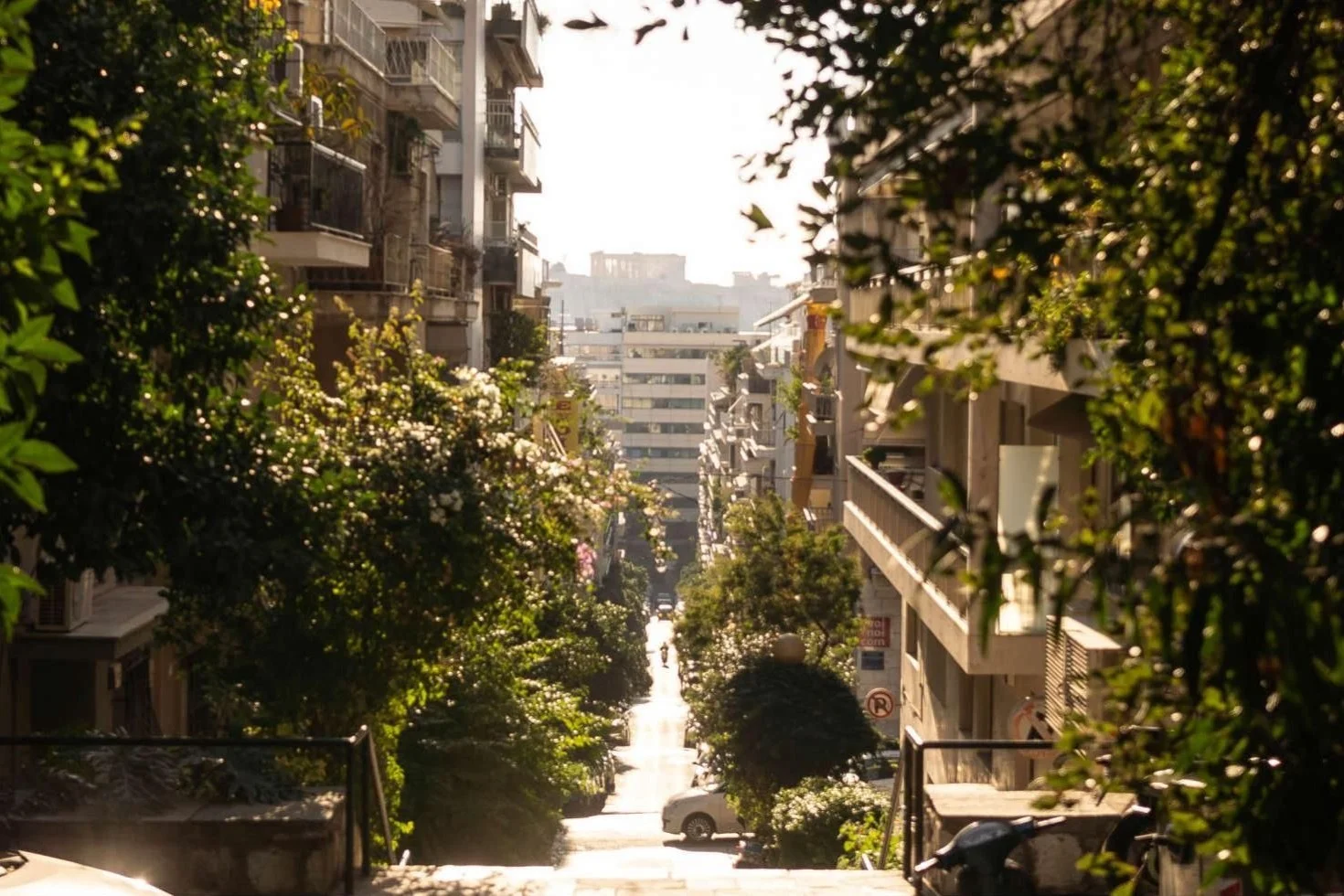
Quick answer: Athens prices range from about €5,409 per square metre in Kolonaki and Lykavittos to about €1,731 in Patisia, with the southern Riviera suburbs in a separate band above the central average. The whole of Attica falls in the €800,000 Golden Visa tier regardless of local prices. Athens yields about 5.43% gross against a 4.40% national average, and it is the only Greek market where rent is supported by year-round demand rather than by a season. It is also now the slowest-growing segment in the country.
The threefold spread inside one city
| Where | Asking price per m² | Source and reference |
|---|---|---|
| Kolonaki and Lykavittos | about €5,409 | Indomio, June 2026 |
| Voula and Varkiza, villa stock | roughly €5,000 to €6,500 | Market summaries, 2026 |
| Glyfada | roughly €4,250 to €5,000 | Market summaries, 2026 |
| Patisia | about €1,731 | Indomio, June 2026 |
The two Indomio figures are asking prices from live listings for central Athens municipalities. The Riviera bands come from published market summaries rather than a single portal index, which is why they are given as ranges.
A factor of three inside one metropolitan area is unusual and it is the most important thing to understand about buying here. In most European capitals the gap between a prime central district and an ordinary residential one is large but not this large. In Athens the same budget buys a small flat in Kolonaki or a substantial one in Patisia, and the two are a twenty-minute journey apart.
Athens is the only Greek market that works in February
Every island page on this site ends up making the same seasonal point. Athens is the page where it does not apply, and that is the reason to consider it.
Rent here is supported by employment, universities, hospitals, government and a permanent population. Demand does not stop in October. The practical consequences run through every part of a purchase: a property can be let on a twelve-month basis without the income collapsing, works can be commissioned in January, tradespeople are available, and a resale can be viewed in any month of the year.
That is why Athens carries an average gross rental yield around 5.43% against a national average of 4.40%, despite being among the more expensive places to buy. The market overview sets the yield picture out in full. Islands beat Athens on peak nightly rates and lose to it across twelve months, which is the whole difference between a seasonal asset and a year-round one.
Which part of Athens, by what you want
| If you want | Look at | Trade |
|---|---|---|
| Coast and city together | Glyfada, Voula, Vouliagmeni, Varkiza | Highest prices per m², car-dependent |
| Walkability and letting demand | Kolonaki, Koukaki, Pangrati, Mets | Small units, older stock, tighter short-let rules |
| Family space and schools | Kifissia, Marousi, Psychiko and the northern suburbs | Commute, less coastal |
| Yield on paper | Western and northwestern districts | Thin foreign resale pool |
The Riviera is what most international buyers picture when they picture Athens property, and it behaves like a separate market: coastal, lower density, newer stock, and priced accordingly. It is also the part of the city that has absorbed the most development attention over recent years.
The central districts are where letting demand is deepest and where stock is oldest. Athenian apartment buildings from the 1960s and 1970s dominate the centre, which means the engineer’s assessment does real work here on wiring, plumbing, insulation and seismic retrofitting rather than on unpermitted extensions.
Buying into a Greek apartment block
Almost every Athens purchase is a flat in a polykatoikia, the mid-century apartment building that defines the city, and it works differently from a house.
You buy a specific apartment plus an undivided share of the building and the plot, expressed as a percentage on the deed. That share sets your vote in building decisions and your contribution to shared costs, and it is a number worth reading rather than skimming.
Shared costs, the koinochrista, cover the lift, stairwell lighting, cleaning, any central heating and the building’s maintenance. On a block with central oil heating they can be substantial in winter, and on a block that has deferred maintenance for years they can arrive as a large one-off levy after a vote you were not present for.
Three things to establish before an offer, none of which appears in a listing. Whether the building has an active management and a maintenance record. What the current monthly shared charge actually is, not what the seller says it usually is. And whether any major works have been voted on or are being discussed, because a lift replacement or a facade repair divides across the shares and yours arrives with the keys.
This is the Athens equivalent of the island legality question: a normal, manageable feature of the market that costs money when discovered late.
Transport is priced into everything
The metro is the variable that most reliably separates two otherwise similar Athens addresses, and it is not always obvious from a map.
A property within a short walk of a metro station lets faster, lets to a wider pool and resells to a wider pool, because a large share of Athens renters do not have a car and the traffic makes one a mixed blessing. The tram along the coast performs the same function for the Riviera at a slower pace, and the suburban rail serves the northern suburbs and the airport.
What this means practically is that walking distance to a station is worth paying for in a way that a slightly better view is not, if the purchase has any letting or resale intention at all. It is also the reason some cheaper districts yield well on paper: they are cheap partly because they are awkward to reach, and the same awkwardness is waiting when you sell.
The Golden Visa problem specific to Athens
All of Attica sits in the €800,000 tier under Law 5100/2024. That is straightforward in Kolonaki, where €800,000 buys roughly 148 square metres at prevailing asking prices, and it is awkward everywhere else.
At Patisia prices near €1,731 per square metre, €800,000 corresponds to roughly 462 square metres, which is not a normal apartment. The tier does not follow the local price level, so in the cheaper half of the city a qualifying purchase means buying something considerably larger or more expensive than the area’s own market suggests.
Two consequences follow for anyone combining a purchase with a residence application. Buyers at the €800,000 threshold concentrate in the districts where that sum buys a normal property, which is a narrower set than the city as a whole. And the €800,000 areas guide is worth reading before shortlisting, because the tier is set by the cadastral parcel rather than the address and the boundary questions in Attica are real.
The tier structure sets out how the zones are defined and where the €400,000 alternative applies elsewhere in Greece.
Letting, and two rules that can both apply
Athens is where the short-let question is most contested and most regulated.
Restrictions on new short-term rental registrations in parts of the centre have tightened, and the position is now location-specific enough that it belongs in the pre-offer checks rather than in the post-purchase planning. The Athens moratorium guide covers where the restrictions apply.
Separately, a Golden Visa qualifying property may only be let on leases of twelve months or longer anywhere in Greece. A central Athens Golden Visa purchase can therefore be caught by both rules simultaneously: prohibited from short-letting by the permit, and in a district where new registrations are restricted anyway.
For an ordinary purchase the long-let market in Athens is genuinely strong, which is the point of buying here rather than on an island. The rental income guide covers the tax position, which reaches 45% from 2026 with only a flat 5% deduction.
Athens is now the slowest-growing part of Greece
On Bank of Greece data for the first quarter of 2026, Athens apartment prices rose 5.2% year on year, against 6.4% in Thessaloniki, 5.4% in other cities and 6.9% in areas outside all of those.
For most of the previous cycle Athens led, absorbing the attention and the capital while the regions lagged. That has reversed, and a great deal of commentary about the Greek market has not caught up with it.
Two readings are both reasonable. Athens may simply be further through its cycle, having repriced earlier. Or the regions may be moving further on fewer transactions, which thin markets do. The data does not choose, and confident assertions either way are opinion rather than finding.
Risks and red flags
Old central stock. Wiring, plumbing, insulation and seismic standards on 1960s and 1970s apartment blocks. The survey matters more here than the title search.
Assuming the Golden Visa threshold matches the district. It does not. €800,000 applies across Attica whatever the local price level.
Short-let assumptions in restricted areas. Check the registration position for the specific address before an offer, not after.
Buying on Riviera photographs without the commute. The southern suburbs are a car journey from the centre, and the coastal road is the constraint people underestimate.
Reading Athens as the growth story. It is currently the slowest of the four segments, which does not make it a bad purchase and does make the standard narrative out of date.
Skipping the building before buying the flat. In a city of apartment blocks the condition and governance of the block matter as much as the unit inside it, and a well-presented flat in a badly run building is a worse purchase than the reverse.
Buyer scenarios
A buyer with €300,000 wanting a lettable central apartment. Achievable in several central districts, with the strongest case being walkable areas where long-let demand is deep. The survey is the priority, not the title. Yields around the Athens average of 5.43% gross are realistic; net is materially lower after the 2026 rental scale.
A buyer with €800,000 taking a Golden Visa file. Kolonaki at about €5,409 per square metre gives roughly 148 square metres, which is a normal large apartment. The same sum in a cheaper district buys something that is not a normal property for that area, which is worth thinking about at resale.
A buyer wanting a coastal apartment on the Riviera. Glyfada at roughly €4,250 to €5,000 per square metre, or Voula and Varkiza higher for villa stock. The trade is a car-dependent life and a coastal road that is the real commute, against the only part of Attica where you get sea and city together. Tram proximity does for the Riviera what metro proximity does for the centre.
A family relocating with school-age children. The northern suburbs, where international schooling and space are concentrated, at the cost of a commute and no coast. Renting for a year before buying is the standard advice and it is correct here, because Athens neighbourhoods differ more than their prices suggest.
Frequently Asked Questions
The spread inside the city is roughly threefold. Kolonaki and Lykavittos ask about €5,409 per square metre at the top of central Athens and Patisia about €1,731 at the bottom, on Indomio listing data for June 2026. The southern Riviera suburbs form a separate band, with Glyfada broadly €4,250 to €5,000 and Voula and Varkiza higher again for villa stock. All of these are asking prices from live listings rather than recorded transaction prices.
The €800,000 tier, across the whole of Attica, since it is named in the prime zone under Law 5100/2024. A qualifying purchase needs €800,000 in a single residential property with at least 120 square metres of main usable area on one title deed. The threshold does not follow local prices, so in Kolonaki it corresponds to a normal large apartment while in the cheapest districts it corresponds to something well outside the area's own market.
Across a full year, yes. Athens runs an average gross rental yield around 5.43% against a national average of 4.40%, and the reason is structural: Athens rent is supported by year-round employment, universities, hospitals and a permanent population, while island rent depends on a season. Islands beat Athens comfortably on peak nightly rates and lose to it over twelve months, which is the difference between a seasonal asset and a year-round one.
It follows purpose rather than a ranking. The Riviera suburbs from Glyfada south give coast and city together at the highest prices per square metre and with car dependence. Central districts like Kolonaki, Koukaki and Pangrati give walkability and the deepest long-let demand, in older and smaller stock. The northern suburbs give family space and international schooling at the cost of a commute. Cheaper western districts show the best yields on paper and the thinnest foreign resale pool.
It depends on the specific address, since restrictions on new short-term rental registrations in parts of the centre have tightened and the position is now location-specific. Separately and everywhere in Greece, a Golden Visa qualifying property may only be let on leases of twelve months or longer for the life of the permit. A central Athens Golden Visa purchase can be caught by both rules at once, so both should be checked before an offer rather than after.
Yes, but Athens is now the slowest of the four segments the Bank of Greece tracks. Athens apartment prices rose 5.2% year on year in the first quarter of 2026, against 6.4% in Thessaloniki, 5.4% in other cities and 6.9% in areas outside all of those. For most of the previous cycle Athens led while the regions lagged, and that has reversed, which a great deal of published commentary about the Greek market has not yet caught up with.
The building rather than the paperwork, unusually for Greece. Central Athens stock is dominated by 1960s and 1970s apartment blocks, so wiring, plumbing, insulation and seismic retrofitting are where the money and the risk sit, and a proper engineer's inspection does more work than the title search. Building management arrangements and the state of shared elements also matter more in an apartment block than in the standalone island houses most Greek property guides describe.
Next steps: the wider Greek market · the €800,000 areas in detail · the Athens short-let restrictions.
Read next
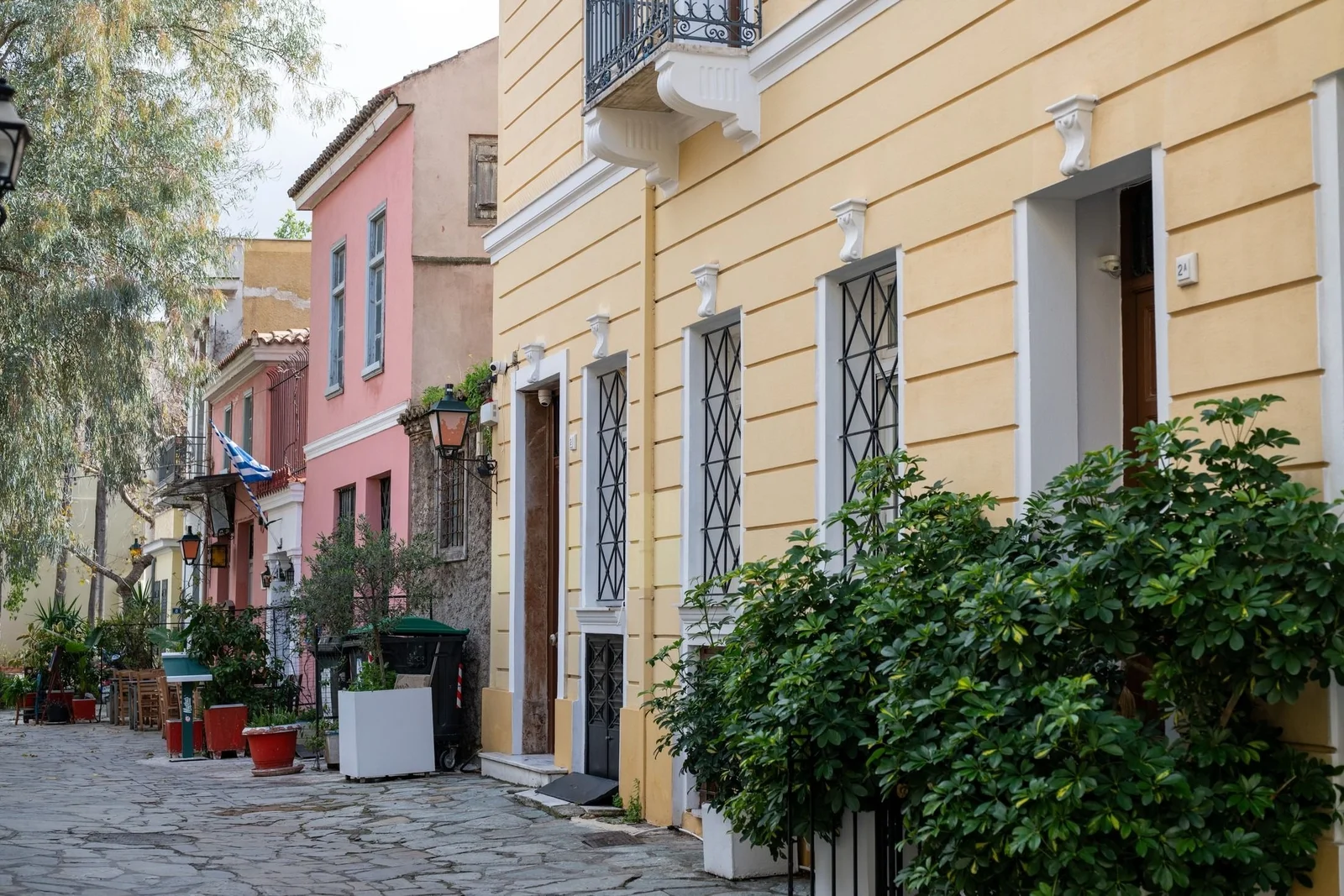
Athens Golden Visa €800K: Which Areas Qualify in 2026
Athens €800K Golden Visa zone: Piraeus, Glyfada, Voula, Vouliagmeni, Ellinikon. Prices, 120m² rule and area guide for 2026.

Greece Golden Visa Property Tiers 2026: €800K vs €400K
Law 5100/2024 created three Greece Golden Visa tiers. Compare €800K prime zones, €400K regional, and €250K conversion thresholds to pick the right investment.
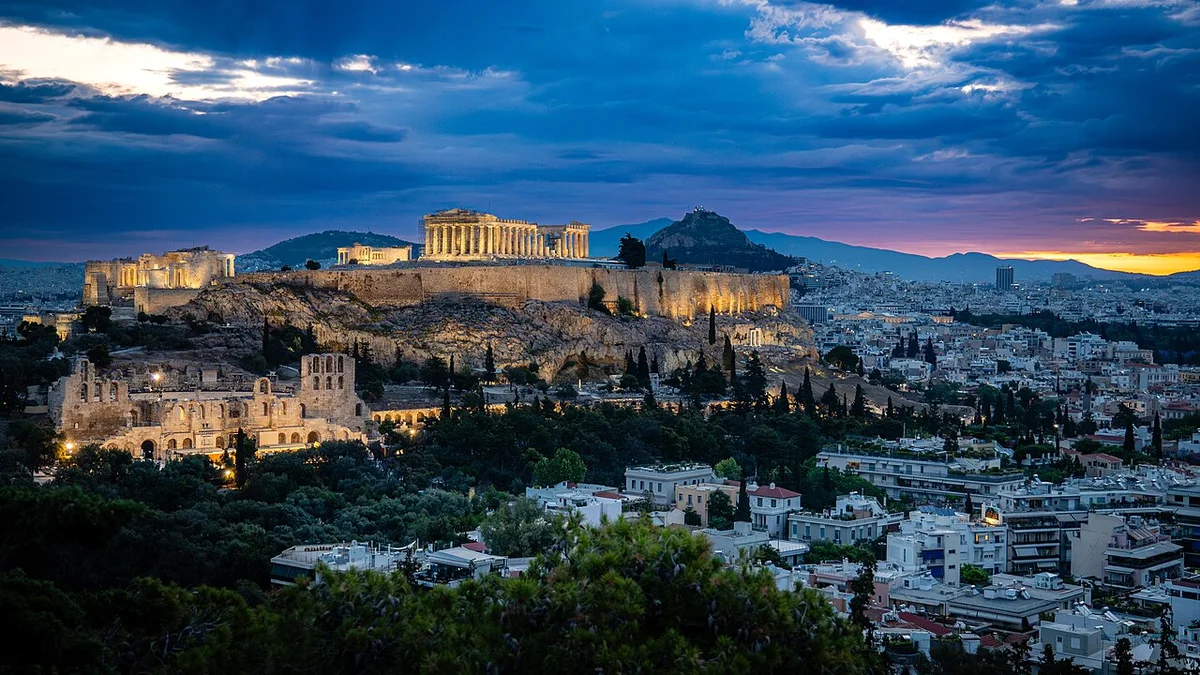
Athens Airbnb Moratorium 2026: Zones, Rules and Impact
Athens STR moratorium through end-2026: density caps in Kolonaki, Koukaki and centre. Separate from the Golden Visa rental ban, rules explained.

Greece Rental Income Tax 2026: Non-Resident Rates Guide
Progressive 15 to 45% Greek rental income tax for non-residents: brackets, filing steps, deductible expenses, AFM setup, and Golden Visa STR restrictions.
12 Hidden Costs Buying Property in Greece: 2026 List
The real total for a Greek purchase: transfer tax 3.09%, notary, lawyer and agent fees plus 12 costs buyers miss, with a worked example on a €400K purchase.
Due Diligence Greece Property: The Complete 2026 Checklist
Due diligence Greece property: title search, cadastre, ENFIA arrears, permits, engineer survey, co-ownership, mortgages, Golden Visa tier. Full checklist.
Get your Greece property shortlist
Share your budget, region (Athens, Crete, islands, or Peloponnese), and Golden Visa goal. We reply within one business day with matched options and next steps.