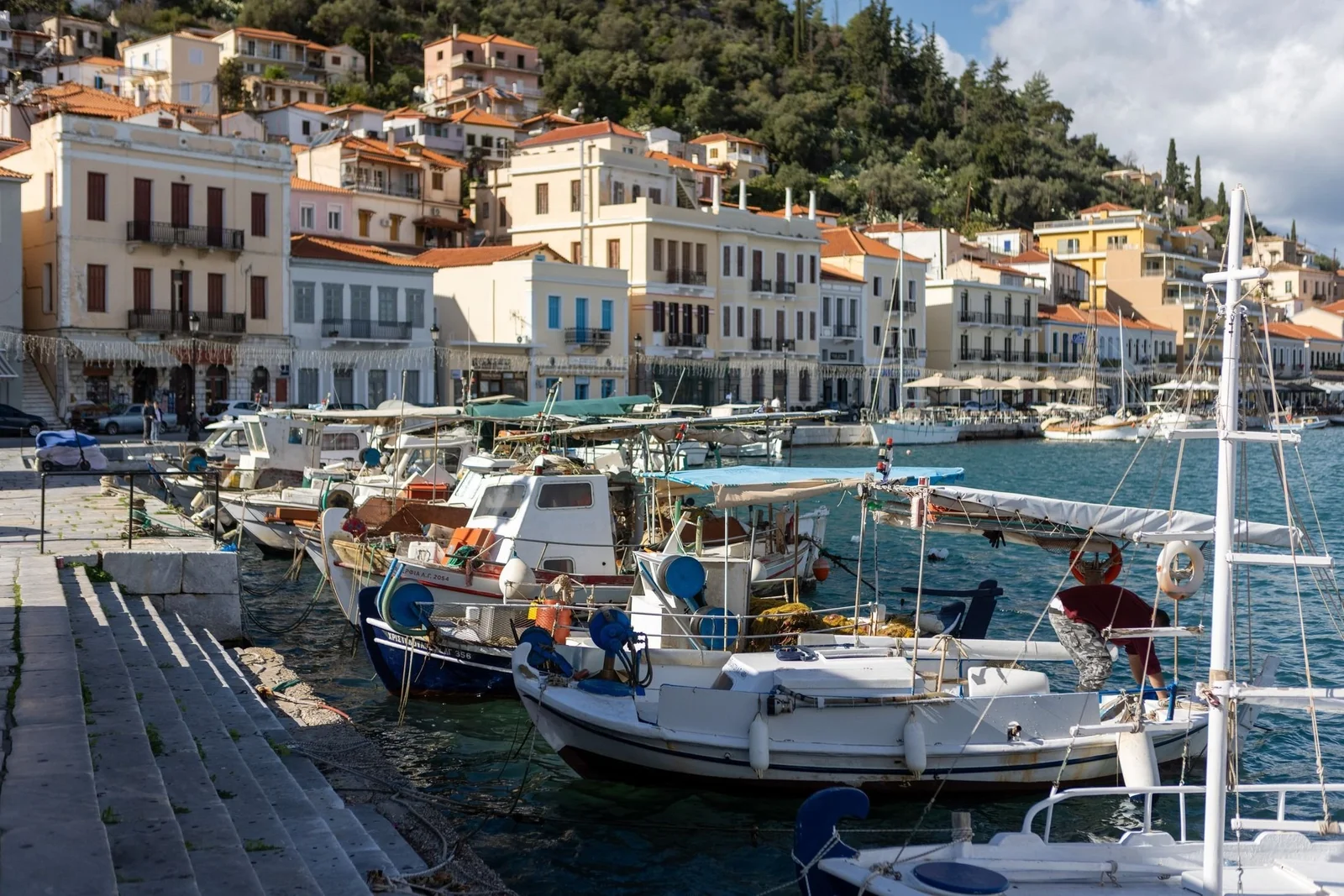
Quick answer: Greece taxes a relocating foreign pensioner at a flat 7% on all foreign income, pension, dividends, interest, foreign rents and gains, for 15 years under Article 5B. Entry needs a foreign pension, 5 of 6 prior years outside Greek residence, and a cooperation-agreement state; no property purchase is required.
Portugal closed its NHR door in 2024, Italy confines its 7% to small southern villages, and Greece quietly runs the widest flat-rate pension regime in the Mediterranean: 7% on everything foreign, anywhere in the country, Athens and Santorini included. Article 5B has been in force since July 2020, sits untouched by the 2026 tax reform, and remains the least-marketed reason retirees are buying in Crete and the Peloponnese.
This guide covers the regime as of 22 August 2026: the three entry tests, exactly which income the 7% touches, the application calendar, treaty interactions by country, the property question it does not ask but most retirees answer anyway, and the arithmetic against the ordinary scale.
What Is the Article 5B Pension Regime?
Article 5B is an alternative taxation election for foreign pension recipients who transfer tax residence to Greece: all foreign-source income is taxed at a flat 7% for up to 15 tax years, declared annually and settled in one payment by the end of July. It is the pensioner counterpart to the €100,000 investor regime.
| Feature | Ordinary Greek resident | 5B pensioner |
|---|---|---|
| Foreign pension | Progressive scale to 44% | 7% flat |
| Foreign dividends, interest, gains | Class rates / scale | 7% flat |
| Foreign rental income | Progressive scale | 7% flat |
| Greek-source income | Ordinary rules | Ordinary rules, unchanged |
| Investment required | None | None |
| Duration | Indefinite | 15 tax years |
The design is deliberately broad: Greece is not buying your pension, it is buying your presence, your spending and, frequently, your property purchase. The regime’s 7% applies from the first euro with no allowance and no cap, which keeps the arithmetic honest at every income level: €30,000 of foreign income pays €2,100, €300,000 pays €21,000.
Greece’s position in the retirement-tax market is easiest to see against its two former rivals. Portugal’s NHR regime, which taxed foreign pensions at 10% and once at 0%, closed to new entrants in 2024 and left tens of thousands of planned relocations without a destination. Italy still offers 7%, but only in southern municipalities of fewer than 20,000 inhabitants, which excludes every city and every island town a typical retiree shortlists. Greece’s Article 5B carries the same 7% rate with no geographic restriction at all: central Athens, Chania, Rethymno, Nafplio and Santorini qualify identically, for 15 years against Italy’s 10. That combination, Mediterranean capital cities at a single-digit rate, currently exists nowhere else in the EU, and it is the quiet engine behind the retiree segment of Greek coastal demand since 2024.
Who Qualifies, and From Which Countries?
Qualification is three tests, all documentary: a pension arising abroad, non-residence in Greece for 5 of the previous 6 years, and arrival from a state with a tax cooperation agreement with Greece, a list that covers the EU and EEA, the UK, the US, Canada, Australia and most of Greece’s 57 treaty partners.
- The pension test. State pensions, occupational schemes, private annuities and provident funds all qualify; the pension must arise abroad, and there is no minimum amount. Early-retirement and disability pensions have been admitted on the same footing.
- The 5-of-6 test. Returning Greek emigrants qualify after a genuine 5 years abroad, which makes the regime a repatriation tool as much as an expat one.
- The cooperation-state test. The move must come from a cooperating jurisdiction; arrivals from non-cooperative territories are excluded, a list that shifts with EU designations rather than with Greek politics.
- Residence itself. You must actually become Greek tax resident, 183 days or centre of vital interests, and keep it; the election does not survive a move back out.
No property, no investment, no minimum stay beyond residence itself: the entry bar is the lowest of Greece’s three special regimes, which is precisely why the 5A and 5B menu should be read together before choosing.
Which Income Does the 7% Cover, and Which Does It Not?
The scope of the 7% is every category of foreign-source income without exception: the pension itself, dividends, interest, royalties, rent from property abroad and capital gains on foreign assets. Outside the 7% sit only Greek-source income and Greek property taxes, which follow the ordinary rules for every resident alike.
Worked against a typical retired couple’s ledger:
| Income line | Source | Tax under 5B |
|---|---|---|
| UK occupational pension, €38,000 | Foreign | 7% = €2,660 |
| Dividend portfolio, €15,000 | Foreign | 7% = €1,050 |
| Rent from a UK flat, €12,000 | Foreign | 7% = €840 |
| Rent from a Greek apartment, €9,000 | Greek | 15% band = ~€1,283 |
| ENFIA on the Greek home | Greek | €2.00 to €16.20/m² |
Three practical notes. Foreign income must still be declared annually, unlike under 5A, so the 7% is transparent rather than private. Foreign tax already paid can be credited against the 7% under the relevant treaty, and where the treaty gives Greece exclusive rights the 7% is the entire worldwide charge. And a Greek letting stays on the ordinary rental scale, 15% to 45% on gross rent, exactly as for any other owner.
How Do You Apply, and What Is the Calendar?
The election is filed with AADE by 31 March of the first tax year, with evidence of the foreign pension and the 5-of-6 residence history; AADE decides within about 60 days, and the year’s 7% is then paid in a single instalment by the last working day of July.
- Year before the move: collect pension certificates, residence evidence, and treaty paperwork; plan the departure-state exit.
- By 31 March of year one: file the 5B application with AADE.
- Within ~60 days: decision issues; late or incomplete files slip a full year.
- By end of July, each year: pay the flat tax assessed on the declared foreign income.
- Years 2 to 15: the regime renews by compliance, no re-application.
The deadline discipline mirrors 5A: a 1 April filing waits until next year, and a missed July payment removes you from the regime rather than merely penalising the year. Retirees arriving mid-year should note that Greek residence for the year of arrival follows the facts, and most files start the election from the first full calendar year.
Retiring to Greece on the 7% regime? We shortlist towns and properties where the arithmetic works, Crete to the Peloponnese, and sequence the tax and residency files.
What Does the 7% Save Against the Ordinary Scale?
The saving is roughly €4,600 a year on a €30,000 income and €90,000 a year at €300,000, because the ordinary 2026 scale climbs to 44% while the 7% never moves. Break-even does not exist: the flat rate beats the ordinary scale at every income level a pensioner can hold.
| Annual foreign income | Ordinary 2026 scale (approx.) | 5B at 7% | Saved per year | Saved over 15 years |
|---|---|---|---|---|
| €30,000 | ~€6,700 | €2,100 | €4,600 | €69,000 |
| €60,000 | ~€15,000 | €4,200 | €10,800 | €162,000 |
| €100,000 | ~€30,600 | €7,000 | €23,600 | €354,000 |
| €300,000 | ~€111,000 | €21,000 | €90,000 | €1,350,000 |
- The 15-year column is the retirement plan: six figures kept at ordinary incomes.
- No cap means no cliff: the 7% never worsens as income grows.
- The comparison uses post-2026-reform brackets, not the older scale.
Ordinary-scale figures approximate the post-reform 2026 brackets applied to pension-plus-investment mixes. Unlike the investor regime, where the €100,000 flat charge only wins above roughly €230,000 of annual income, 5B has no losing case on the numbers: at every income a pensioner can realistically hold, 7% is below the ordinary scale’s effective rate, which starts at 9% and climbs to 44%. The only people who should not elect are those failing an entry test, those whose pensions a treaty keeps taxable at source, and those unwilling to hold genuine Greek residence for the years claimed. For everyone else the decision is not whether but when, and the answer to when is the 31 March before the first full year in Greece.
Do You Need to Buy Property, and Should You Anyway?
Article 5B requires no purchase at all: a tenant qualifies exactly as an owner does. Most relocating pensioners buy regardless, because ownership fixes housing cost for the 15-year term, and because for non-EU retirees a €400,000 regional purchase adds a Golden Visa, residence rights independent of the tax election.
How the property decision splits by passport:
- EU and EEA retirees need no immigration permission; the purchase decision is purely financial. Renting first for a winter, then buying, is the pattern that survives contact with January.
- UK, US and other non-EU retirees need a residence route: the Golden Visa at €400,000 regional with both sets of parents includable, or the Financially Independent Person permit at roughly €3,500 of monthly passive income, cheaper but stay-dependent.
- Buyers at the tier boundary should keep the two files apart in their heads: the visa wants a deed and 120 m² of certified area; 5B wants none of it, only the pension and the residence history.
A €400,000 Cretan purchase carrying the visa, with the 7% election on top, prices a complete relocation, home, residence rights and a 15-year tax position, at under half the capital of the Attica investor route.
What Are the Advantages and Disadvantages of the 7% Regime?
The regime’s advantages are breadth and price: a flat 7% on everything foreign, anywhere in Greece, with no investment test and no income level at which it loses. The disadvantages are the genuine residence commitment, annual declaration of worldwide income, treaty carve-outs on government pensions, and the hard 15-year ceiling.
Advantages
- 7% flat on all foreign income, from the first euro, at any income level.
- No investment or property requirement, and no minimum pension.
- Nationwide: Athens and the islands qualify, unlike Italy’s village-only 7%.
- Savings of €4,600 to €90,000 a year against the ordinary scale.
- Compatible with a Golden Visa purchase for non-EU residence rights.
Disadvantages
- Genuine Greek residence is required and checked; this is not a paper election.
- Foreign income must be declared annually, unlike the 5A regime’s privacy.
- Government-service pensions often stay taxable at source under treaties.
- US citizens remain inside US worldwide taxation; 7% helps little.
- Hard stop at 15 years, with the ordinary scale waiting at year 16.
What Are the Risks and Red Flags Before Electing?
There are three failure modes, the calendar, the treaty and the exit: a missed 31 March filing or end-July payment, a pension the treaty keeps taxable at source, and departure-state rules that tax the leaver. Each is checkable before the move for a few hundred euros of advice against a 15-year, five-figure-a-year position.
- Calendar risk. File by 31 March, pay by end July; the first slips a year, the second ends the regime outright.
- Treaty carve-outs. UK government-service and many public-sector pensions remain taxable only in the paying state; the 7% then applies to everything else, which changes the arithmetic rather than breaking it.
- Source-state withholding. Some pensions arrive net of foreign withholding the treaty says should stop once Greece taxes them; reclaiming takes forms and months, so start before the move.
- Departure rules. Exit charges and trailing-residence tests, the UK’s temporary non-residence rules included, can follow the leaver; sell or crystallise on the right side of the move.
- Residence drift. Spending winters back home can undermine the 183-day facts the election rests on; keep the day count and the paper trail.
Which Retiree Scenario Fits the 7% Election?
The regime fits three profiles cleanly: the northern-European retiree trading a 40%+ marginal rate for 7%, the returning Greek emigrant after 5 years abroad, and the non-EU retiree pairing the election with a €400,000 Golden Visa. It fits US citizens poorly and fits seasonal, sub-183-day swallows not at all.
- Full-time move, private pension: elect, the case is closed.
- Government pension dominant: model the carve-out first.
- Half-year lifestyle: no residence, no regime, no need.
The UK or German occupational retiree. €50,000 to €80,000 of pension and investment income taxed at 7% instead of 30% to 42% at home: the saving funds the Greek life it enables, roughly €10,000 to €20,000 a year kept.
The returning Greek of the diaspora. Five years in Munich or Melbourne satisfies the 5-of-6 test; the regime welcomes the pension home at 7% and the family property needs no purchase at all.
The American retiree. Elect only with US advice: the IRS taxes citizens worldwide, foreign tax credits blunt the benefit, and for many US files the [FIP visa plus ordinary treaty planning] does as much with less paperwork.
Next steps: the €100K investor regime compared · pairing residence and tax in one plan · the €400K Crete route.
Frequently Asked Questions
Article 5B of the Greek Income Tax Code taxes a foreign pension recipient who moves tax residence to Greece at a flat 7% on all foreign-source income, not only the pension, for up to 15 years. Dividends, interest, foreign rents and capital gains are all covered at the same 7%, declared annually and paid in one instalment by the end of July.
Three conditions: you receive a pension arising abroad, you were not a Greek tax resident in 5 of the 6 years before the move, and you arrive from a state holding a tax cooperation agreement with Greece, which covers the EU, the UK, the US, Canada, Australia and most treaty partners. There is no minimum pension amount and no property purchase requirement.
Yes. Once admitted under Article 5B, every category of foreign-source income is taxed at the flat 7%: the pension itself, dividends, bank interest, rent from property abroad and capital gains on foreign assets. Greek-source income, including rent from a Greek property, stays under the ordinary Greek scales.
File with AADE by 31 March of the tax year the regime is to start, evidencing the foreign pension and your residence history; the decision issues within about 60 days of a complete file. The 7% is then assessed through the annual return and paid in a single instalment by the last working day of July each year.
No. Article 5B carries no investment test, unlike the €500,000 requirement of the 5A investor regime. A retiree can rent in Greece and still qualify. Many pensioners nonetheless buy, because a €400,000 regional purchase also carries a Golden Visa, useful for non-EU retirees who want residence rights independent of the tax election.
The treaty decides which country may tax the pension at all. Most Greek treaties give private pensions to the residence state, Greece, so 7% becomes the only charge. Government-service pensions often remain taxable only at source, in which case Greece exempts them and the 7% applies to your other foreign income. US citizens stay inside US worldwide taxation with credits.
Failing to pay the year's flat tax by the July deadline removes you from the regime, and ceasing genuine Greek tax residence has the same effect. The regime otherwise runs its full 15 tax years and cannot be renewed; from year 16 the ordinary progressive scale applies to worldwide income.
Read next

Greece Non-Dom Tax Regime: The €100K Flat Rate (5A)
Greece's Article 5A non-dom regime: €100,000 flat tax on all foreign income for 15 years, €500,000 investment test, €20,000 per family member. Full guide.

Greece Digital Nomad Visa 2026: Income, Tax and Applying
€3,500 a month, a 50% tax exemption for up to seven years, and from February 2026 consulate-only applications. What qualifies and where the tax trap sits.

Cost of Living in Greece 2026: What Official Data Shows
Eurostat puts Greece 14% below the EU average, but food above it. Where the saving is real, how Greece compares to Portugal, and what the index cannot say.

Crete Property Investment Guide 2026: Island Markets
Crete property investment 2026: €400K Golden Visa tier, ~€2,329/m² average, what the yield data supports, north coast markets, GV vs Attica arbitrage.

Greece Golden Visa for Family: Who Is Included 2026
One investment covers spouse, children under 21 and all four parents. Documents, renewal rules and what happens when a child turns 21.
Get your Greece property shortlist
Share your budget, region (Athens, Crete, islands, or Peloponnese), and Golden Visa goal. We reply within one business day with matched options and next steps.